


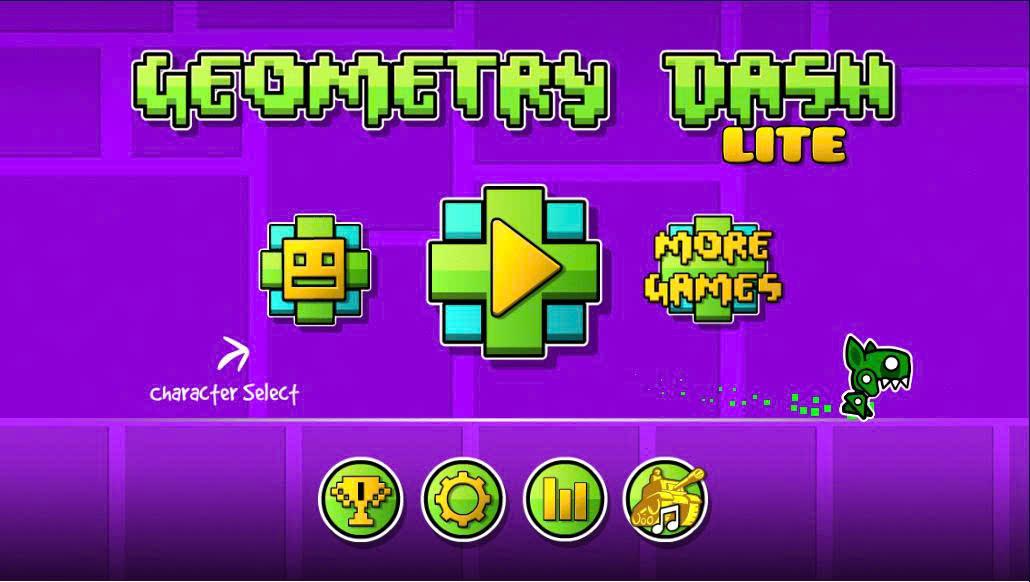
If you’ve ever felt the urge to test your reflexes while vibing to fast-paced music, then Geometry Dash might already be on your radar. If not, it’s one of those deceptively simple games that quickly turns into a full-blown obsession. At its core, Geometry Dash is about timing, patience, and learning from failure—but in a way that feels oddly satisfying rather than punishing. Whether you’re new or returning after a break, there’s a lot to enjoy in the way this game blends rhythm and challenge.
Getting Into the Gameplay
The first thing you’ll notice about Geometry Dash is its clean, minimal design. You control a small geometric icon—usually a cube—that automatically moves forward through a level filled with obstacles. Your job is simple: jump at the right time to avoid spikes, gaps, and other hazards. That’s it. No complicated controls, no long tutorials.
But don’t let that simplicity fool you.
Each level is synced with energetic music, and your jumps often need to match the rhythm to succeed. As you progress, the gameplay evolves. You’ll encounter portals that change your form into a ship, ball, or wave, each with its own mechanics. Suddenly, you're not just tapping to jump—you’re flying, flipping gravity, or zigzagging through tight spaces.
Levels are designed to be memorized through repetition. You’ll fail. A lot. But every attempt teaches you something new—where to jump, when to hold, when to let go. That’s part of the experience. Instead of feeling frustrating, it often feels like you’re gradually mastering a song.
Another big part of Geometry Dash is its community-created levels. Players can design their own stages, which means there’s an endless supply of content. Some are incredibly creative, blending visuals and music into something that feels more like an interactive music video than a traditional game level.
Tips to Make the Experience More Enjoyable
If you’re just starting out, it’s easy to get overwhelmed. Here are a few simple tips that can make your journey smoother and more fun.
First, don’t rush into harder levels. The early stages are there for a reason—they help you build timing and muscle memory. Skipping ahead might seem tempting, but it often leads to unnecessary frustration.
Second, practice mode is your best friend. It lets you place checkpoints and learn tricky sections without restarting from the beginning every time. Some players ignore it, but using it wisely can save you a lot of time and effort.
Third, pay attention to the music. It’s not just background noise—it’s a guide. Many jumps are designed to match the beat, so listening closely can actually improve your timing.
It also helps to stay patient with yourself. Geometry Dash is a game of trial and error. Even experienced players fail dozens (or hundreds) of times on difficult levels. Progress isn’t always fast, but it is steady if you keep going.
Finally, explore custom levels when you’re ready. They add variety and can be a refreshing break from official stages. Some are easier, some are harder, and some are just plain weird—in a good way.
Why It Keeps Players Coming Back
What makes Geometry Dash stand out isn’t just its difficulty—it’s how it turns repetition into something rewarding. Every small improvement feels meaningful. Beating a level you’ve struggled with for hours gives a real sense of accomplishment.
The combination of music, visuals, and gameplay creates a flow that’s hard to find in other games. When everything clicks, it feels less like you’re playing and more like you’re part of the rhythm.
It’s also a game you can pick up anytime. Whether you have five minutes or an hour, you can jump in, make a few attempts, and feel like you’ve made progress. That flexibility makes it easy to keep coming back.
Wrapping It Up
Geometry Dash isn’t about flashy graphics or complex storytelling. It’s about timing, persistence, and the simple joy of getting better at something one attempt at a time. It can be challenging, even frustrating, but that’s exactly what makes it memorable.
If you’re willing to embrace the trial-and-error nature and let yourself get into the rhythm, you’ll find a surprisingly deep and satisfying experience hidden behind its simple design. And who knows—you might just find yourself saying “just one more try” a lot more often than you expected.