


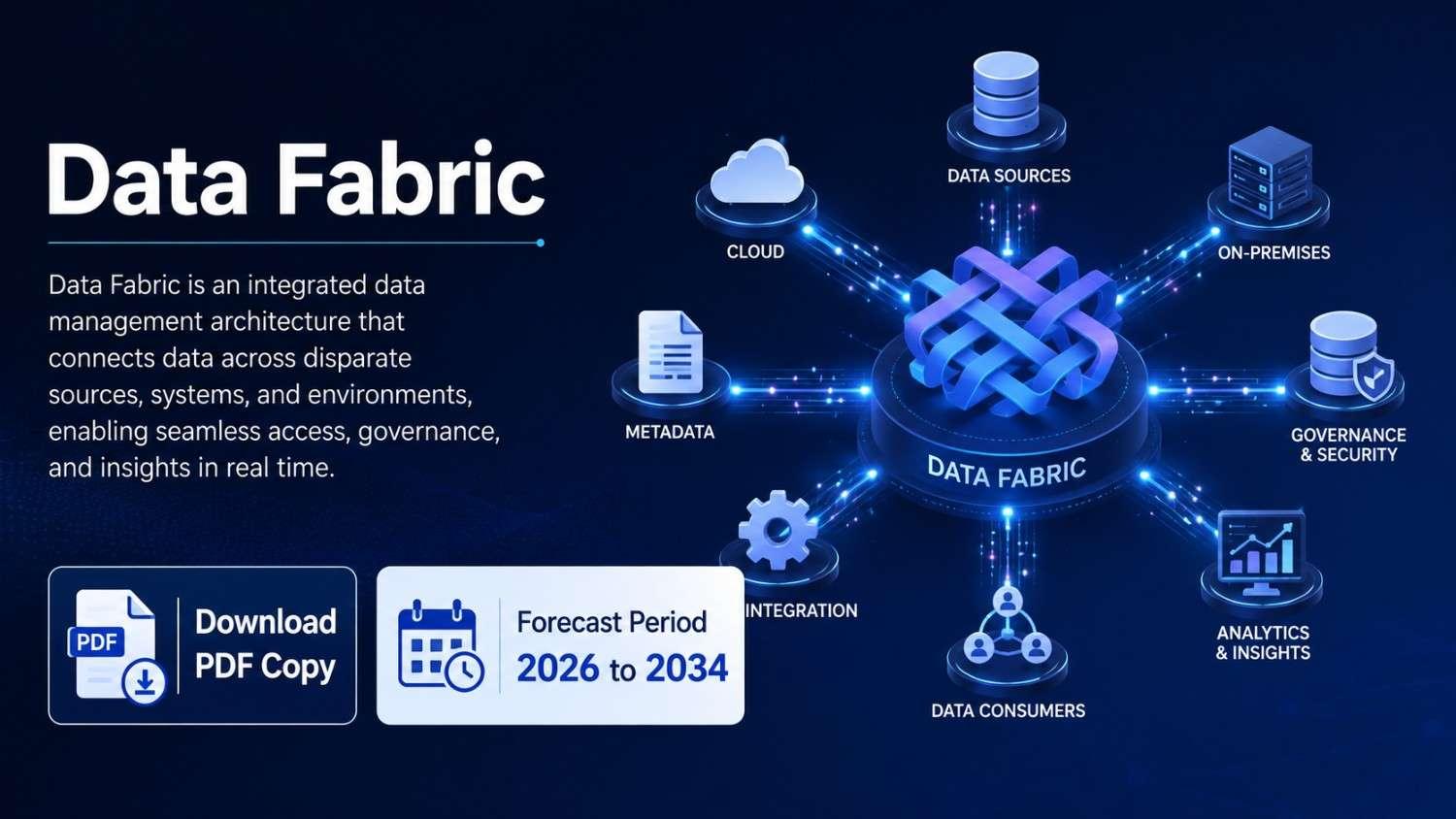
The data fabric market is poised for substantial growth over the next few years, driven by the increasing complexity of data management and the need for organizations to streamline their data operations. As companies continue to generate vast amounts of data, the demand for efficient and integrated data solutions becomes paramount.
The Data Fabric market is projected to grow from US$ 2.09 billion in 2023 to US$ 10.59 billion by 2031; it is expected to expand at a CAGR of 22.5% from 2023 to 2031. Growing demand for real-time streaming analytics is expected to be a key trend in the market.
Market Overview
Data fabric is an architectural approach that enables seamless data integration and management across various environments, including on-premises, cloud, and hybrid systems. It provides a unified framework that allows organizations to access, share, and analyze data in real-time, promoting agility and efficiency. The market is characterized by an increasing focus on data democratization, where organizations aim to empower users with data access and insights, regardless of their technical expertise.
Key Drivers
Several factors are driving the growth of the data fabric market:
- Rapid Data Growth: The exponential increase in data generation across industries necessitates advanced data management solutions. Organizations are seeking ways to harness this data effectively.
- Need for Real-time Insights: Businesses require real-time data analytics to make informed decisions. Data fabric solutions facilitate quick access to data from various sources, enabling timely insights.
- Integration of AI and ML: The integration of artificial intelligence (AI) and machine learning (ML) technologies into data fabric solutions enhances data processing capabilities, providing predictive analytics and automation.
- Cloud Adoption: The shift towards cloud computing is driving the demand for data fabric solutions. Organizations are looking for hybrid solutions that can seamlessly integrate on-premises and cloud data.
- Regulatory Compliance: The increasing focus on data privacy and compliance with regulations such as GDPR and CCPA is pushing organizations to adopt data fabric solutions that ensure secure data management.
Opportunities
The data fabric market presents numerous opportunities for growth and innovation:
- Emerging Technologies: The integration of emerging technologies such as blockchain and IoT with data fabric solutions opens new avenues for data management and security.
- SME Adoption: Small and medium-sized enterprises (SMEs) are beginning to recognize the value of data fabric solutions, leading to increased market penetration.
- Vertical-specific Solutions: Tailored data fabric solutions for specific industries, such as healthcare, finance, and retail, can address unique data challenges and drive adoption.
- Partnerships and Collaborations: Strategic partnerships between technology providers and organizations can enhance product offerings and expand market reach.
Segmentation
The data fabric market can be segmented based on various criteria:
- By Component: Solutions, Services
- By Deployment Mode: On-premises, Cloud
- By Application: Data Integration, Data Governance, Data Security, Data Analytics
- By Industry Vertical: BFSI, Healthcare, Retail, IT & Telecom, Manufacturing, Others
Market Report Scope
The report encompasses a comprehensive analysis of the data fabric market, including market dynamics, trends, challenges, and competitive landscape. It also provides insights into market segmentation, regional analysis, and key player strategies. The scope of the report covers historical data, current market status, and future projections up to 2031.
Market News and Recent Developments
The data fabric market has seen several notable developments recently:
- Acquisitions: Major players are acquiring innovative startups to enhance their data fabric capabilities and expand their product portfolios.
- Product Launches: Companies are launching advanced data fabric solutions that incorporate AI and ML for improved data processing and analytics.
- Collaborative Initiatives: Partnerships between technology providers and industry leaders are fostering innovation and driving the adoption of data fabric solutions.
Competitive Landscape
The competitive landscape of the data fabric market is characterized by the presence of several key players:
- IBM Corporation: A leader in data management solutions, IBM offers a robust data fabric platform that integrates AI and ML capabilities.
- Oracle Corporation: Known for its data management solutions, Oracle provides a comprehensive data fabric framework for enterprises.
- Microsoft Corporation: With its Azure cloud platform, Microsoft is a significant player in the data fabric space, offering seamless integration and analytics solutions.
- SAP SE: SAP’s data fabric solutions focus on enterprise resource planning and data integration, catering to a wide range of industries.
- Informatica: A pioneer in data integration, Informatica offers advanced data fabric solutions that support real-time data management and analytics.
Future Outlook
The data fabric market is expected to continue its upward trajectory, driven by technological advancements and evolving business needs. As organizations increasingly prioritize data-driven decision-making, the demand for integrated and efficient data management solutions will rise.
Frequently Asked Questions
What is data fabric?
Data fabric is an architecture that enables seamless integration and management of data across various environments, allowing organizations to access and analyze data in real-time.
What are the key benefits of adopting data fabric solutions?
Key benefits include improved data accessibility, real-time insights, enhanced data security, and streamlined data management processes.
Which industries are driving the data fabric market?
Industries such as BFSI, healthcare, retail, IT & telecom, and manufacturing are significant contributors to the growth of the data fabric market.