


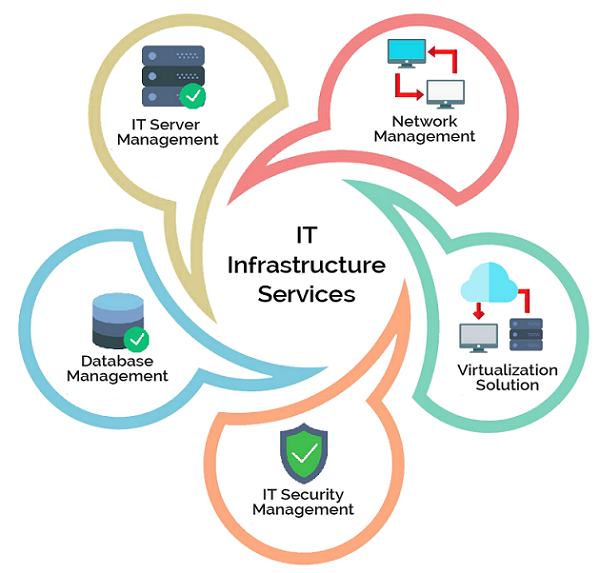
Modern IT Infrastructure Services provide the foundation that keeps business applications available, fast, and secure. Organizations depend on infrastructure for everything from email and collaboration to ERP, customer platforms, analytics, and AI workloads. These services include data center operations, cloud infrastructure management, networking, storage, backup, disaster recovery, and endpoint support. As environments become hybrid and multi-cloud, infrastructure services help unify monitoring, policy, and performance across diverse platforms. They also reduce operational burden by providing 24/7 support, patching, capacity planning, and incident response. Reliability is critical because outages quickly become revenue loss and reputational damage. Security is equally important, as infrastructure sits on the front line against ransomware and intrusion attempts. With increasing complexity and talent shortages, many organizations use infrastructure services to maintain resilience while freeing internal teams to focus on business-facing innovation.
Core service areas typically include compute and virtualization, storage management, network design and operations, and identity and access foundations. Managed services often extend to cloud migration support, configuration management, and continuous optimization of workloads. Backup and disaster recovery are central, ensuring data is protected and recoverable after failures or cyber incidents. Monitoring and observability tools track performance, capacity, and availability, enabling proactive response to degradation before users are impacted. Infrastructure services also include patch management and vulnerability remediation, which are essential for cyber hygiene. For regulated industries, audit-ready controls and documentation are often required. Service providers may operate across on-prem data centers, colocation facilities, and public clouds, making governance and standardization important. Successful engagements define service-level objectives, escalation workflows, and clear ownership boundaries between provider and client. Without that operational clarity, incidents can become slow and blame-driven.
Hybrid infrastructure is now the norm, and services must connect these layers effectively. Enterprises often run core systems on-prem while using public cloud for elastic workloads, analytics, and SaaS integration. Network connectivity—VPNs, direct connects, SD-WAN—must be designed for performance and security across environments. Security services integrate with infrastructure through segmentation, logging, and identity controls. Automation is increasingly important: infrastructure as code, configuration drift detection, and standardized deployment pipelines reduce errors and speed recovery. Cost optimization is another key capability as cloud spend rises; services may include rightsizing, reserved capacity planning, and usage governance. However, cost cuts must not compromise resilience. Strong infrastructure services balance efficiency with risk management by prioritizing critical workloads and designing for failover. Organizations that standardize architecture and monitoring across environments gain better visibility and control.
Looking ahead, IT infrastructure services will focus more on resilience, automation, and platform operations. AI-driven operations may help detect anomalies earlier and recommend remediation steps, improving uptime. Edge computing and IoT will expand the infrastructure footprint, increasing demand for distributed management and security. Zero-trust security architectures will further integrate identity and policy into infrastructure operations. Sustainability will also shape infrastructure decisions, from energy-efficient data centers to workload placement strategies that reduce power and cooling needs. As businesses depend more on digital services, infrastructure operations become strategic, not just technical. Providers that deliver reliable uptime, rapid recovery, strong security, and clear cost governance will be central to enterprise competitiveness. Ultimately, infrastructure services exist to make complexity manageable and keep critical systems running without interruption.
Top Trending Reports: