


About 200 percent of the cost of hanging and finishing drywall depends on the labor, site, and type of drywall you choose. Most households that want the lowest price quote find themselves with cracks, uneven surfaces, bubbles, or even repairs within a few months.
Here’s how it works: drywall pricing is not an art. Most homeowners in the USA spend an average of $1.50 to $3.50 per square foot, or about $800 to $1,600. The total cost may be higher or lower than your estimate, depending on the stage of completion, room design, and quality of materials.
You’ll also see how estimation companies in usa can help you save both time and money while avoiding hidden costs. Through a detailed takeoff and estimating process, you’ll learn the actual, recent, and more affordable cost breaks, understand why costs vary, and know exactly what to expect when hiring a professional for drywall installation. Whether you’re remodeling a single room or an entire house, you’ll have an accurate estimate before any work begins.
Why Drywall Costs Vary
There is more than setting gypsum boards in order to hang and finish drywall. The prices differ based on several factors:
-
Labor skill: Skilled crews are efficient in the work of taping, mudding, sanding and finishing. The work of less qualified workers may leave corners unfinished, seams over-mudded, or screws popped.
-
Quality of the material: The common 1/2 inch drywall is less expensive. Boards with moisture-resistant, fire-resistant, or increased thickness are more expensive.
-
Room geometry and height: Vaulted ceilings, corners, cut-outs, or unusual-shaped rooms contribute to wastage and time.
-
Finish level: A simple paint-ready finish is less expensive than a smooth and perfect Level 5 finish that is meant to be used on glossy walls.
Even a basic 10ft by 12ft bedroom can be very different in price based on these aspects.
Typical Cost Ranges (2025 US Averages)
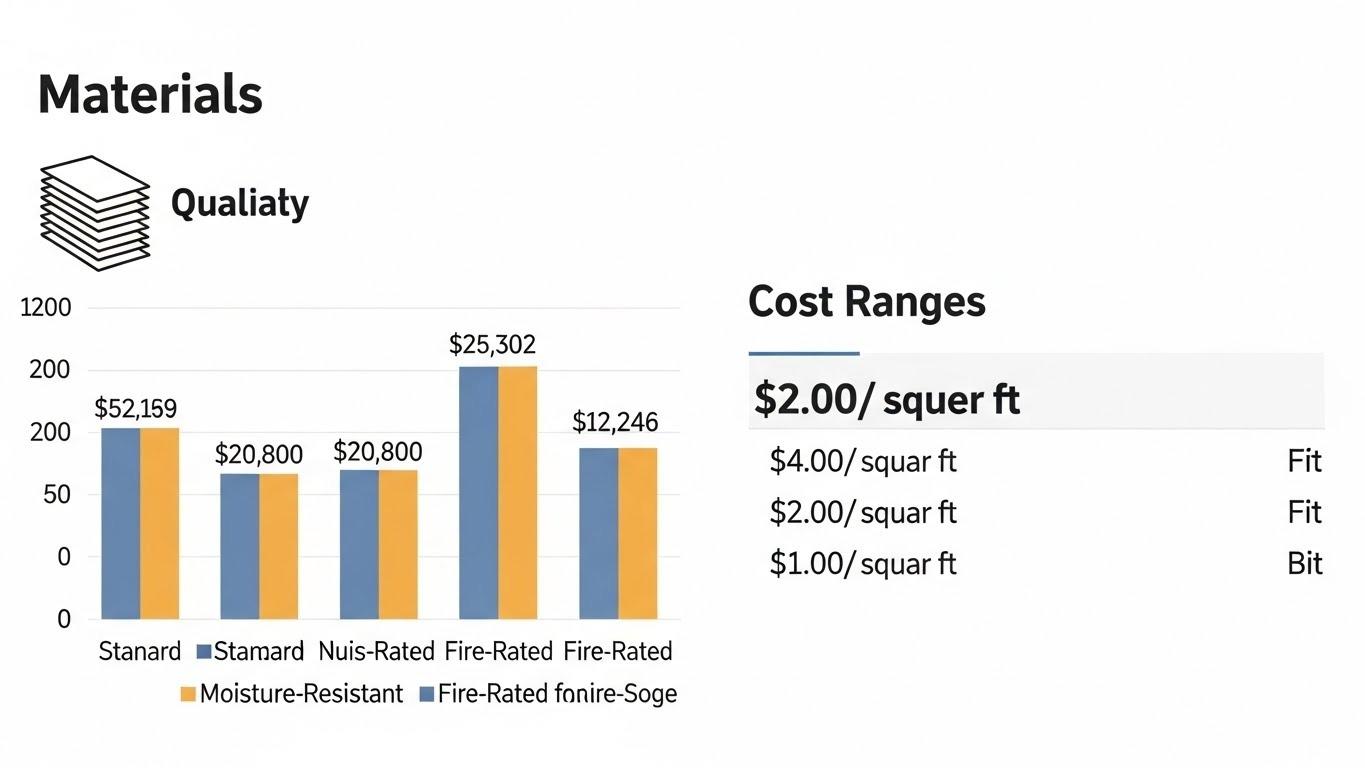
Here’s a general guide based on contractor data, remodeling sites, and homeowner reports:
| Job / Situation | Typical Cost (Materials + Labor) |
| Hang & finish drywall: per square foot | $1.50 – $3.50 |
| Hang & finish drywall: per 4′ × 8′ sheet (~32 sq ft) | $50 – $110 (basic finish; higher for premium finish) |
| Full small room (10′ × 12′, walls + ceiling) | $800 – $1,600 (depending on finish level, waste, room complexity) |
| Whole-house drywall (2,000 sq ft living area) | $3,000 – $7,000 (average finish, standard ½″ drywall) |
Note: Finish level matters. A simple paint-ready finish will be less expensive than a Level 5 smooth finish that is meant to be used as glossy paint or decor.
Things that can influence your final price
1. Type of Material: Standard and Specialty
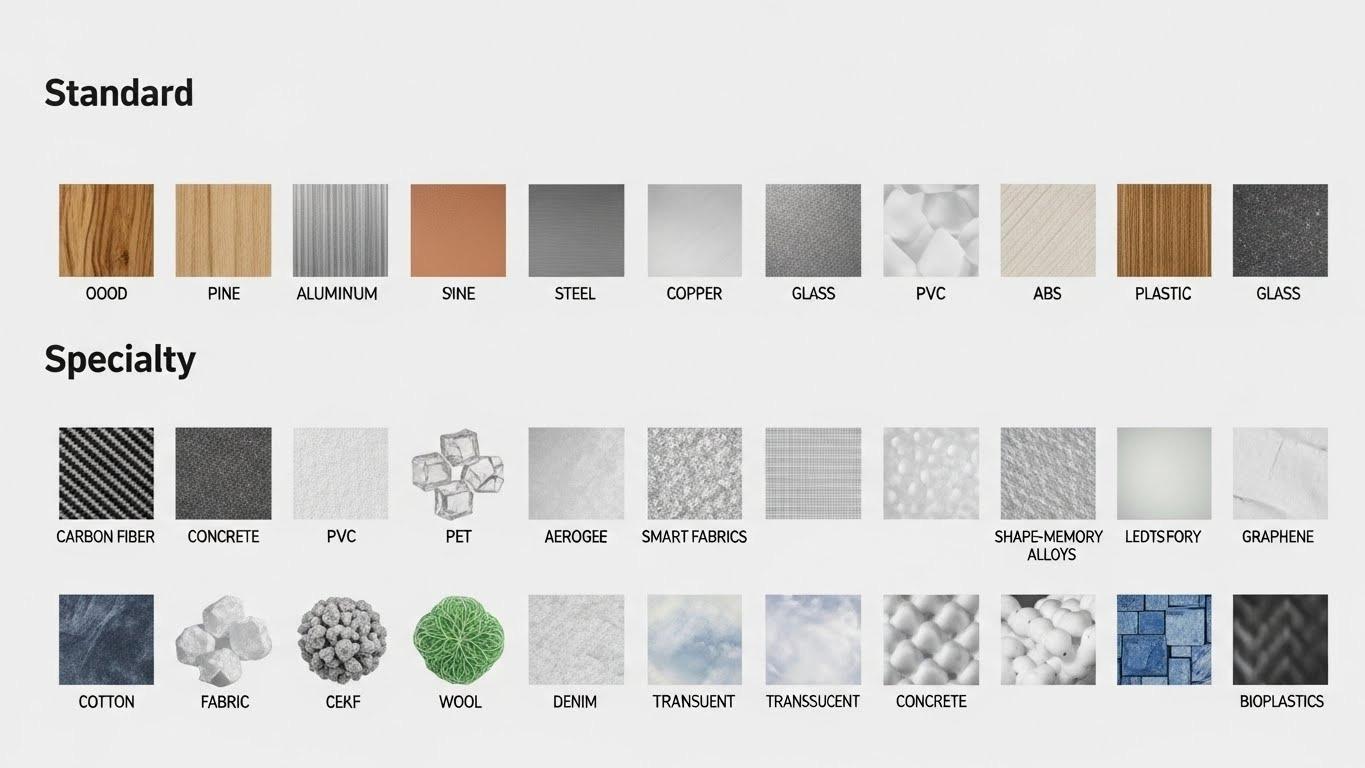
The cheapest one is standard 1/2 inch drywall. Bathrooms (moisture-resistant), fire-rated, or heavy 5/8 inch boards can add 15/30 to the cost of the materials.
2. Quality of Finishes: Basic to Premium
Finish levels are usually mentioned by the contractors: 0-5:
-
Level 0-1: Sheets were pinned, and the seams were exposed.
-
Level 2-3: Taped and lightly skim-coated; can be applied to textured ceiling or slightly light paint.
-
Level 4-5: Multiple coats, fine sand, ideal on smooth walls, glossy paint, or showcase rooms.
The cost and labor time increase with every step up.
3. Room Shape, Waste, and Complexity
Simple rectangular rooms are cheaper. Vaulted ceilings, arches, high numbers of windows/doors, and weird shapes demand more cuts and losses, escalating your price per square foot.
4. Local Demand and Regional Labor Rates
Metropolises where the demand is high have higher rates of labor. The rural or slower markets can be less expensive, yet there can be variations in their availability and the workmanship.
5. Prep Work & Extras
Should your walls need insulation, electrical/plumbing pass-throughs, or additional trimming, you will likely incur more cutout, mud repair, and sanding charges.
What You Get for Your Money
A good drywall job cannot be done by merely hanging boards:
-
Framing verification: Checks the plumbers of the studs and the correct distance between them.
-
Installation of drywall: Walls and ceilings, installation of corner beads, and seam taping.
-
Mudding: It is normally 2-3 coats with drying and sanding in between.
-
Last finish/ finish: Smooth, ready to prime/paint (level of finish level-dependent).
-
Cleanup: Cleaning up of dust and scrap material.
Better finish levels and higher quality of boards eliminate flaws beneath the paint and increase the life of the walls.
Real-World Example
Basic Remodel (Standard Finish) Bedroom
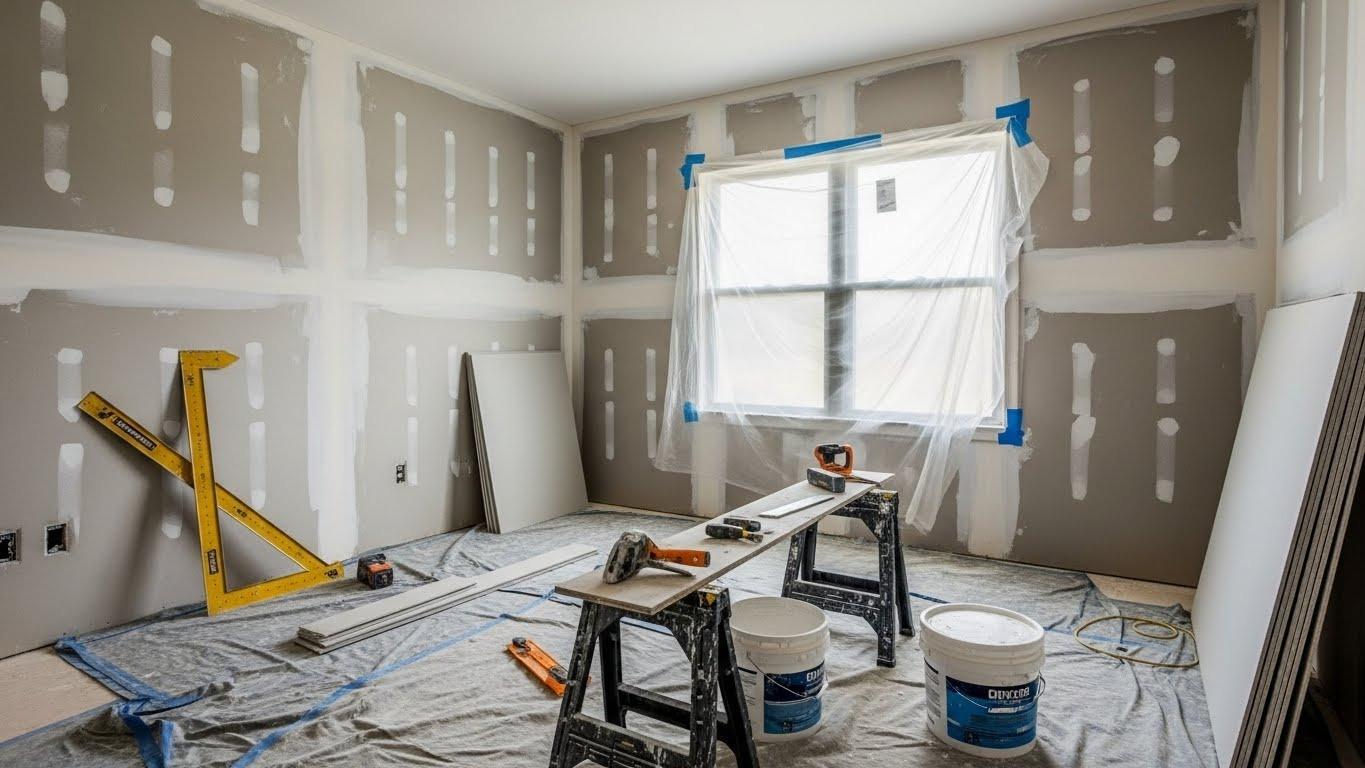
Alice in Ohio has contracted a local company to drywall her 12-foot to 14-foot bedroom. She spent approximately 1050 dollars on using typical 1/2 inch drywall, with a simple tape-and-sand finishing. The number of sheets was fourteen, the seams taped, and a single skim coat put on. The walls were prepared to have a textured ceiling.
This example demonstrates how the cost may be different: between approximately $1,050 $2,500, depending on the level of finish, type of drywall, size of the room, and location.
How to Get Accurate Quotes
Before hiring:
-
Tally wall and ceiling go-round.
-
State type of drywall (1/2, 5/8, moisture-resistant, and so on).
-
Enquire with contractors what level of finish they offer.
-
Talk about such extras as cornerwork, sanding, cleanup, and waste.
-
Demand a material, labor, and finishing breakdown.
-
Consider professional drywall estimating companies to have a transparent line-item quote.
The advantages of the use of professional estimators:
-
They are realistic and have cost estimates based on data.
-
You receive a well-organized and clear cost breakdown in the beginning.
-
Minimizes speculation and shortfall.
-
Enables you to make comparisons on several bids.
Understanding the importance of selecting the contractor
Bidding the cheapest may be counterproductive:
-
Unprofessional finish with a seam on it.
-
Alternative expenses in sanding, patching, or rework.
-
Waste is mined in case of poor installation or damage of the drywall.
A qualified contractor would be expensive at the beginning, but get them durable smooth walls that will last several years.
Sometimes Unspoken Expenses and Errors
-
Overlooking the amount of waste: Leftovers can be formed by every slice, opening, and door.
-
Omission of coats or sanding: Coat skimming may result in rough or uneven walls.
-
No cleanup: Drywall construction is very dusty and messy.
-
Finish overlooked: A paint-ready finish can be satisfactory with textured paint; however, it will have imperfections with smooth or glossy paint.
How to Save Smartly
-
Standard 1/2 inch drywall is used where there is no moisture.
-
Finishes: Accept a mid-level finish (Level 3) when textured paint or paneling is used.
-
Do the work of preparing or cleaning yourself where practicable, and outsource the services of experienced workmen to hang, mud, and sand.
-
Integrate various rooms in one job to cut down labor overhead.
Conclusion
Installing drywall is not a low-paying union job. The quality of materials, workmanship, and finish are all important factors in the durability, smoothness, and longevity of the wall.
A realistic cost estimate of $1.50 to $3.50 per square foot is reasonable, considering the level of finish, waste, and cleanliness. Never accept vague quotes, always compare contractors, and also hire professional estimators.
I think planning today is economically smart, saving both money and time.
FAQs
How much will it cost to install drywall on average?
One 4 by 8 foot sheet (about 32 sq ft) of drywall (therefore, one 4 by 8 foot sheet) costs about $50-110 in labor and finish, depending on the location and the finish level.
Why are the prices of drywall between 1.50 and 3.50 per square foot?
The prices depend on the type of drywall (regular and specialty), the level of finish, room complexity, skills of labor, as well as the material/labor rates in the region.