


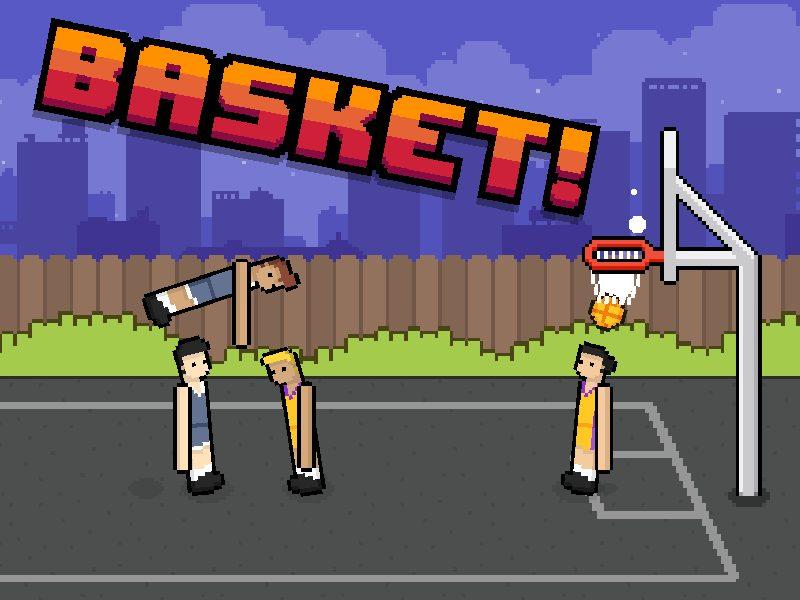
Okay, I know what you’re thinking. Basket Random – that crazy, physics-based, two-player basketball game where you’re more likely to score with your chin than a proper shot – and store management? Bear with me, because underneath its chaotic exterior, this game reveals some surprising parallels to running a successful store. And while I'm not suggesting you start managing your employees with random arm movements, exploring the underlying principles of Basket Random can offer some playful insights into resource allocation, adaptation, and overall strategy.
Let's be clear: Basket Random isn't actually a store management game. But by looking at the game's mechanics through the lens of strategic thinking, we can extract some surprisingly relevant lessons applicable to the world of retail.
First, a Quick Round of Basket Random Gameplay:
If you've never had the... pleasure of experiencing Basket Random, picture this: two ragdoll players, hilariously elongated limbs, and a basketball court that shifts and changes with every point scored. The controls are simple: one button to jump. That's it. Yet, the simplicity belies the strategic depth (or at least, the desperate attempts at strategy) that unfold as you try to wrestle control from the chaotic physics.
Each match is a different experience. Sometimes, you'll be blessed with springy legs and a perfectly timed bounce, allowing you to soar through the air and effortlessly dunk. Other times, you'll be flailing helplessly as the ball bounces off your head and directly into the opponent's basket. The goal is simple: score more points than your opponent before the clock runs out. But the unpredictable nature of the game means you need to be constantly adapting.
How Basket Random Reveals Secret Store Management Strategies:
So, where's the store management angle? It’s not obvious, but here's how I see it:
Resource Allocation (aka The Jumpy Legs Dilemma): In Basket Random, your primary "resource" is your jump. Each jump is a limited, fleeting opportunity to position yourself for a rebound, intercept a pass, or attempt a shot. Think of this as your store's budget. How do you allocate your "jumps" (budget) effectively? Do you spend them all on aggressive marketing (aggressive shots), or do you conserve them for strategic inventory management (careful positioning)? Just like in store management, recklessly spending your resources rarely leads to long-term success.
Adaptability is Key (The Ever-Changing Court): The shifting court in Basket Random forces you to constantly adapt your strategy. One round you might have tiny hoops, requiring pinpoint accuracy. The next, you might be playing on a trampoline, demanding entirely different timing. This mirrors the ever-changing landscape of the retail world. Market trends shift, customer preferences evolve, and competitors introduce new products. A store manager who can't adapt to these changes is destined to be left behind. Are you prepared to change your layout, adjust your pricing, or embrace new technologies based on external forces?
Embrace the Chaos (Unexpected Customer Interactions): Let's be honest, Basket Random is chaotic. You can't predict every bounce or anticipate every move. This is a pretty good metaphor for dealing with the unpredictability of customer interactions and daily operations in a store. You'll inevitably encounter unexpected situations: a sudden surge in demand for a specific product, a disgruntled customer, or a system malfunction. How you handle these "chaotic moments" will define your success.
Focus on the Fundamentals (Basic Jumps and Customer Service): While fancy tricks and aerial acrobatics might work in Basket Random, consistent success comes from mastering the fundamentals: timing your jumps, anticipating the ball's trajectory, and positioning yourself effectively. Similarly, in store management, focusing on the basics like excellent customer service, efficient inventory management, and a clean and organized store environment are crucial for building a loyal customer base and driving sales.
Tips for Mastering (and Finding Lessons Within) Basket Random:
While I can't guarantee Basket Random mastery will translate directly into a booming retail empire, here are some tips that highlight both the game's mechanics and the underlying principles we've discussed:
Observe and Adapt: Don't just blindly jump. Watch how the ball bounces, anticipate your opponent's moves, and adjust your strategy accordingly. Similarly, pay attention to market trends, customer feedback, and competitor activities.
Master the Fundamentals: Practice your basic jumps and timing. In store management, this translates to mastering essential skills like communication, problem-solving, and inventory management.
Don't Be Afraid to Experiment: Try different approaches and see what works. In Basket Random, that might mean trying unorthodox jumping techniques. In store management, it could involve testing new marketing strategies or product placements.
Stay Calm Under Pressure: Basket Random can be frustrating. Don't let your emotions cloud your judgment. Similarly, stay calm and collected when dealing with challenging situations in your store.
Have Fun! At the end of the day, Basket Random is a game. Enjoy the absurdity and the unexpected moments. Similarly, find joy in the challenges and rewards of store management.
In Conclusion: A Silly Game, a Serious Lesson
While Basket Random might seem like a world away from the spreadsheets and strategic planning of store management, its chaotic gameplay actually provides a surprisingly relevant framework for understanding key business principles. By viewing the game through a different lens, we can appreciate the importance of resource allocation, adaptability, and embracing the unexpected. So, the next time you're bouncing around the court, remember: you're not just playing a silly game, you're honing your skills as a future (or current) store manager... maybe. Or maybe you're just having fun. And that's perfectly fine too.