


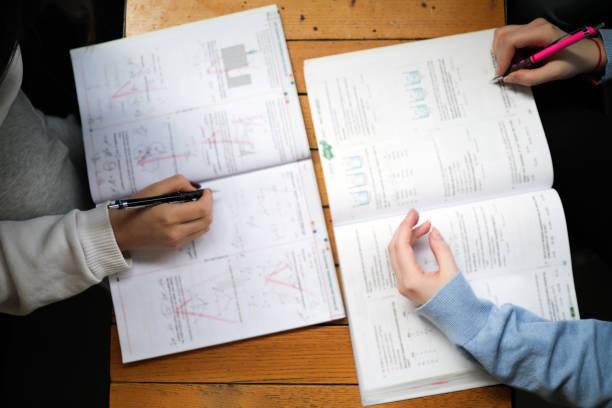
Probability is a branch of mathematics that deals with the likelihood of different outcomes. Whether you're a high school student just beginning to explore the world of probability or a university student tackling advanced topics, writing probability homework can seem challenging. However, with a structured approach, you can break down problems and solve them step by step.
In this guide, we'll walk you through the entire process of writing probability homework, from understanding the problem to presenting your final solution. We’ll offer tips on how to stay organized, focus on key concepts, and provide clarity in your explanations.
1. Understand the Problem
Before you start solving any problem, it’s crucial to fully understand the question. Probability questions often involve determining the likelihood of an event happening based on given conditions, and misinterpreting these can lead to incorrect answers.
Read the Problem Carefully
Read the problem at least twice. The first reading is to get an overall understanding of the problem, and the second time you should be paying closer attention to the specific details. Look for keywords such as "at least," "exactly," or "less than," as they provide insight into the type of probability problem you're dealing with.
Identify What Is Given and What You Need to Find
List the information provided in the problem. This includes numbers, distributions, events, and conditions. Also, identify what the problem is asking for the exact outcome, event, or conditional probability. It might be asking for an individual event probability, a conditional probability, or something more complex, such as combinations or permutations.
Break Down the Problem Into Smaller Parts
Many probability problems have multiple steps or concepts involved. Breaking the problem into smaller parts will help you manage each piece methodically. For instance, if the problem involves multiple events, you might want to separate each event to determine its probability and then combine them as needed.
2. Review Relevant Probability Concepts
Before you begin calculating anything, make sure you are comfortable with the relevant probability concepts. Understanding key terms and formulas will help you tackle the problem more efficiently.
Basic Probability
The most fundamental concept in probability is the probability of a single event. The probability of an event happening is calculated as:
P(E)=Number of favorable outcomesTotal number of possible outcomesP(E) = \frac{\text{Number of favorable outcomes}}{\text{Total number of possible outcomes}}P(E)=Total number of possible outcomesNumber of favorable outcomes
Where:
-
P(E) is the probability of event E occurring
-
Number of favorable outcomes is how many times the event occurs
-
Total number of possible outcomes is the total number of outcomes that could possibly happen
Compound Events
When dealing with compound events (events that consist of two or more smaller events), there are two main rules to understand:
-
Addition Rule: Used when events are mutually exclusive or disjoint (i.e., the occurrence of one event excludes the possibility of the other). For example, the probability of getting a head or a tail when tossing a coin:
P(A∪B)=P(A)+P(B)P(A \cup B) = P(A) + P(B)P(A∪B)=P(A)+P(B) -
Multiplication Rule: Used when events are independent (the outcome of one does not affect the other). For example, the probability of getting two heads in a row when tossing a fair coin:
P(A∩B)=P(A)×P(B)P(A \cap B) = P(A) \times P(B)P(A∩B)=P(A)×P(B)
Conditional Probability
In many cases, you will encounter conditional probability, which asks for the probability of an event occurring given that another event has already occurred. This is represented by:
P(A∣B)=P(A∩B)P(B)P(A | B) = \frac{P(A \cap B)}{P(B)}P(A∣B)=P(B)P(A∩B)
Where:
-
P(A | B) is the probability of A occurring given that B has occurred
-
P(A ∩ B) is the probability of both A and B happening
-
P(B) is the probability of event B
Understanding these concepts will help you in structuring your answers effectively and solving the problems more efficiently.
3. Solve the Problem Using Formulas
Now that you understand the problem and the relevant concepts, it's time to apply the formulas. This is where you start working through the problem step by step.
Identify the Type of Problem
The first step in solving any probability question is identifying which type of problem you're dealing with. Is it a simple event, a compound event, or conditional probability? Once you know this, choose the appropriate formula.
Apply the Formula Step by Step
Substitute the known values from the problem into the formulas you've identified. Show all your steps clearly, so anyone reading your solution can follow along. If needed, draw diagrams or charts to help visualize the problem especially when working with probability distributions or complex events.
Double-Check Your Work
After you've worked through the solution, double-check your math. Probability homework often involves dealing with fractions, percentages, and combinations, all of which can be prone to small errors. Verifying your steps ensures that your solution is accurate.
4. Organize Your Solution and Write It Clearly
How you present your solution matters as much as getting the correct answer. A well-organized and clearly written solution helps the reader follow your thought process. It also shows your understanding of the concepts.
Structure Your Answer Logically
Organize your work in a logical order:
-
Restate the Problem: This ensures that the reader knows what you are solving for.
-
Show Your Work: Break the problem down into its parts and solve it step by step.
-
State the Final Answer: Make sure to include the probability as a fraction, decimal, or percentage, as required by the problem.
-
Explain Your Reasoning: If the problem involves more complex reasoning (e.g., conditional probability), take a moment to explain your steps.
Keep It Neat
Make sure your handwriting or typing is legible, especially when solving problems by hand. For more complex problems, you may want to draw diagrams or use tables to help illustrate your work.
5. Use Available Resources
Writing probability homework often requires more than just applying formulas. Sometimes you might need additional resources or assistance to clarify certain concepts.
Seek Help When Needed
If you're stuck or not understanding a particular concept, don't hesitate to seek help. You can consult textbooks, online resources, or even probability homework services that provide expert solutions to help guide you through tough problems.
Use Online Tools
There are plenty of online tools and calculators that can help you solve specific types of probability problems, especially when dealing with large sets of data or complex calculations. However, always make sure you understand the process, not just the final result.
6. Review and Revise Your Solution
Once you have completed your homework, it's time to review and refine your work. Take a step back and evaluate whether the answer makes sense logically. Are your calculations correct? Did you apply the right formula? Is your explanation clear and concise?
Conclusion
Writing probability homework can be a daunting task, but by following these steps, you can break it down into manageable parts. Start by understanding the problem, reviewing key concepts, applying the correct formulas, and presenting your work clearly. With practice and persistence, you'll become more confident in tackling probability questions.
Remember, the key to success in probability is not only solving the problem but also showing your work and explaining your reasoning. This ensures you understand the material and can apply it to future problems.