


If you have Small Intestinal Bacterial Overgrowth (SIBO), you already know it’s not just “bloating after meals.” It can mean chronic digestive discomfort, food sensitivities, fatigue, and frustration from treatments that only partly work.
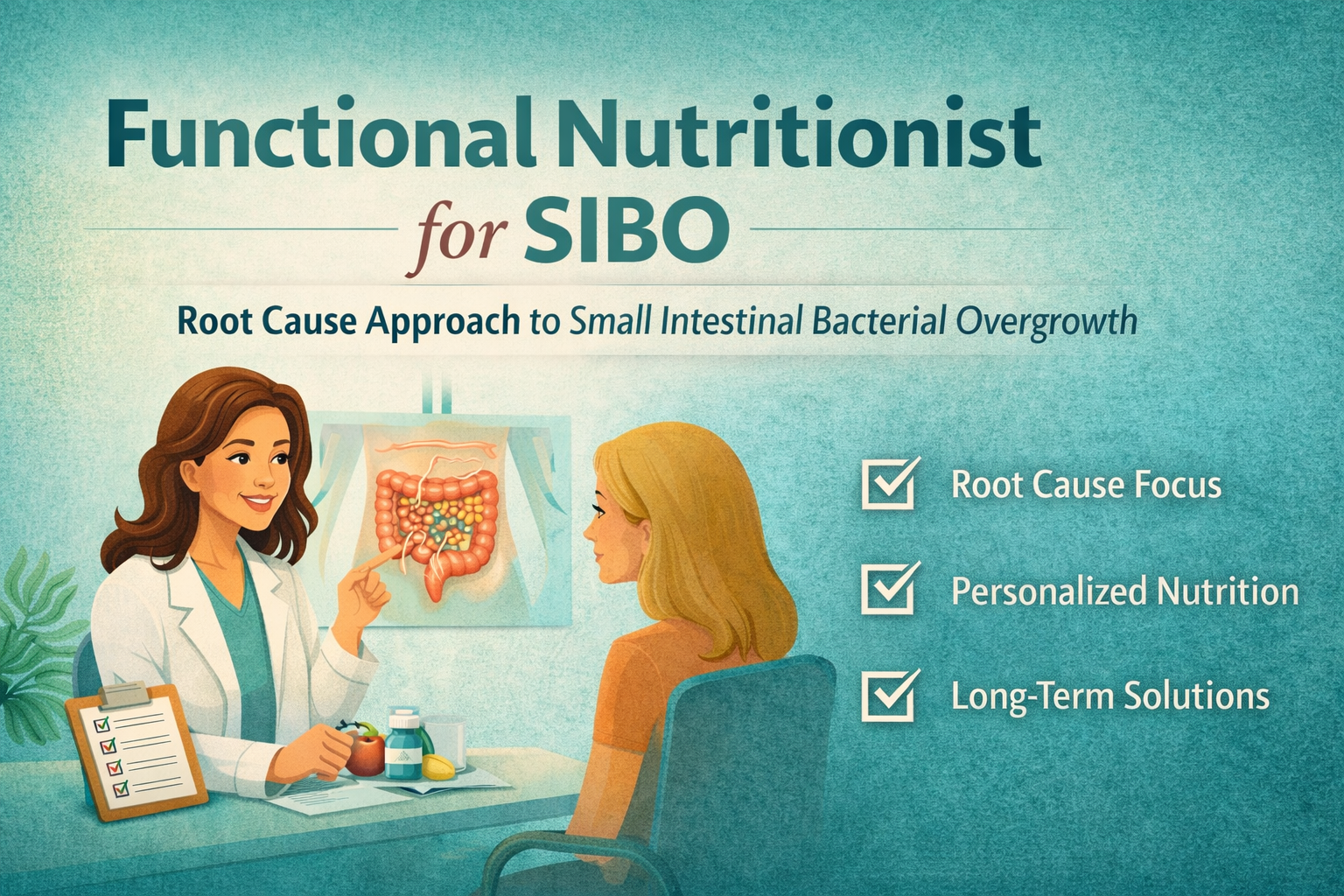
A functional nutritionist focuses on why SIBO developed and how to restore gut balance long term — not just reduce symptoms for a few weeks.
This article explains what a functional nutritionist does for SIBO, how their approach differs from standard nutrition care, and what real treatment can look like in practice.
What Is a Functional Nutritionist (In Practical Terms)
A functional nutritionist uses nutrition therapy to address root causes of health issues. With SIBO, they look beyond bacterial overgrowth and ask:
-
Why did bacteria accumulate in the small intestine?
-
What disrupted gut motility or digestion?
-
What is feeding the overgrowth?
-
What systems are not functioning properly (enzymes, stomach acid, bile, nervous system)?
Instead of giving a generic diet plan, they build a structured protocol that typically includes:
-
Symptom and history analysis
-
Diet strategy matched to SIBO type
-
Digestive support (enzymes, bile, acid if needed)
-
Gut motility support
-
Gradual microbiome repair
How a Functional Nutritionist Approaches SIBO Treatment
1. Root Cause Investigation
SIBO rarely appears randomly. Common triggers include:
-
Food poisoning that damaged gut nerves
-
Low stomach acid
-
Slow intestinal motility
-
Long-term stress
-
Chronic constipation
-
Previous abdominal surgery
-
Overuse of acid-suppressing medications
Example:
A patient with recurring SIBO after antibiotics may actually have slow gut motility. Without fixing movement in the small intestine, bacteria keep returning — no matter how many treatment rounds they try.
A functional nutritionist screens for these patterns before planning treatment.
2. Targeted Nutrition Strategy (Not Just “Low FODMAP Forever”)
Many people are told to stay on a low-FODMAP diet long term. That reduces symptoms but does not fix SIBO.
A functional nutritionist uses diet in phases:
Phase 1 — Symptom control
Reduce fermentable foods temporarily.
Phase 2 — Treatment support
Adjust carbohydrates to weaken bacterial overgrowth.
Phase 3 — Reintroduction and rebuilding
Gradually expand food diversity to restore gut resilience.
Example:
Someone reacting to onions, garlic, and lentils may avoid them initially. After treatment and gut repair, they reintroduce small portions without symptoms.
The goal is always food freedom — not permanent restriction.
3. Digestive Function Repair
Bacteria thrive when digestion is weak.
A functional nutritionist evaluates whether the body properly breaks down food. Common supports may include:
-
Digestive enzymes for protein and fat breakdown
-
Stomach acid support if levels are low
-
Bile support for fat digestion
-
Nutrient repletion (iron, B12, magnesium)
Example:
If protein digestion is incomplete, bacteria ferment leftovers. Supporting enzymes reduces fermentation and bloating even before antimicrobial treatment begins.
A functional nutritionist for SIBO uses nutrition strategically — not restrictively. Carbohydrates may be temporarily reduced to decrease fermentation, but the long-term objective is reintroduction and gut resilience. Permanent food elimination is not the goal; digestive recovery is.
4. Gut Motility Restoration (Critical for Prevention)
The small intestine has a cleansing wave called the Migrating Motor Complex (MMC). It sweeps bacteria out between meals.
If this system is slow, SIBO often returns.
Functional nutrition strategies may include:
-
Structured meal spacing (no constant snacking)
-
Motility-supporting supplements
-
Nervous system regulation
-
Constipation management
Example:
A client who snacks every 2 hours never activates the gut’s cleaning wave. Switching to 3 structured meals daily can reduce relapse risk significantly.
5. Long-Term Microbiome Repair
After reducing bacterial overgrowth, the gut needs rebuilding. This may involve:
-
Gradual fiber reintroduction
-
Prebiotic tolerance training
-
Select probiotic use (case-dependent)
-
Anti-inflammatory nutrition patterns
This stage is often skipped in standard care — which is why symptoms return.
Who Should Work With a Functional Nutritionist for SIBO
You may benefit if you:
-
Have recurring SIBO after antibiotics or herbs
-
React to many foods and can’t expand your diet
-
Experience bloating within 1–2 hours after eating
-
Have chronic constipation or irregular bowel patterns
-
Feel fatigued or nutrient deficient
-
Want prevention, not just symptom control
What a Real Treatment Plan Might Look Like
Here is a simplified example of a 12-week functional nutrition plan:
Weeks 1–2
-
Diet modification
-
Digestive enzyme support
-
Identify triggers
Weeks 3–6
-
Antimicrobial or medical therapy (if appropriate)
-
Motility support begins
-
Nutrient repletion
Weeks 7–10
-
Food reintroduction
-
Gut lining support
-
Fiber tolerance training
Weeks 11–12
-
Maintenance strategy
-
Relapse prevention plan
-
Diet expansion
Every plan differs — but structured progression is key.
Evidence-Based Principles Behind Functional Nutrition for SIBO
Functional nutrition for SIBO aligns with established research in:
-
Gastrointestinal motility disorders
-
Microbial fermentation and carbohydrate absorption
-
Nutrient malabsorption in bacterial overgrowth
-
Gut–brain axis regulation
-
Relapse prevention after antimicrobial therapy
Clinical studies consistently show recurrence rates are high when motility and underlying causes are not addressed.
How to Choose the Right Functional Nutritionist
Look for someone who:
-
Has formal nutrition or clinical training
-
Understands SIBO subtypes (hydrogen, methane, hydrogen sulfide)
-
Uses structured treatment phases
-
Focuses on prevention, not just elimination diets
-
Reviews medical history in detail
-
Communicates with healthcare providers when needed
Avoid practitioners who promise instant cures or permanent restrictive diets.
Key Takeaways
-
SIBO is usually a system problem, not just a bacterial problem.
-
A functional nutritionist focuses on root causes, digestion, and relapse prevention.
-
Diet alone is not treatment — it is one tool in a broader strategy.
-
Long-term success requires restoring motility, digestion, and microbial balance.
-
The goal is sustainable gut function and normal eating — not lifelong restriction.
If you are struggling with recurring symptoms or limited food tolerance, working with a functional nutritionist for SIBO can provide a structured, root-cause framework for recovery. By addressing digestion, motility, and microbiome balance together, this approach supports sustainable improvement instead of short-term relief.