


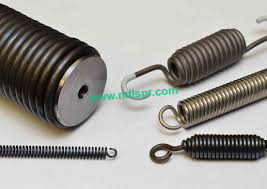
Custom Extension Spring Manufacturing: A Step-by-Step Process
Mechanical systems rely on extension springs for tension, return force, and energy storage. Each application demands specific load characteristics, dimensions, and durability. The manufacturing of a Custom Extension Spring involves multiple stages, each affecting final performance. Ndlspr, operating as a national high-tech enterprise with production bases in Zhejiang and Dongguan, follows IATF 16949 standards to produce precision springs for automotive, medical, and aerospace sectors. The question for engineers and procurement specialists is this: what exactly happens during Custom Extension Spring production, and how does the factory maintain consistency across thousands of units?
The manufacturing journey begins with raw material sourcing. High-carbon steel, alloy steel, or stainless steel wires arrive in coil form. Each material grade offers specific tensile strength, fatigue resistance, and corrosion protection. The receiving inspection verifies wire diameter tolerance, surface quality, and chemical composition. Advanced spring factories maintain strict acceptance criteria, rejecting material that fails to meet specification limits. The wire diameter range available at Ndlspr extends from 0.03mm to 6.0mm, accommodating diverse application requirements. Material traceability systems document each coil's origin and test results, enabling root cause analysis if issues emerge later in production.
The coiling operation transforms straight wire into helical form. CNC coiling machines feed wire through guide rollers, around a coiling point, and along a pitch tool. The machine controls wire speed, mandrel position, and tool angles to achieve the specified outer diameter, pitch, and total coils. Extension spring coiling requires particular attention to initial tension, which creates internal stress that resists opening forces. The setup process includes tooling selection, machine parameter programming, and trial runs. Operators adjust the coiling head position and wire feed rate based on spring design calculations. Precision grinding of coiling tools ensures consistent wire forming without surface damage.
The end configurations distinguish extension springs from other types. Hooks, loops, or specialized attachments are formed during or after coiling. Some machines integrate end-forming stations that bend the wire into the specified shape. Alternative approaches use separate bending equipment for more complex end designs. The hook geometry affects the spring's load distribution and mounting method. Improper hook formation creates stress concentrations that shorten service life. Quality monitoring includes checking hook position, angle, and material integrity. Fully automated systems may include cameras that inspect each hook against dimensional standards, removing defective parts before further processing.
Cold-coiled springs contain residual stresses from the forming process. Heat treatment relieves these stresses and sets the spring's elastic properties. The process typically includes stress relief annealing at controlled temperatures and durations. For certain applications, manufacturers perform hardening and tempering to increase strength and fatigue resistance. The heat treatment process affects the spring's load-deflection characteristics and dimensional stability over time. Temperature uniformity within the furnace is critical; uneven heating produces inconsistent mechanical properties across the batch. Ndlspr uses heat treatment equipment with digital temperature controls to maintain consistency.
Shot peening enhances fatigue resistance by introducing compressive residual stresses. Small steel balls impact the spring surface at controlled velocity, creating dimples that resist crack propagation. This process is especially beneficial for extension springs subject to cyclic loads. Peening intensity and coverage must match the application requirements. Insufficient peening offers limited improvement, while excessive peening may damage the spring surface. Automated shot peening systems use process controls to achieve repeatable results. Verification includes testing peening intensity through Almen strip measurement.
Many extension springs receive surface coatings to prevent corrosion. Zinc plating is common, but other finishes include phosphate coating, e-coating, or powder coating. Some applications require specialized coatings for high-temperature or chemical resistance. The coating process involves cleaning, plating, and baking steps. For electroplated springs, baking after plating prevents hydrogen embrittlement, a condition that can lead to sudden failure. The baking temperature and duration follow established standards for the specific material grade. Coating thickness and adhesion testing ensure the finish meets specifications.
Modern spring factories employ automated optical inspection systems. These systems use high-resolution cameras and image analysis software to measure dimensions and detect surface defects. AOI (Automated Optical Inspection) verifies critical parameters such as outer diameter, total length, hook position, and surface condition. The system compares each spring against the design tolerances, rejecting out-of-spec parts. Statistical process control charts track measurements over time, identifying trends that may indicate tool wear or machine drift. Ndlspr uses AOI and cleaning systems as part of its quality assurance infrastructure.
Every spring must demonstrate its mechanical properties before shipment. Testing equipment applies tension loads while measuring deflection and force. The load-deflection curve confirms that the spring meets specified spring rates and initial tension. Fatigue testing may be performed on sample springs from each batch, subjecting them to repeated cycles at operating loads. The testing protocol follows customer specifications or industry standards. Automatic testing stations can verify hundreds of springs per hour, documenting each one's performance data. The results provide evidence of batch consistency and process capability.
The final manufacturing stage involves cleaning, packaging, and documentation. Springs may receive anti-rust treatment before packaging. The packaging method should prevent tangling and surface damage during shipment. For precision components, individual packaging may be specified. Documentation includes test reports, material certificates, and dimension measurement records. Traceability marks allow identification of each batch's manufacturing history. The documentation package accompanies the shipment, providing quality assurance evidence to the customer.
Manufacturing consistency depends on ongoing monitoring and adjustment. Statistical process control (SPC) tracks machine performance, material properties, and finished spring measurements. Control charts reveal variations before they produce out-of-tolerance parts. Regular tool maintenance and calibration schedules prevent drift. The quality management system includes corrective action procedures that address any deviations. Ndlspr's IATF 16949 certification requires documentation of process controls, audit trails, and continuous improvement activities. The factory's experience across multiple industries enables process refinements that enhance consistency and reduce variation.
Each manufacturing stage contributes to the final spring's performance, and quality controls protect against variation. Understanding these steps helps buyers evaluate their supplier's capabilities and determine whether they match application requirements. A reliable Custom Extension Spring source must demonstrate technical expertise, rigorous inspection, and process consistency. https://www.ndlspr.com/ provides details about Ndlspr's manufacturing capability for extension springs. Does your current spring manufacturer follow these same quality standards and process controls?