


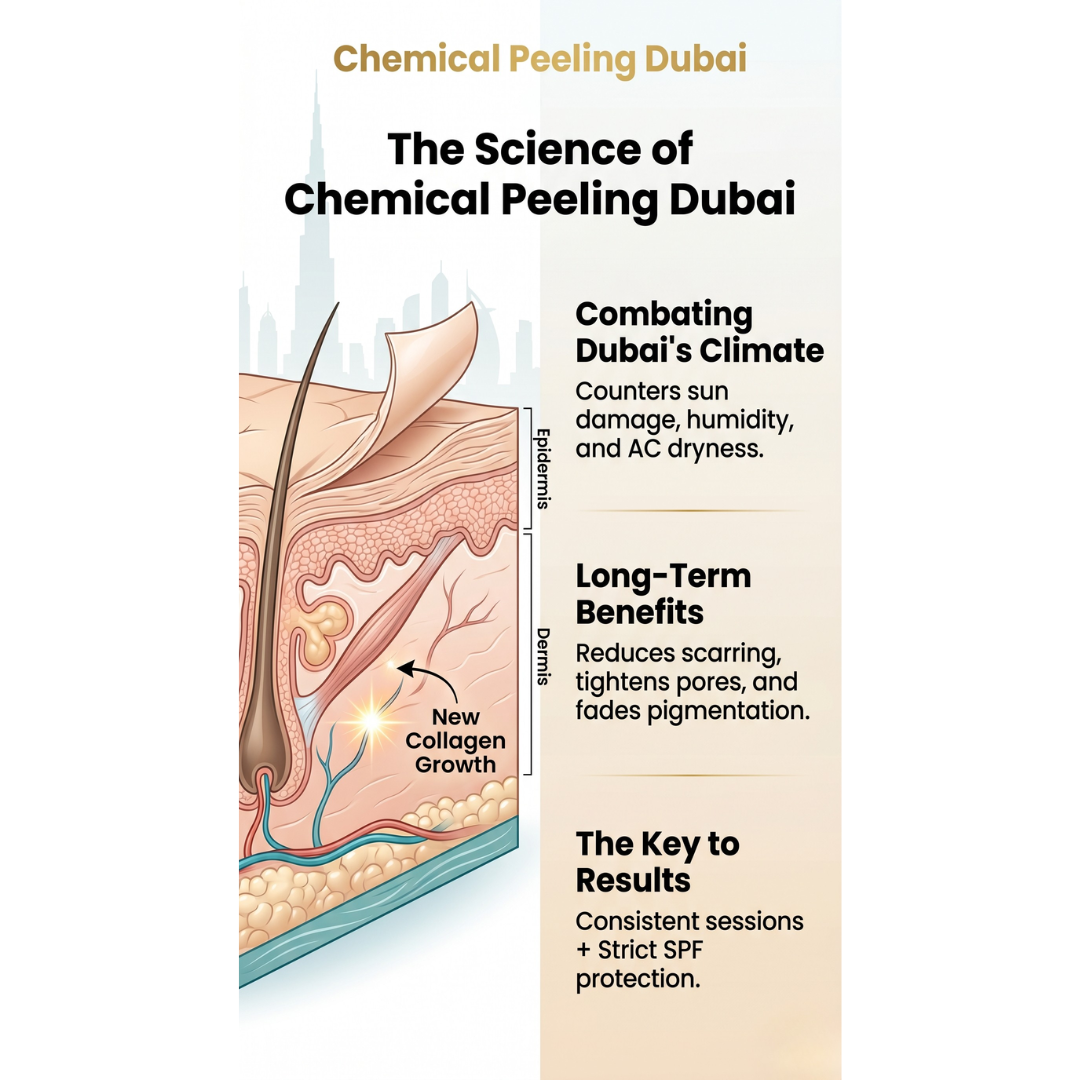
Chemical peeling works by removing damaged outer layers of skin through a controlled acid application, which pushes the skin to regenerate healthier cells underneath. The results are not just cosmetic. Over repeated sessions, the skin's texture, tone, and resilience actually improve at a structural level. That is what separates a proper peel from a surface-level treatment.
In a city like Dubai, where sun exposure, humidity, and pollution are daily constants, peeling treatments address problems that creams and facials simply cannot reach.
How Chemical Peels Actually Change the Skin Over Time
Most people think of a peel as something that makes skin look fresher for a few weeks. That is partly true, but the longer-term picture is more significant.
When an acid solution is applied to the skin, it triggers a controlled wound response. The body reads this as damage and begins producing new collagen, elastin, and fresh epidermal cells. This is not a cosmetic trick. It is a biological process that happens beneath the surface.
With consistent treatment over months, the skin builds more structural support, which means:
-
Fine lines become less prominent as collagen density improves
-
Hyperpigmentation fades as melanin-producing cells are disrupted and reset
-
Acne scarring softens because new skin forms at a more even depth
-
Pore size appears reduced as the surface texture tightens
The keyword here is consistency. A single session produces visible results. Multiple sessions spaced correctly produce lasting change.
Why Dubai's Climate Makes Peeling Treatments More Relevant
Dubai's environment puts skin through constant stress. UV exposure is year-round and intense. Air-conditioned environments pull moisture out of the skin indoors while outdoor heat and humidity create excess sebum production. Pollution particles from construction and traffic sit on the skin throughout the day.
This combination leads to a specific pattern of skin problems:
-
Uneven tone
-
Clogged pores
-
Sun-induced dark spots
-
Dullness
-
Early signs of aging that appear faster than they would in cooler climates
Chemical peeling Dubai clinics address these issues directly because peels are designed to clear accumulated skin damage rather than just manage symptoms.
For residents who are outdoors regularly or work in high-pressure professional settings, maintaining clear and healthy skin has both personal and practical importance.
Types of Peels and What Each One Does
Not every peel works the same way. Depth matters, and so does the right formulation for each skin type.
Superficial Peels
These use mild acids like glycolic or salicylic acid. They target only the outermost layer of skin. Good for mild pigmentation, oily skin, and general maintenance. Downtime is minimal and they work well as part of a regular skincare routine.
Medium Depth Peels
Usually trichloroacetic acid (TCA) based. These penetrate deeper and are effective for moderate sun damage, acne scarring, and more stubborn pigmentation. Some redness and peeling lasts a few days post-treatment.
Deep Peels
Phenol-based peels reach the deeper layers of the dermis. These are used for significant scarring, deep wrinkles, and advanced sun damage. They require more recovery time and are not suitable for all skin tones.
Skin tone matters significantly in Dubai's population, which is highly diverse. Darker skin tones require careful acid selection to avoid post-inflammatory hyperpigmentation. An experienced practitioner adjusts concentration and acid type based on this.
What Actually Determines Whether Results Last
Results from a chemical peel do not last simply because the treatment was done. They last when the right conditions are maintained afterward.
Sun Protection
Sun protection is non-negotiable. After a peel, skin is more sensitive to UV damage. In Dubai specifically, skipping SPF after treatment can reverse results quickly. Patients who wear broad-spectrum sunscreen daily maintain their results significantly longer.
Proper Session Intervals
The interval between sessions matters. Peeling too frequently does not give the skin time to complete its regeneration cycle. Most practitioners recommend sessions every four to six weeks for superficial peels and longer intervals for deeper ones.
Aftercare Products
Aftercare products support the healing process. Gentle hydration, avoiding active ingredients like retinol immediately post-peel, and keeping the skin barrier intact all contribute to better long-term outcomes.
Lifestyle Factors
Overall lifestyle factors play a role. Sleep, hydration, and reducing sugar intake all support the skin's ability to renew itself effectively.
Why Professional Clinic Selection Matters in Dubai
Dubai has a large number of aesthetic clinics, and the quality varies considerably. The effectiveness of chemical peeling Dubai residents experience depends heavily on clinical assessment before the treatment begins.
A good clinic assesses:
-
Skin type
-
Fitzpatrick scale classification
-
Active skin conditions
-
Current medications
Applying the wrong acid strength to a patient on retinoids or with active rosacea can cause more damage than good.
Regulatory standards in Dubai through the Dubai Health Authority (DHA) mean licensed clinics must meet specific qualifications, but doing a background check on the practitioner's experience with diverse skin types is still important.
Results are not just about the product used. They depend on who applies it and how.
Conclusion
Chemical peels produce lasting skin improvement because they trigger the body's own repair process rather than just masking problems. For people living in Dubai, where environmental conditions accelerate skin aging and damage, these treatments offer a practical and medically sound option.
Long-term results come from:
-
The right peel depth
-
Proper aftercare
-
Adequate recovery time between sessions
-
Consistent sun protection
None of this works in isolation. Skin improvement through peeling is a process, not a one-time fix.
FAQs
Q.1 Is chemical peeling safe for all skin types in Dubai?
Ans: Most skin types can be treated, but darker skin tones require specific acid types and concentrations to avoid irritation or pigmentation issues. A proper skin assessment before treatment is essential.
Q.2 How many sessions are typically needed to see results?
Ans: For superficial peels, visible improvement usually begins after three to four sessions. Deeper skin concerns like scarring or significant pigmentation may need six or more sessions over several months.
Q.3 Can you get a chemical peel during Dubai's summer months?
Ans: Yes, but sun protection afterward becomes even more critical. Many practitioners recommend adjusting peel strength during peak summer due to higher UV exposure.
Q.4 What is the recovery time after a medium-depth peel?
Ans: Most people experience redness, tightness, and peeling for three to seven days. Social downtime varies by person, but most resume normal activities within a week.
Q.5 How is chemical peeling different from laser skin treatments?
Ans: Peels use acid chemistry to remove and stimulate skin layers. Lasers use targeted light energy. Both address similar concerns, but peels are often more accessible in cost and suitable for a broader range of skin tones when selected correctly.