


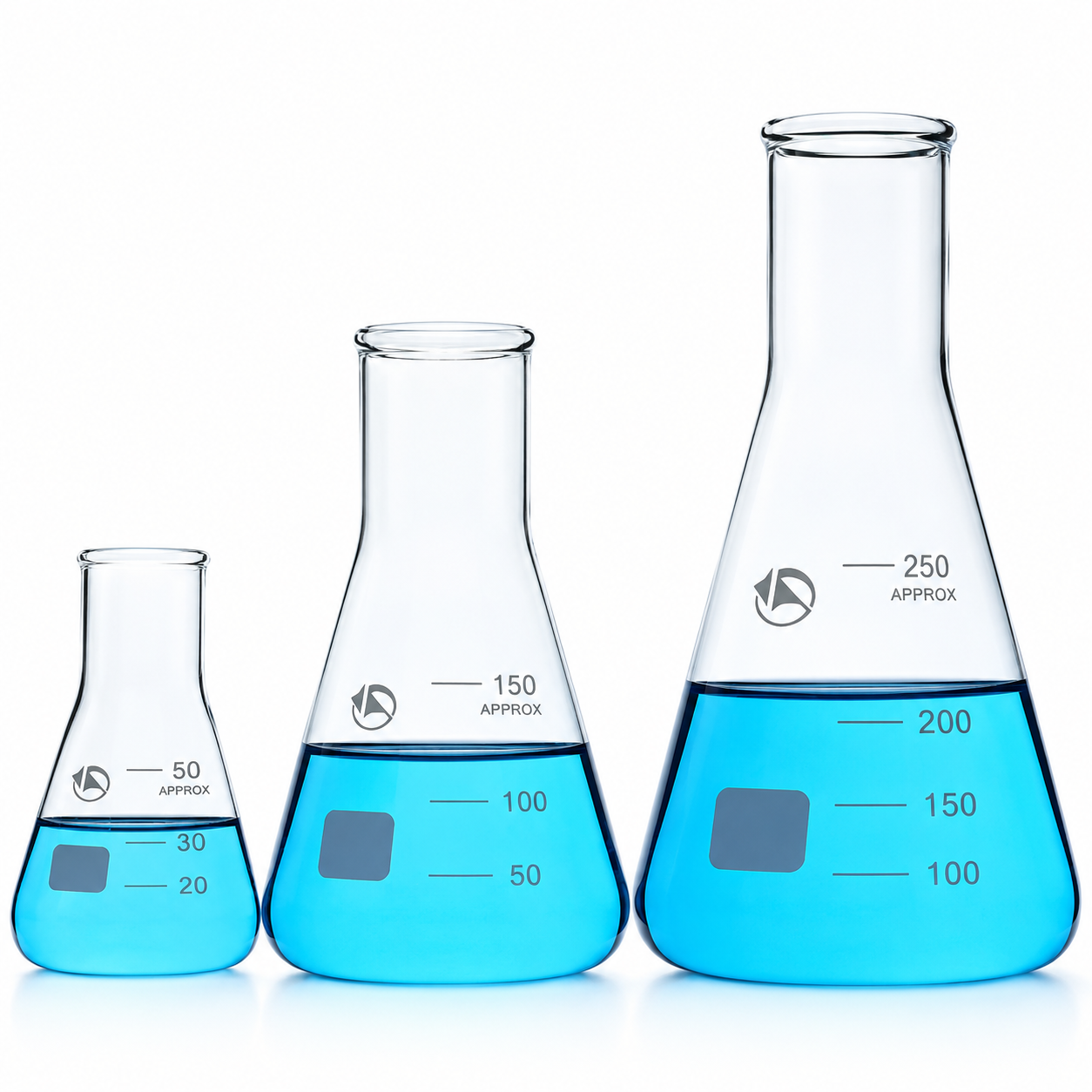
A triangular beaker is a type of laboratory glassware designed for mixing, heating, and storing chemical solutions in scientific experiments. It is commonly used in chemistry labs, research institutions, and educational environments. The shape of the beaker is slightly different from a standard cylindrical beaker, offering better grip, stability, and controlled pouring during experiments. Because of its practical design, it helps scientists handle liquids more safely and efficiently.
What is a Triangular Beaker?
A triangular beaker is a laboratory container made from heat-resistant glass or sometimes durable plastic, featuring a three-sided or slightly triangular body structure. It is mainly used for handling chemical solutions during experiments where precision and safety are required. The shape allows easy handling and reduces the chances of spilling liquids while transferring substances between containers.
Structure of Triangular Beaker
The structure of a triangular beaker is designed to improve stability and usability in laboratory settings. It usually consists of a wide base, slanted sides forming a triangular shape, and a pouring lip for easy transfer of liquids. The glass used is typically borosilicate, which is resistant to heat and chemical reactions. This strong structure ensures that it can withstand high temperatures and reactive chemicals during experiments.
Material Used in Triangular Beaker
Triangular beakers are mainly made from borosilicate glass due to its excellent thermal resistance and chemical durability. In some cases, plastic materials like polypropylene are also used for experiments that do not involve high heat. Borosilicate glass is preferred because it does not easily break under sudden temperature changes, making it safe for laboratory use. The material also ensures that there is no reaction between the container and the chemicals inside.
Working of Triangular Beaker
The triangular beaker works as a general-purpose container in laboratories for mixing, heating, and storing liquids. When chemicals are poured into the beaker, its shape allows easy swirling and mixing without spilling. It is often used with other lab equipment like glass rods, burners, and measuring instruments. The design helps maintain stability on flat surfaces, making it safer during heating and chemical reactions.
Uses of Triangular Beaker
A triangular beaker is widely used in chemistry and biology labs for various purposes. It is commonly used for preparing chemical solutions, mixing reagents, and heating liquids during experiments. It is also used in educational institutions for teaching students basic laboratory techniques. In research labs, it helps in conducting controlled experiments where safe handling of chemicals is required.
Advantages of Triangular Beaker
One of the main advantages of a triangular beaker is its improved stability compared to traditional beakers. The shape allows better grip and reduces the risk of slipping during handling. It also provides easier pouring of liquids without spillage. The heat-resistant material makes it suitable for high-temperature experiments. Additionally, it is reusable and durable, making it cost-effective for laboratories.
Limitations of Triangular Beaker
Despite its advantages, the triangular beaker also has some limitations. It may not be suitable for highly precise volume measurements because it does not provide exact calibration markings like measuring cylinders. It can also break if handled roughly or exposed to sudden mechanical shock. In some advanced experiments, more specialized containers may be required instead of a simple beaker.
Importance in Laboratory Work
The triangular beaker plays an important role in laboratory experiments by providing a safe and stable container for chemical handling. It helps scientists perform mixing and heating processes efficiently while reducing the risk of accidents. Its simple design makes it suitable for both beginners and professionals in laboratory environments. It is an essential part of basic laboratory equipment used in science education and research.
Difference Between Triangular and Normal Beaker
The triangular beaker differs from a normal cylindrical beaker mainly in shape and handling. While a normal beaker has straight cylindrical walls, the triangular beaker has angled sides that provide better grip and stability. The triangular design also helps in controlled pouring of liquids, reducing spillage. However, both types serve similar purposes in laboratory experiments.
Maintenance and Care of Triangular Beaker
Proper care of a triangular beaker is necessary to ensure long-lasting use. It should be cleaned immediately after use to avoid chemical residue buildup. It must be handled carefully to prevent cracks or breakage. When not in use, it should be stored in a safe place away from heavy objects. Regular inspection helps ensure that it remains in good condition for laboratory work.
Safety Measures While Using Triangular Beaker
Safety is very important when using a triangular beaker in a laboratory. It should always be used with proper protective equipment such as gloves and goggles. Hot liquids should be handled carefully to avoid burns or accidents. The beaker should never be placed on unstable surfaces during experiments. Following proper laboratory safety rules ensures safe and effective usage.
Applications in Education and Research
In educational institutions, triangular beakers are widely used for teaching students basic chemistry experiments. They help students understand mixing, heating, and chemical reactions in a controlled environment. In research laboratories, they are used for preparing solutions and conducting experimental procedures. Their simple design makes them suitable for both learning and professional scientific work.
Conclusion
The triangular beaker is a simple yet important piece of laboratory glassware used in science experiments. Its unique shape, durability, and ease of handling make it useful for mixing, heating, and storing chemical solutions. Although it has some limitations, its advantages make it a valuable tool in laboratories. It continues to play an important role in scientific education, research, and chemical analysis.