


Every time a business ships a product, it sends that item on a treacherous journey. Packages face a maze of conveyor belts, rough handling, stacking pressure, and bumpy delivery trucks. If a product breaks before it reaches the customer, the business loses money, time, and trust.
Relying entirely on a standard cardboard box to survive this journey is a risky game. To truly protect goods, businesses need smart internal solutions. This is where packaging inserts come in. These customized internal structures cradle your items, absorb impacts, and lock everything in place.
In this comprehensive guide, we will explore exactly how packaging inserts prevent product damage in transit. You will learn the mechanics behind shock absorption, the materials available, and the best practices for implementing these protective solutions in your own fulfillment process.
The High Cost of Product Damage During Transit
Before we look at how to stop transit damage, we must understand why it matters so much. When a product shatters, dents, or breaks during shipping, the negative impacts ripple across your entire business.
Investing in Custom Packaging With Inserts optimizes your entire shipping operation. Because the insert is created specifically for your product's dimensions, your warehouse team does not have to guess how much bubble wrap to use. They simply place the product into its designated slot, slide the insert into the box, and seal it.
Financial Losses
The most obvious cost of transit damage is financial. When a customer receives a broken item, you have to replace it. This means you pay for the manufacturing of a second item, the cost of the first item, return shipping for the broken product, and outbound shipping for the replacement. These hidden costs quickly eat into your profit margins.
Brand Reputation and Customer Loyalty
Customers expect perfection. When they open a box to find damaged goods, they feel disappointed and frustrated. First impressions matter immensely in ecommerce. A bad unboxing experience often leads to negative online reviews. Worse, that customer is highly unlikely to buy from your store again.

Environmental Waste
Damaged products often go straight into the trash. Furthermore, shipping a replacement doubles the carbon footprint of that single order. If your company values sustainability, preventing shipping damage is one of the most effective ways to reduce waste.
By using the right internal packaging, you can prevent these issues entirely.
What Are Packaging Inserts?
Packaging inserts are custom-shaped, supportive structures placed inside a shipping box. They are designed to hold a specific product, or set of products, securely in place.
Unlike standard void fill—such as packing peanuts, crumpled paper, or generic bubble wrap—inserts are engineered for an exact fit. Standard void fill tends to shift during transit. When a box vibrates in the back of a delivery truck, heavy items sink to the bottom. Once an item touches the rigid outer wall of the box, it loses its cushioning and becomes vulnerable to impact.
Inserts solve this problem by suspending the item in the center of the box, maintaining a safe buffer zone on all sides.
The Science: How Packaging Inserts Prevent Product Damage
Why do inserts work so effectively? It all comes down to physics. A well-designed insert protects products through three primary mechanisms: immobilization, shock absorption, and crush resistance.
1. Immobilization (Stopping the Shift)
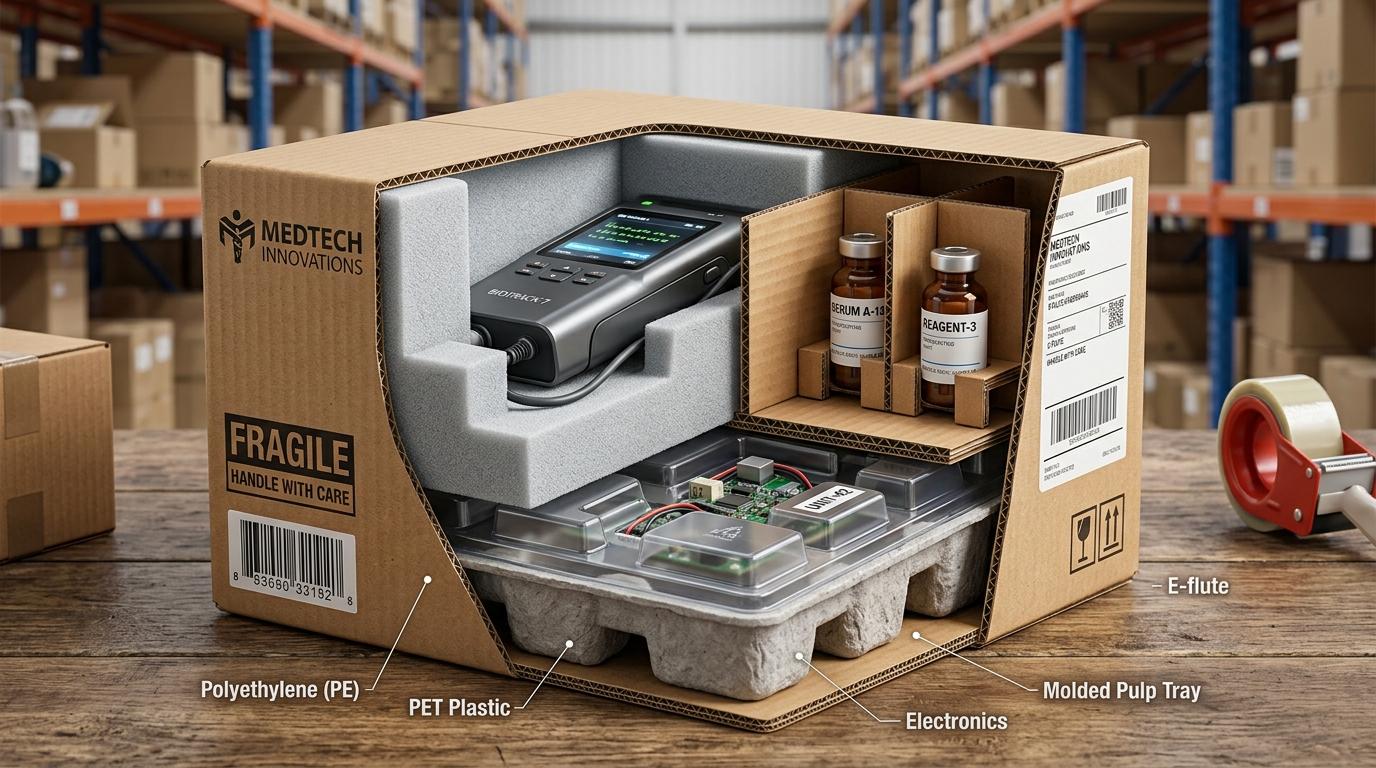
Movement is the leading cause of internal transit damage. If parts rattle around inside a box, they will scratch each other or crack upon impact. A precision-engineered insert contours exactly to the shape of your product. This completely immobilizes the item. No matter how many times the box is flipped upside down or tossed onto a sorting belt, the product inside stays perfectly still.
2. Shock and Vibration Absorption
When a box drops on the ground, kinetic energy transfers into the package. If the product is touching the side of the box, that energy goes directly into the item, causing it to break. Inserts act as a shock-absorbing buffer. They take the force of the drop and disperse it harmlessly throughout the insert material. Furthermore, inserts absorb the continuous, low-level vibrations of road transport, which can slowly loosen screws or weaken fragile joints over a long journey.
3. Crush Resistance
Delivery trucks maximize space by stacking boxes high. If your box ends up at the bottom of a heavy pallet, the outer cardboard might bow or collapse. Rigid packaging inserts add vital structural integrity to the inside of the box. By supporting the outer walls from within, inserts increase the overall stacking strength of the package, preventing compression damage.
Types of Packaging Inserts for Transit Protection
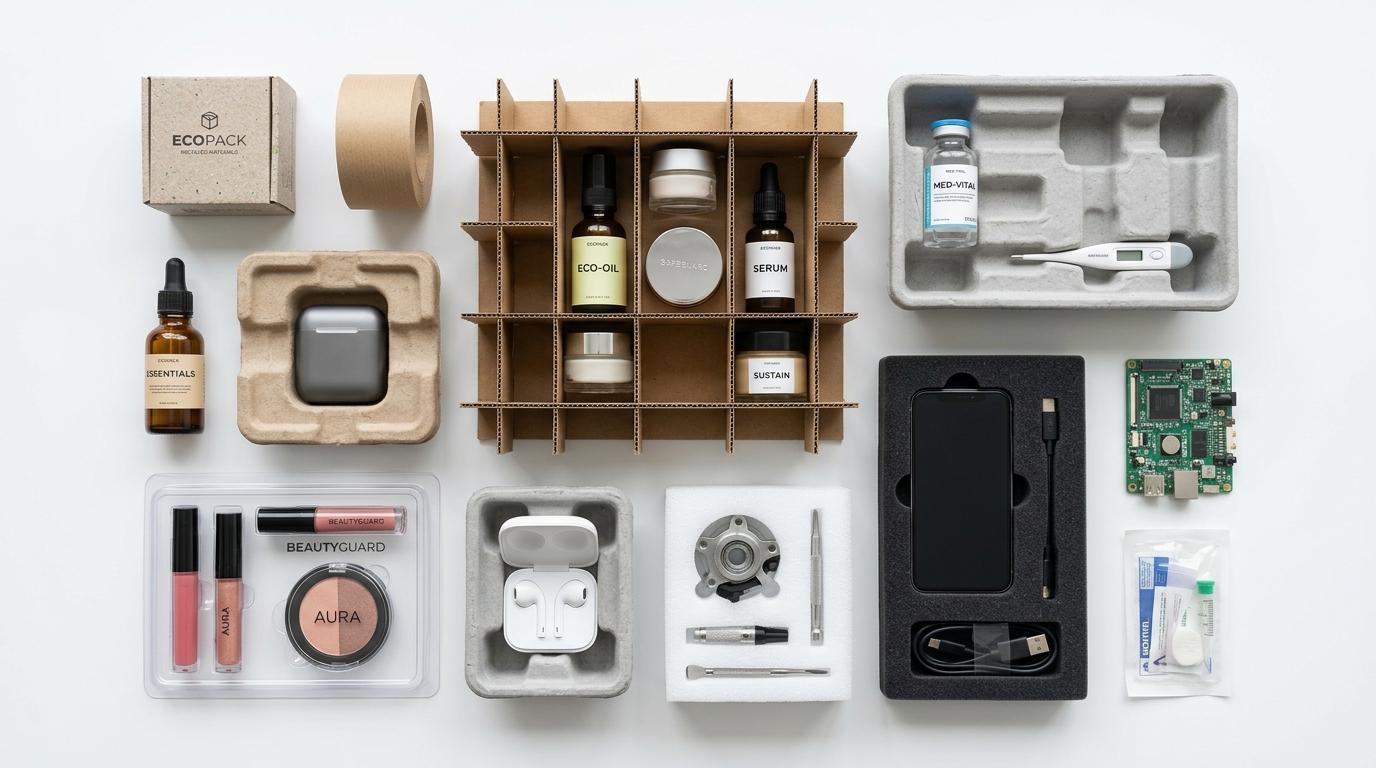
Not all products require the same level of protection. A heavy iron skillet needs a different insert than a delicate glass perfume bottle. Here is a breakdown of the most common packaging insert materials and how they perform.
| Insert Material | Key Characteristics | Best Used For |
| Corrugated Cardboard | Sturdy, highly recyclable, easy to score and fold into custom shapes, very cost-effective. | Heavy items, canned beverages, books, meal kits, and subscription boxes. |
| Molded Pulp | Made from recycled paper, eco-friendly, excellent at absorbing shocks and vibrations. | Wine bottles, electronics, egg cartons, cosmetics, and glass jars. |
| Polyurethane Foam | Soft, open-cell foam that easily compresses and bounces back. Very lightweight. | Highly delicate, lightweight items like jewelry, circuit boards, or glass ornaments. |
| Polyethylene Foam | Dense, rigid, closed-cell foam. Highly durable and absorbs heavy impacts without tearing. | Heavy machinery parts, power tools, automotive parts, and high-end electronics. |
| Molded Plastic (Blister) | Custom-molded plastic that locks items into place tightly. Often transparent. | Consumer electronics, pharmaceuticals, small toys, and health and beauty tools. |
Why Custom Solutions Outperform Standard Void Fill
Many businesses attempt to cut costs by buying standard, oversized boxes and stuffing them to the brim with loose materials. While this might appear cheaper on paper, it introduces significant risks and hidden costs.
Investing in Custom Packaging With Inserts optimizes your entire shipping operation. Because the insert is created specifically for your product's dimensions, your warehouse team does not have to guess how much bubble wrap to use. They simply place the product into its designated slot, slide the insert into the box, and seal it. This dramatically speeds up fulfillment times. More importantly, it ensures every single package leaves the warehouse with a uniform, tested level of protection, entirely removing human error from the packing process.
Enhancing the Brand Experience Beyond Safety
While safety is the primary goal of any packaging insert, its value does not stop there. The moment a customer opens your package is a critical touchpoint for your brand.
A well-designed insert presents the product beautifully, creating a premium retail experience right in the customer's living room. When you pair snug, protective inserts with Custom Printed Packaging, you transform a boring brown box into a powerful marketing tool. You can print instructions, brand stories, or personalized thank-you messages directly onto the cardboard inserts. This level of presentation shows the customer that you care deeply about your product quality and their overall experience.
Best Practices for Implementing Packaging Inserts
If you are ready to transition to engineered packaging inserts, follow these established best practices to ensure maximum protection.
Step 1: Assess Product Fragility
Understand exactly how fragile your product is. Engineers measure this using a "G-factor," which calculates how much shock an item can take before it breaks. A highly sensitive electronic device has a very low G-factor and requires thick, soft cushioning. A sturdy wooden toy has a high G-factor and might only need a simple cardboard insert to keep it from shifting.
Step 2: Identify the Weak Points
Look at your product and identify its most vulnerable areas. If you are shipping a mug, the handle is the weak point. If you are shipping a laptop, the screen and corners are the weak points. Design your insert so that it provides extra clearance and support around these specific zones.
Step 3: Balance Safety with Unboxing Ease
A package should keep a product safe, but it should not be impossible to open. If an insert grips a delicate item too tightly, the customer might accidentally break the product while struggling to pull it out. Always design finger cut-outs or easy-pull tabs into your inserts so the customer can remove the item effortlessly.
Step 4: Test Your Packaging
Never assume an insert will work perfectly on the first try. Run your prototype packaging through standardized drop tests and vibration tests. Drop the box on its corners, edges, and flat sides from various heights. This rigorous testing will reveal any design flaws before you start shipping to actual customers.
Step 5: Prioritize Sustainability
Modern consumers care deeply about the environment. Whenever possible, choose sustainable insert materials. Corrugated cardboard and molded pulp offer fantastic protection and are universally recyclable. If you must use foam for a very heavy or fragile item, look into newer biodegradable foam alternatives, or provide the customer with clear instructions on how to properly dispose of the material.
Real-World Applications by Industry
Different industries face unique shipping challenges. Let us look at how various sectors rely on inserts to prevent product damage.
The Electronics Industry
Laptops, tablets, and smartphones are incredibly sensitive to hard impacts and static electricity. Tech companies typically use specialized anti-static foam inserts. These specific inserts cushion the device from high drops while actively preventing the buildup of static charges that could easily fry delicate microchips during transit.
Glassware and Fragile Goods
Shipping wine bottles, perfumes, or glass homeware is notoriously difficult. A minor bump can result in shattered glass. Molded pulp inserts are a favorite in this industry. They are custom-molded to hug the curves of the bottles tightly, ensuring the glass never touches the hard outer walls of the shipping box.
Medical and Pharmaceutical Supply
In the medical field, a damaged product is not just an inconvenience; it is a serious health hazard. Glass vials containing medications or delicate surgical instruments must arrive fully intact and sterile. Rigid polyethylene foam and custom plastic trays are heavily utilized to lock medical supplies in place. This prevents sharp tools from piercing their sterile wraps and stops glass vials from colliding and cracking.
Conclusion
Packaging inserts are far more than just internal padding. They are highly engineered, structural solutions designed to protect your valuable products against the harsh realities of the shipping network. By stopping internal movement, absorbing heavy shocks, and adding vital crush resistance to your boxes, inserts drastically lower your damage rates.
Taking the time to invest in custom-fitted packaging inserts will save your business money on replacements, protect the environment from unnecessary waste, and guarantee that your customers receive a pristine, impressive product every single time they order.
Frequently Asked Questions (FAQs)
Are packaging inserts more expensive than bubble wrap?
Custom inserts do have a higher initial setup cost for design and tooling. However, they reduce warehouse packing time, use less overall material, and drastically cut down the high costs associated with replacing damaged products. For most businesses, inserts are far more cost-effective in the long run.
What is the most environmentally friendly packaging insert?
Corrugated cardboard and molded pulp are widely considered the most eco-friendly options. They are made from highly recycled materials, are completely biodegradable, and can be easily recycled by your customers in their standard curbside bins.
How do I choose the right foam for my product?
Your choice of foam depends on the weight and fragility of your item. Use soft polyurethane foam for lightweight, delicate items like jewelry or small electronics. Use dense, rigid polyethylene foam for heavy, rugged items like machinery parts or power tools that need heavy impact protection.
Do inserts increase my shipping costs?
Generally, no. Most insert materials, especially foams and molded pulp, are incredibly lightweight. In fact, because custom inserts hold products so efficiently, they often allow you to use a smaller outer box. This can actually reduce your dimensional weight shipping costs.