


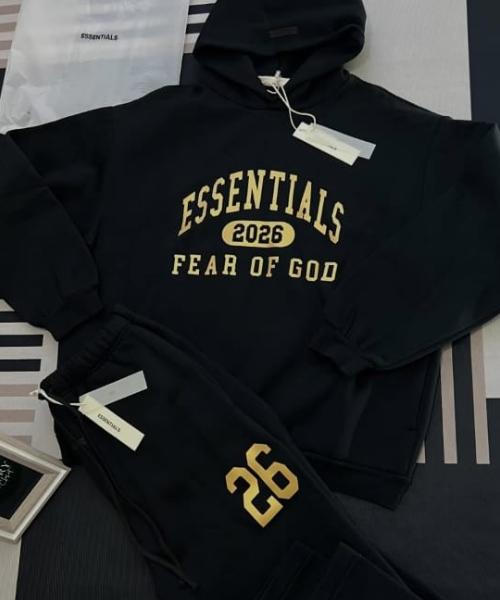
Black hoodies are supposed to be the reliable choice. The one everyone reaches for because it goes with everything and requires no thought. In most markets, across most brands, black is the fastest-selling colourway because it's the lowest-commitment decision available. You don't have to think about whether black works. It just does.
The Essentials hoodie oatmeal consistently outsells black on drop day. Not always by dramatic margins, not in every single drop — but reliably enough that people who follow stock levels and sell-out timing notice the pattern and find themselves trying to explain it. Because on paper it shouldn't happen. Oatmeal is a more specific choice than black. More limited in what it works with, or so the conventional thinking goes. More dependent on the rest of the outfit being right.
Except that conventional thinking is wrong. And understanding why it's wrong tells you something genuinely interesting about how the Essentials hoodie sits in wardrobes and what people are actually looking for when they buy one.
What Oatmeal Actually Is on This Hoodie
Worth being specific about the colour before explaining why it behaves the way it does in the market. Oatmeal on the essentials hoodie is not a straightforward off-white or a simple cream. It's a pigment-dyed neutral that sits somewhere between warm grey and pale bone — with a slight warmth to it that makes it read differently from cool whites and differently from yellow-toned creams.
The pigment dyeing process means the colour isn't perfectly uniform across the fabric surface. There's slight variation in depth — slightly more saturated in some areas, slightly lighter in others — that gives the hoodie a lived-in quality from new. Not worn-out looking. Just not flat. That variation is part of what makes oatmeal on this specific hoodie different from a similar shade on a cheaper, conventionally dyed garment.
In different lighting the oatmeal reads differently. Warm indoor light pulls the yellow tones out slightly. Cool daylight sits the shade closer to a pale grey. That responsiveness to light is actually part of its appeal — the colour behaves in a way that's interesting rather than just sitting there flatly doing one thing. Black doesn't do this. Black is always black. Oatmeal keeps shifting slightly, which keeps it more visually engaging across different contexts than a stable neutral would be.
The Wardrobe Versatility Argument — and Why Oatmeal Wins It
The assumption that black is more versatile than oatmeal deserves a direct challenge because it's the assumption most people carry into the purchase decision and it doesn't hold up well under examination. Black works with a lot of things. But it actively clashes with some things — specifically other dark or saturated pieces where the contrast creates a visual tension that doesn't sit comfortably. Black on dark navy. Black on dark brown. Black on rich charcoal. These combinations require more thought than people credit them with. Some fans prefer wearing stussy hoodie and Essential Hoodies together to create trendy casual looks.
Oatmeal doesn't clash with much. It sits alongside dark pieces without fighting them because its warmth creates a natural separation rather than a colour clash. It sits alongside other neutrals easily because it doesn't compete for dominance. It works with coloured pieces because a warm neutral doesn't create the same contrast pressure that a dark one does. The wardrobe versatility of oatmeal is actually broader than black in more situations than people expect — it's just that the versatility is quieter and less immediately obvious.
People who've owned both an Essentials hoodie in black and one in oatmeal for extended periods frequently report reaching for the oatmeal more consistently. Not because black is bad — it isn't — but because oatmeal creates fewer outfit problems across a wider range of contexts. Less deliberate thought required. More situations where it just works without asking anything of the rest of the outfit. That's what real versatility looks like in practice, as opposed to what versatility looks like in theory when you're making the purchase decision.
The Photography Effect — This Is More Real Than It Sounds
A significant portion of Essentials hoodie purchasing decisions happen after people see the piece on someone else — in real life, on social media, in editorial content. And oatmeal photographs fundamentally differently from black in the specific contexts where Essentials content tends to appear.
Light-coloured pieces in natural light photography pick up the warmth and texture of the environment around them. An oatmeal hoodie outdoors in soft light shows the fabric's texture, the slight variation in the pigment dye, the weight of the construction. It looks rich without looking heavy. Black in the same lighting conditions absorbs the light rather than reflecting it — which can make pieces look flat or undefined in casual photography rather than deliberate.
On social media specifically, where most product discovery happens for this demographic, oatmeal simply appears better than black in the kinds of images that generate desire. Not in studio photography where lighting is controlled. In real-world content — someone wearing it walking somewhere, sitting in a cafe, layered under a coat on a street — where the natural light is doing the work and the piece needs to hold its own without production support. Oatmeal does this better. Black requires more controlled conditions to show well. That difference in how the two colours behave in the wild has a direct effect on demand at retail.
Perceived Scarcity Does Something Specific Here
There's a psychological element to the oatmeal sell-out pattern that's worth being honest about. Once a colourway develops a reputation for selling out fast, the anticipation of that sell-out accelerates buying behaviour in subsequent drops. People who missed oatmeal once remember it. They're quicker to buy on the next drop. The historical scarcity creates urgency that wouldn't otherwise exist at the same level.
Black doesn't have this reputation in the Essentials ecosystem. It's available, it sells well, but it doesn't carry the same "this'll be gone first" expectation. Which means buyers approach the two colourways with different urgency levels — oatmeal gets purchased quickly because people know it goes quickly. Black gets considered for longer because people know it'll probably still be there.
This self-reinforcing cycle — oatmeal sells fast, builds reputation, creates urgency, sells faster next time — is real and it's not unique to Essentials. But it's particularly visible here because the gap between oatmeal and black sell-out times is consistent enough across enough drops that the pattern is well-documented in the communities that follow this stuff. The perceived scarcity is real scarcity because the buying behaviour it generates actually produces the scarcity it assumes.
Who Is Buying Oatmeal and Why
The oatmeal buyer for the Essentials hoodie is broadly someone who's thought about the purchase more than the black buyer has. That's not a compliment to one group over the other — it's just an observation about the decision-making process. Black is the instinctive choice. Oatmeal is the considered one. People who end up at oatmeal typically got there by thinking about what they actually wear, what their wardrobe actually contains, and which colourway genuinely works better across those specific contexts.
Women buying Essentials hoodies tend toward oatmeal at a higher rate than men — not universally, but enough to be a noticeable pattern. The shade works particularly well with the neutral-toned wardrobe pieces that feature prominently in women's casual dressing — cream, tan, beige, warm grey bottoms that would create a tonal clash with black but sit naturally alongside oatmeal. That specific wardrobe compatibility with a common set of wardrobe pieces drives higher female demand for the colourway.
Repeat buyers also skew toward oatmeal. People buying their second or third Essentials hoodie have already worked out their sizing and their preferred stockist — they've done the easy decisions. The colourway choice becomes the interesting one. And the more experience someone has with the hoodie across different wearing contexts, the more likely they are to identify oatmeal as the colourway that earns the most wear. Black is usually the first choice. Oatmeal is usually the favourite.
What the Sell-Out Pattern Actually Tells You
Markets are generally pretty efficient at surfacing genuine preference when the products involved have a real community around them. The consistent oatmeal sell-out isn't a quirk or an accident of stock allocation. It's the Essentials buying community expressing a preference that has held up across multiple drops and multiple seasons — that oatmeal, despite being the more specific and seemingly more limited choice, is actually the more desirable one for a significant proportion of buyers who think carefully about what they're buying.
That's useful information if you're undecided. The sell-out speed isn't marketing. It isn't manufactured scarcity. It's a large group of people who know this product well making the same decision repeatedly. When a community with genuine knowledge of a product consistently chooses the same thing, that choice is worth taking seriously rather than second-guessing in favour of the conventional wisdom that black is always safer.
Black is not a bad choice. It's a perfectly good hoodie in a perfectly good colourway. But if you're reading an article about why oatmeal sells out faster, you're probably already past the point of defaulting to black. You're already thinking about it. That instinct is probably right — and the sell-out data is the community's way of telling you that a lot of other people who thought the same way ended up reaching for oatmeal more than anything else they owned.
Frequently asked questions
Why does the Essentials hoodie oatmeal sell out faster than black?
Several things working together — broader practical wardrobe versatility than people expect going in, better performance in natural light photography which drives social media discovery, a self-reinforcing sell-out reputation that creates urgency in subsequent drops, and a higher proportion of considered buyers who've worked out through experience that oatmeal earns more wear than black across their actual wardrobes.
Is oatmeal more versatile than black in the Essentials hoodie?
In practice, yes — though it doesn't feel that way before you've owned both. Black clashes with certain combinations in ways oatmeal doesn't. Oatmeal sits alongside dark pieces, other neutrals, and coloured pieces with less visual tension than black creates in equivalent situations. The versatility is quieter and less immediately obvious but broader across real wardrobe use.
Should I buy oatmeal or black for my first Essentials hoodie?
Oatmeal, if you're undecided. Not because black is wrong — it isn't — but because the community preference expressed consistently across drops suggests oatmeal earns more regular wear in most wardrobes. If your wardrobe is specifically dark-toned and you're committed to that aesthetic, black makes more sense. For most wardrobes with any neutral mix, oatmeal works harder.
Does oatmeal show dirt and marks more than black?
Yes — that's the honest trade-off. A light neutral shows marks that black would hide, particularly around the cuffs and front panel where daily contact is highest. The pigment-dyed surface also shows wear slightly differently from black over time. Most oatmeal owners find the versatility and the look worth the additional care required, but it's a real consideration rather than something to dismiss.
How do I make sure I get oatmeal before it sells out?
Treat it as the priority rather than the safe fallback. Set drop notifications across multiple authorised stockists, know your size before the drop goes live, and move on oatmeal first rather than checking black and then coming back to it. The people who miss oatmeal are almost always the ones who assumed it would still be there after they'd had a look at the other options.
Does oatmeal hold its resale value better than black?
Generally yes, particularly in the immediate post-drop window when oatmeal has sold out and black hasn't. The scarcity premium on oatmeal on secondary platforms typically exceeds the equivalent black premium because the demand-to-availability ratio is higher. Over longer timeframes both colours find a similar resale floor, but oatmeal commands stronger premiums in the weeks immediately following a drop.
Why do women tend to choose oatmeal over black in Essentials hoodies?
The shade works particularly well alongside the neutral-toned wardrobe pieces that feature prominently in women's casual dressing — cream, tan, warm grey, beige — where black would create tonal clash. Women buyers also tend to approach the colourway decision more deliberately than impulse-buying black, and deliberate consideration of what actually works in an existing wardrobe consistently points toward oatmeal for most neutral-toned wardrobes.