


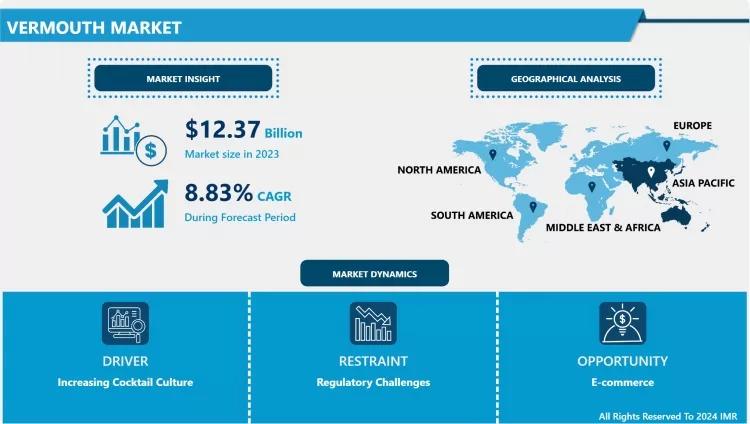
According to a new report published by Introspective Market Research, the Global Vermouth Market by Type, Distribution Channel, and Application, valued at USD 12.37 Billion in 2023, is projected to reach USD 26.49 Billion by 2032, growing at a CAGR of 8.83% from 2024 to 2032. This robust growth is fueled by a global cocktail culture revival, rising consumer interest in premium and artisanal spirits, and the versatile appeal of vermouth as both a cocktail staple and a sophisticated aperitif.
Vermouth is a fortified and aromatized wine, traditionally infused with a proprietary blend of botanicals such as wormwood, herbs, spices, and roots. This centuries-old beverage offers a complex flavor profile that bridges the worlds of wine and spirits. Its primary advantage lies in its versatility; it serves as an essential modifier in classic cocktails like the Martini and Negroni, while also being enjoyed neat, on the rocks, or as a low-alcohol aperitif. This dual role, coupled with a heritage of craftsmanship, positions vermouth uniquely in the modern beverage landscape, appealing to both cocktail enthusiasts and discerning drinkers seeking nuanced flavors.
A Key Growth Driver: The Global Craft Cocktail Revival and Mixology Culture
A primary engine propelling the vermouth market is the explosive global renaissance of craft cocktail culture. As consumers move beyond basic spirits, there is a growing appreciation for the history, craftsmanship, and complex flavors of classic cocktails. Vermouth is the critical backbone of iconic drinks like the Martini, Manhattan, and Negroni, whose popularity has soared. This trend has educated consumers about vermouth's role, moving it from a dusty back-bar item to a celebrated ingredient. Bartenders, acting as influencers, are driving demand by showcasing premium vermouths and creating new cocktails that highlight their botanical complexity, directly increasing both on-trade consumption and retail sales for home experimentation.
A Key Market Opportunity: Premiumization and the Rise of the "Vermouth as a Spirit" Category
A significant market opportunity lies in repositioning vermouth from a mixer to a premium, sip-worthy spirit in its own right. Inspired by the success of craft gin and amaro, producers are creating high-end, small-batch vermouths with artisanal stories, unique terroir, and complex botanical blends. This includes innovations like barrel-aged vermouths, limited editions, and expressions with local or exotic botanicals. By marketing these products for neat sipping or as a sophisticated low-ABV aperitif, companies can capture higher margins, attract wine and spirits connoisseurs, and expand consumption occasions beyond the cocktail hour, tapping into the broader trend of "drinking better, not more."
The Vermouth Market is segmented on the basis of Type, Distribution Channel, and Application.
Type
The Type segment is further classified into Dry and Sweet. Among these, the Sweet Vermouth sub-segment accounted for the highest market share in 2023. Sweet (or Rosso) vermouth's dominance is largely due to its foundational role in several of the world's most popular cocktails, such as the Negroni and the Manhattan. Its richer, more approachable flavor profile, with notes of caramel, vanilla, and baking spices, also makes it a favored choice for newcomers and for drinking on its own in European aperitif culture. Iconic Italian brands like Martini & Rossi and Cinzano have built mass global awareness for this style, cementing its leading market position.
Distribution Channel
The Distribution Channel segment is further classified into On-Trade and Off-Trade. Among these, the On-Trade sub-segment accounted for the highest market share in 2023. Bars, restaurants, and hotels are the primary discovery channel for vermouth, where skilled bartenders introduce consumers to classic and new cocktails. The experiential nature of on-trade consumption, coupled with higher pour costs, drives significant value. However, the Off-Trade segment, particularly Online Retail, is projected to exhibit a high CAGR, as educated consumers, inspired by their bar experiences, seek to purchase bottles for home use, with e-commerce offering access to a wide range of craft and imported brands.
Some of The Leading/Active Market Players Are:
· Bacardi Limited (Bermuda) - (Martini & Rossi)
· Gruppo Campari (Italy)
· Cinzano (Italy) - Part of the Campari Group
· Dolin (France)
· Noilly Prat (France)
· Gancia (Italy)
· Cocchi (Italy)
· Lustau (Spain)
· Carpano (Italy)
· Mancino Vermouth (Italy)
· Regal Rogue (Australia)
· Imbue (USA)
· Atsby Vermouth (USA)
· Quady Winery (Vya Vermouth) (USA)
· Sutton Cellars (USA)
and other active players.
Key Industry Developments
News 1: Strategic Acquisition to Strengthen Portfolio and Distribution
In October 2024, Gruppo Campari finalized the acquisition of a leading premium craft vermouth producer in the United States. The move aims to capture the growing demand for artisanal, American-made vermouth and leverage Campari's global distribution network.
This acquisition highlights how large spirit conglomerates are strategically investing in the premium vermouth segment to diversify their portfolios, tap into craft credibility, and capitalize on the trend toward more authentic and locally-inspired products within the category.
News 2: Launch of a Ready-to-Drink (RTD) Vermouth Cocktail Line
In May 2024, a historic European vermouth house launched its first line of premium, canned Ready-to-Drink cocktails, featuring its signature vermouth as the star ingredient in classic serves like the Negroni and Americano.
This innovation addresses the convenience trend without sacrificing quality, attracting consumers seeking authentic cocktail experiences at home or on-the-go. It represents a strategic move to expand brand reach and consumption occasions beyond the traditional bottle format.
Key Findings of the Study
· The Sweet Vermouth type and the On-Trade distribution channel dominate global market revenue.
· Europe is the largest and most mature market, while North America and Asia-Pacific are the fastest-growing regions, driven by cocktail culture adoption.
· Key growth is fueled by the global craft cocktail revival, premiumization trends, and rising consumer interest in low-ABV aperitifs.
· Major trends include the proliferation of craft/artisanal producers and the expansion into Ready-to-Drink (RTD) formats.
· The market features established European heritage brands competing with innovative New World craft producers.