


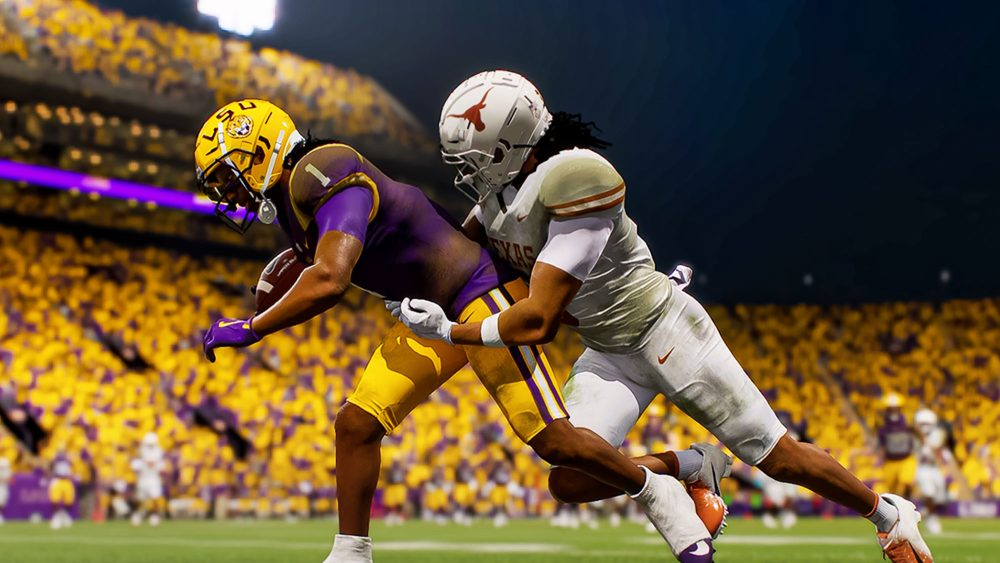
The biggest reason players throw interceptions is simple: they decide where they're throwing the ball before the snap. Even if a receiver looks open initially, defenses change after the ball is snapped. If you lock onto one route, you're setting yourself up to CUT 26 Coins throw into coverage.
Instead of predetermining a receiver, you need to predetermine areas of the field. Every passing play attacks specific zones at specific times, and understanding that timing is crucial.
Take a mesh concept as an example. With shallow drag routes crossing the middle, your first read should always be the short middle of the field. Those routes develop quickly-often within the first second or two after the snap. Deeper routes, like in-routes or posts, take longer to break open. If you stare at them too early, you're wasting time and ignoring easier, safer completions underneath.
A clean passing sequence looks like this:
Read the short area first
If it's open, take it immediately
If not, smoothly work your eyes deeper as routes develop
When you follow this progression, interceptions naturally drop because you're throwing on time instead of forcing late passes.
Read Space, Not Receivers
Another common mistake is focusing too much on individual routes rather than the space they're attacking. Strong passers don't think, "I'm throwing to the tight end." They think, "I'm throwing to the right flat," or "I'm attacking the short seam."
This mindset helps you react faster when defenses do something unexpected. If a route looks covered or "weird," don't force it. Move your eyes immediately. Lingering on a bad look is how interceptions happen.
Good reads feel decisive. If you don't like what you see within a moment, get off it and move on to the next progression.
Use Shotgun Formations for Safer Passing
Formation choice plays a massive role in limiting interceptions. In College Football 26, shotgun formations are far superior for passing compared to under-center sets.
From shotgun, you gain:
More time to read the field
Better protection against blitzes
Stronger halfback pickup on pressure
Access to better route combinations and RPOs
Under-center passing relies heavily on play action, which simply isn't as effective in the game as it is in real football. Shotgun gives you cleaner reads, faster decisions, and better spacing-everything you need to protect the football.
If passing is a core part of your offense, shotgun should be your default.
Learn to Throw the Ball Away
One of the simplest but most overlooked mechanics is throwing the ball away. When a play breaks down and nothing is open, forcing a pass is the worst possible option.
Clicking the right stick lets you safely throw the ball away and live to fight another day. This isn't a failure-it's smart football. You can also roll out slightly to avoid pressure before throwing it away if needed.
There are even situations where going down intentionally with your quarterback is the right move, especially when protecting the ball or managing the clock. These small decisions save possessions and prevent momentum-shifting turnovers.
Optimize Your Passing Settings
Your settings matter more than most players realize. Using Placement & Accuracy passing gives you the most control and consistency, regardless of skill level. Reticle speed should be set to something manageable-around 7 is a strong balance for buy College Football 26 Coins precision without overcorrection.