


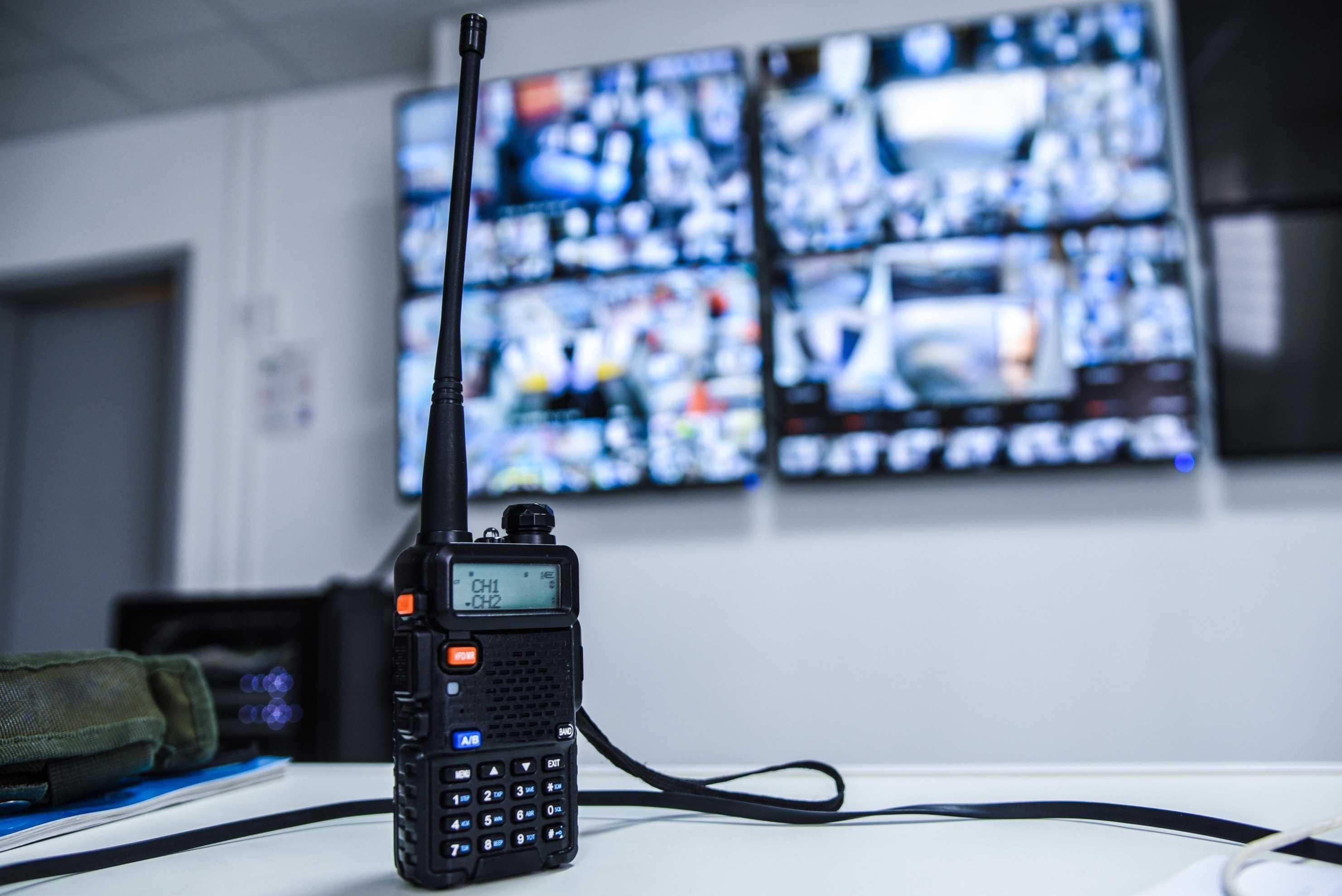
In the age of 5G networks, fiber-optic cables, and satellite internet that allows you to stream movies at 35,000 feet, the cockpit of a modern airliner remains surprisingly analog. When a pilot needs to talk to air traffic control (ATC), they don’t send a text or make a VoIP call. They push a button and speak over radio waves, using technology that has been the industry standard since the mid-20th century.
It might seem counterintuitive that a $200 million aircraft, packed with the most advanced avionics on the planet, relies on radio frequencies to maintain safety. Yet, Very High Frequency (VHF) radio remains the undisputed king of aviation communication. It is the invisible thread that connects the sky to the ground, facilitating everything from routine weather updates to life-saving emergency instructions.
Modern digital communication is often one-to-one (like a phone call). Vhf in aviation operates on a "one-to-many" broadcast model. When a controller presses their push-to-talk button, everyone tuned to that frequency hears the message.
This creates a "party line" effect that is vital for situational awareness. If you are a pilot taxiing to the runway, and you hear the controller clear another plane for takeoff, you know—without being told—not to cross that runway. If a pilot ahead of you reports severe turbulence, you get the warning instantly. This shared mental model of the airspace prevents collisions and allows pilots to self-separate even before ATC intervenes.
Why has this specific band of the radio spectrum held onto its crown for so long? The answer lies in a perfect storm of physics, reliability, and global standardization. This article explores the technical and operational reasons why aviation clings to VHF, the limitations of the system, and the robust engineering required to keep these vital channels open.
The Sweet Spot of the Radio Spectrum
To understand why aviation uses VHF, you have to look at the behavior of radio waves. The radio spectrum is vast, ranging from low-frequency waves that can hug the curvature of the earth to high-frequency microwaves used for radar and data.
Civil aviation communication operates in the "Airband," specifically between 118.000 and 136.975 MHz. This range sits in the VHF band, and it was chosen not by accident, but because it occupies a "sweet spot" for communicating with objects flying high above the ground.
Line-of-Sight Propagation
The defining characteristic of VHF waves is that they travel primarily in straight lines. This is known as "line-of-sight" propagation. Unlike High Frequency (HF) waves, which can bounce off the ionosphere and travel around the globe, VHF waves do not bend over the horizon.
At first glance, this sounds like a limitation. If a plane flies too low behind a mountain, the signal is lost. However, in aviation, this is actually a massive advantage. Because aircraft fly at high altitudes (often 30,000 to 40,000 feet), their "line of sight" extends for hundreds of miles. A plane over Ohio can easily talk to a tower in Chicago.
More importantly, the lack of "bouncing" means the signal stops at the horizon. This allows frequency reuse. A controller in London can use frequency 124.5 MHz to talk to planes, while a controller in Rome uses the exact same frequency without the two conversations interfering with each other. This efficiency is critical in a world running out of available radio spectrum.
Clarity and Static Resistance
Lower frequency bands are notoriously noisy. They are susceptible to static from thunderstorms, solar flares, and electrical interference. VHF, by contrast, is relatively quiet. It provides clear, crisp voice transmission, which is non-negotiable when a pilot is receiving complex vectoring instructions or landing clearances. The last thing a pilot needs during a storm is a radio filled with the crackle of lightning static.
Immediate, Universal Access
Beyond the physics, the operational benefits of VHF radio make it irreplaceable for safety-critical communication.
Simplicity and Redundancy
VHF radios are mechanically simple compared to digital data links or satellite systems. They don't require a login process, a handshake protocol, or a server connection. You simply tune the dial and talk.
This simplicity translates to reliability. In an emergency, such as a total electrical failure, standby VHF radios can run off a small battery for hours. There is no software to crash and no network to go down. As long as the radio has power and an antenna, it works. This "fail-safe" nature is why regulators are hesitant to replace voice radio with digital text entirely.
The Limitations of VHF
While VHF is the standard, it is not perfect. Its greatest strength—line-of-sight propagation—is also its greatest weakness.
The Horizon Problem
Once an aircraft flies over the ocean or across a vast, unpopulated expanse like the poles, it eventually drops below the horizon relative to the ground station. At this point, VHF communication is severed.
For decades, this meant oceanic flights had to switch to High Frequency (HF) radio, which is long-range but notoriously static-filled and unreliable. Today, this gap is largely filled by satellite communication (SATCOM) and digital data links (CPDLC), but VHF remains useless in these remote areas.
Frequency Congestion
The VHF band is finite. As air traffic grows, finding empty frequencies for new sectors or airports becomes increasingly difficult. In busy airspace like Europe or the US Northeast, the spectrum is saturated. This has led to the introduction of "8.33 kHz channel spacing," a technical change that splits the existing channels into narrower slivers to squeeze more frequencies into the same bandwidth.
Engineering for Reliability: The Ground Game
We often focus on the radios in the cockpit, but the system is only as good as the infrastructure on the ground. For a controller's voice to reach a pilot 200 miles away, a complex network of transmitters, receivers, and antennas must function perfectly, 24/7.
This infrastructure faces significant challenges, particularly in harsh environments where temperature extremes and weather can degrade electronic performance.
Resilience in Extreme Climates
Consider the engineering challenges in the Middle East. The approach to airport engineering Qatar has implemented demonstrates the level of sophistication required to maintain VHF reliability in hostile conditions. In this region, aviation infrastructure faces a "triple threat": searing heat that can melt standard cabling, high humidity that promotes corrosion, and fine, conductive dust that penetrates equipment enclosures.
To ensure that the VHF signal remains clear and constant, engineers use specialized hardening techniques:
- Climate-Controlled Nodes: Remote transmitter sites are not just metal boxes; they are active, climate-controlled shelters that keep sensitive radio equipment at optimal operating temperatures.
- Corrosion-Resistant Arrays: Antenna masts are treated with advanced coatings to resist the abrasive sand and saline humidity found in coastal desert environments.
- Redundant Power and Data: The voice signal travels over redundant fiber-optic loops. If a cable is cut on one side of the airport, the signal instantly reroutes. Uninterruptible Power Supplies (UPS) ensure that even a grid failure doesn't silence the control tower.
This level of robust engineering ensures that the simple act of pushing a button results in a clear transmission, regardless of the chaos of the environment outside.
The Future: Will VHF Be Replaced?
With the rise of digital technology, is the end of VHF near? Unlikely. While digital data links (like Controller-Pilot Data Link Communications, or CPDLC) are taking over routine tasks like frequency changes and clearance delivery, voice remains superior for urgent situations.
Human speech conveys more than just data; it conveys tone, urgency, and emotion. A controller can hear the stress in a pilot's voice and offer immediate help. A pilot can shout "Break, break!" to interrupt a conversation in an emergency. Text messages cannot replicate this immediacy.
Furthermore, the cost of retrofitting the global fleet of aircraft with a new primary communication system would be astronomical. Instead, aviation is moving toward a hybrid model: using digital text for routine logistical messages to declutter the airwaves, while keeping VHF voice as the primary, unshakeable safety net for tactical control.
Conclusion
Aviation communication uses VHF radio not because the industry is stuck in the past, but because the technology is uniquely suited to the physics of flight. It offers a blend of clarity, line-of-sight efficiency, and "party line" situational awareness that no other system can match.
While it has limitations over oceans and is facing congestion issues, robust ground engineering and the integration of digital supplements are keeping the system viable. For the foreseeable future, the crackle of a VHF radio will remain the soundtrack of flight safety, a testament to the idea that sometimes, the simplest technology is the best tool for the job.
Key Takeaways
- Physics of Safety: VHF's line-of-sight propagation prevents interference and allows for efficient frequency reuse across the globe.
- Shared Awareness: The "party line" nature of broadcast radio allows all pilots to hear instructions, building a shared mental map of the airspace.
- Operational Simplicity: The reliability and ease of use of VHF radios make them the ultimate fail-safe during emergencies.
- Engineering Matters: Reliable communication depends on hardened ground infrastructure capable of withstanding extreme environmental challenges.