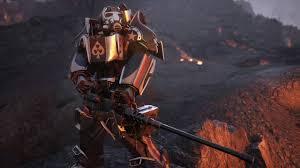
In a genre dominated by competitive shooters and toxic chat, Fallout 76 has cultivated something rare: a genuinely kind community. It is a peculiar phenomenon in a game set in a post-nuclear wasteland, a world ostensibly built on scarcity and survival of the fittest. Yet, the social fabric of Appalachia is woven from acts of spontaneous generosity, silent cooperation, and a shared understanding that the real enemy is not other players, but the Scorched, the robots, and the game's own quirky instability.
This culture of kindness is baked into the game's design. The absence of proximity voice chat by default removes the immediate potential for verbal abuse. The inability to easily grief another player's C.A.M.P. or steal their loot creates a safe space. And the sheer scale of the map encourages a "live and let live" philosophy. From these design choices, a community has emerged that actively looks out for one another.
The most common expression of this goodwill is the low-level care package. It is a rite of passage for every new player emerging from Vault 76. Within the first hour of exploration, a high-level player in gleaming Power Armor will often appear, silently approach, and drop a paper bag on the ground. Inside, a new player might find purified water, stimpaks, radaway, and sometimes, a fully modified weapon that will carry them for the next ten levels. No words are exchanged. The high-level player simply waves, fires a jetpack into the sky, and disappears. This silent tradition, passed down through the community, establishes a social contract: we were all noobs once, and we help each other.
This spirit of cooperation reaches its peak during public events. When the alarms sound for "Scorched Earth" or "A Colossal Problem," players from across the server converge not as competitors, but as a unified militia. There is no kill-stealing in Fallout 76; everyone who contributes gets a share of the loot. High-level players will tank the boss, drawing its fire while wearing their heaviest Power Armor, allowing lower-level players to plink away from a safe distance. When someone goes down, a dozen stimpaks are suddenly flying in their direction. It is a beautiful, chaotic display of teamwork where the only goal is mutual survival.
The social dynamic extends beyond combat into the simple pleasures of everyday life in the wasteland. Players regularly build their C.A.M.P.s not as fortresses, but as public amenities. A camp placed near a popular farming spot might feature free water purifiers, a row of corn and mutfruit for anyone to harvest, and a fully-stocked vendor selling ammunition at one cap per round. Others build elaborate structures purely for entertainment, like underground fighting pits, obstacle courses, or museums dedicated to Mothman. Stumbling upon one of these creations is a highlight of any play session, a reminder that there is a person behind the screen who wanted to add something positive to the world.
This generosity creates a feedback loop. A player who was given a care package at level 5 is far more likely to drop supplies for a newbie when they reach level 50. The community polices itself through positivity, and toxicity is rare. When a griefer does appear, they are often ignored into irrelevance, their attempts to disrupt met with indifference rather than engagement.
In the end, the community is the true endgame of buy Fallout 76 Items. The quests eventually run dry, the legendary grind becomes repetitive, but the people remain. Logging into a server feels like visiting a familiar town, where you might run into the neighbor with the crazy camp, or the regular who always brings a Nuka-Cola to every event. It is a wasteland, yes, but it is also home.