ACCL portal day 48 task story post @ Badaruddin Chai wala The Journey of Dinosaurs: A Scientific Perspective
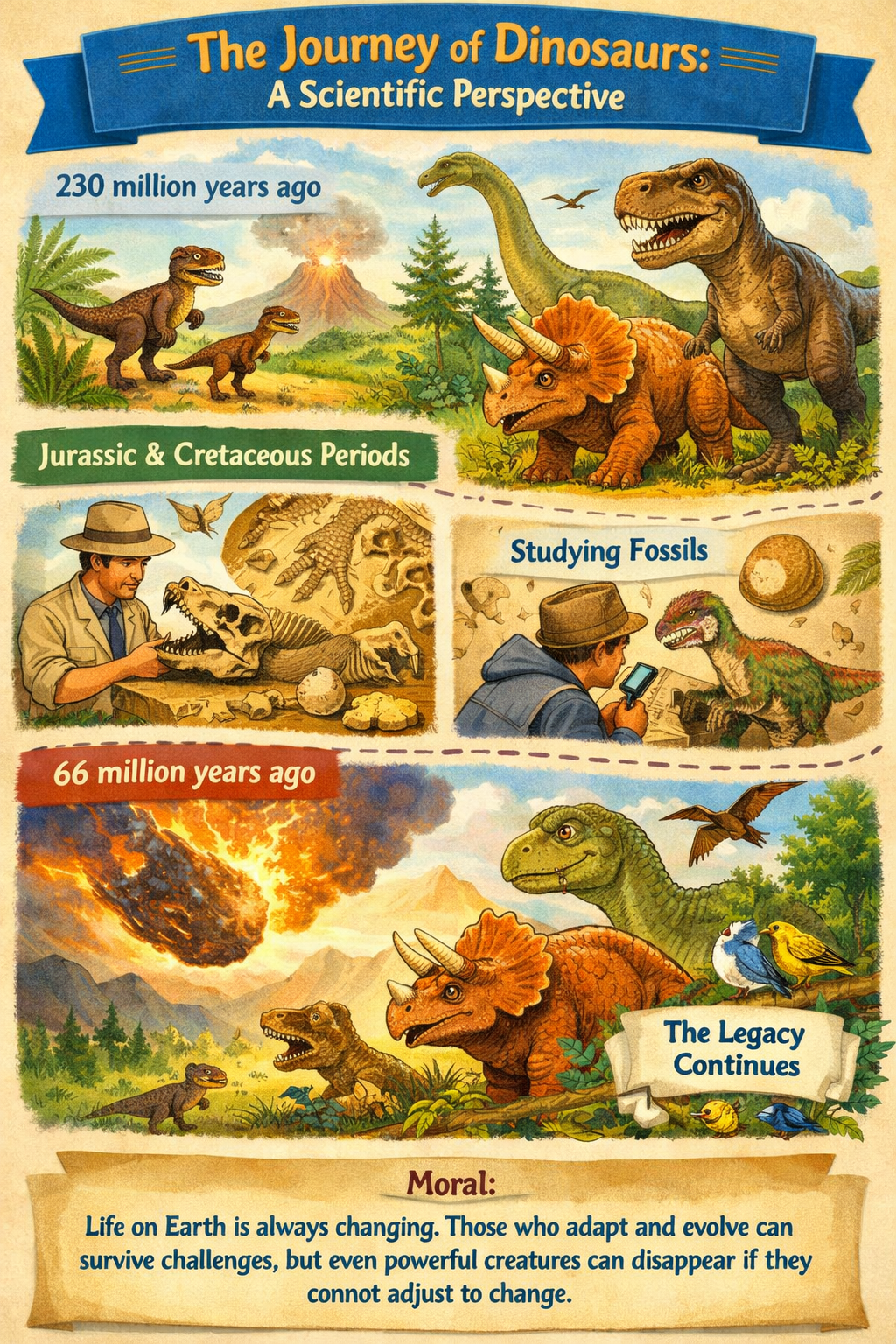
Dinosaurs first appeared about 230 million years ago during the Late Triassic period. They lived on Earth for over 160 million years, spreading across different continents as the land slowly shifted due to plate tectonics. Early dinosaurs were generally small and walked on two legs, but over time they evolved into many different shapes and sizes, from tiny bird-like species to enormous plant-eaters.
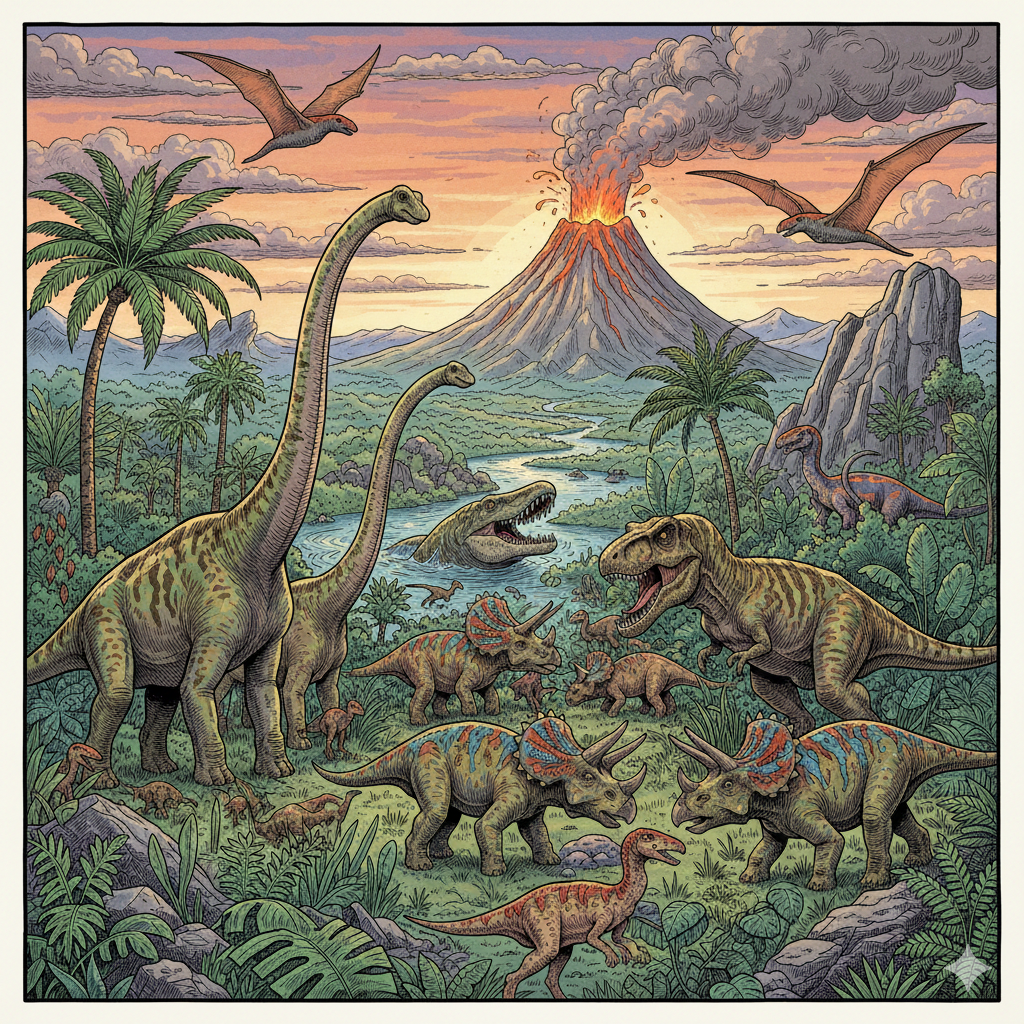
During the Jurassic and Cretaceous periods, dinosaurs became the dominant land animals. Some, like Tyrannosaurus rex, were powerful meat-eaters with sharp teeth and strong legs, while others, such as Triceratops, were plant-eaters with protective horns and frills. Giant long-necked dinosaurs like Brachiosaurus could reach tall trees for food. Their great variety shows how life can adapt and change over time.
Scientists study fossils—such as bones, footprints, and eggs—to understand how dinosaurs lived and behaved. Research has shown that many dinosaurs likely had feathers and that modern birds are their closest living descendants. Each new discovery helps us learn more about Earth’s ancient past and the process of evolution.
About 66 million years ago, a massive asteroid impact and major environmental changes led to the extinction of most dinosaurs. However, their story did not truly end, as birds continue their legacy today. The journey of dinosaurs teaches us about survival, change, and the history of life on Earth.
Moral:
Life on Earth is always changing. Those who adapt and evolve can survive challenges, but even powerful creatures can disappear if they cannot adjust to change.
Dinosaurs first appeared about 230 million years ago during the Late Triassic period. They lived on Earth for over 160 million years, spreading across different continents as the land slowly shifted due to plate tectonics. Early dinosaurs were generally small and walked on two legs, but over time they evolved into many different shapes and sizes, from tiny bird-like species to enormous plant-eaters.
During the Jurassic and Cretaceous periods, dinosaurs became the dominant land animals. Some, like Tyrannosaurus rex, were powerful meat-eaters with sharp teeth and strong legs, while others, such as Triceratops, were plant-eaters with protective horns and frills. Giant long-necked dinosaurs like Brachiosaurus could reach tall trees for food. Their great variety shows how life can adapt and change over time.
Scientists study fossils—such as bones, footprints, and eggs—to understand how dinosaurs lived and behaved. Research has shown that many dinosaurs likely had feathers and that modern birds are their closest living descendants. Each new discovery helps us learn more about Earth’s ancient past and the process of evolution.
About 66 million years ago, a massive asteroid impact and major environmental changes led to the extinction of most dinosaurs. However, their story did not truly end, as birds continue their legacy today. The journey of dinosaurs teaches us about survival, change, and the history of life on Earth.
Moral:
Life on Earth is always changing. Those who adapt and evolve can survive challenges, but even powerful creatures can disappear if they cannot adjust to change.
🦖ACCL portal day 48 task story post @ Badaruddin Chai wala The Journey of Dinosaurs: A Scientific Perspective
Dinosaurs first appeared about 230 million years ago during the Late Triassic period. They lived on Earth for over 160 million years, spreading across different continents as the land slowly shifted due to plate tectonics. Early dinosaurs were generally small and walked on two legs, but over time they evolved into many different shapes and sizes, from tiny bird-like species to enormous plant-eaters.
During the Jurassic and Cretaceous periods, dinosaurs became the dominant land animals. Some, like Tyrannosaurus rex, were powerful meat-eaters with sharp teeth and strong legs, while others, such as Triceratops, were plant-eaters with protective horns and frills. Giant long-necked dinosaurs like Brachiosaurus could reach tall trees for food. Their great variety shows how life can adapt and change over time.
Scientists study fossils—such as bones, footprints, and eggs—to understand how dinosaurs lived and behaved. Research has shown that many dinosaurs likely had feathers and that modern birds are their closest living descendants. Each new discovery helps us learn more about Earth’s ancient past and the process of evolution.
About 66 million years ago, a massive asteroid impact and major environmental changes led to the extinction of most dinosaurs. However, their story did not truly end, as birds continue their legacy today. The journey of dinosaurs teaches us about survival, change, and the history of life on Earth.
🌟 Moral:
Life on Earth is always changing. Those who adapt and evolve can survive challenges, but even powerful creatures can disappear if they cannot adjust to change.
0 Comentários
0 Compartilhamentos
27 Visualizações