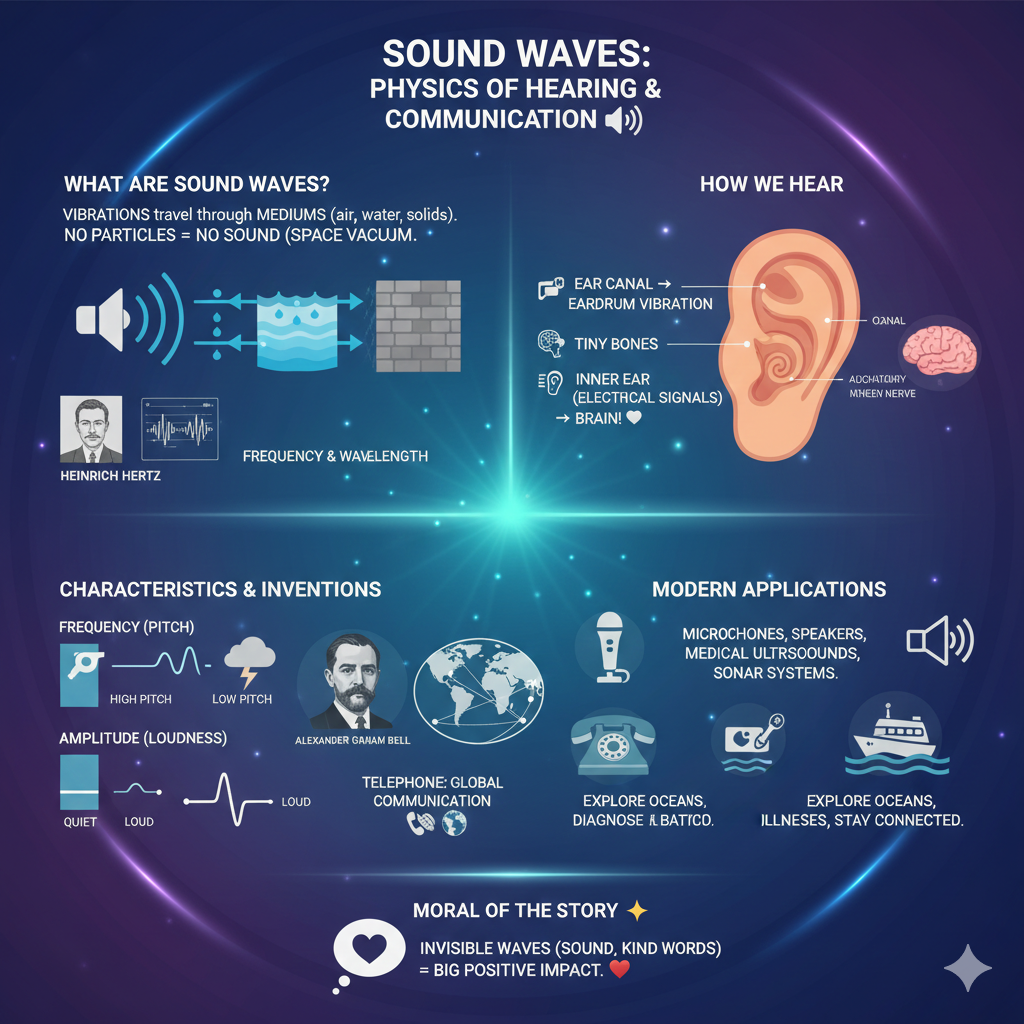
• ACCL PORTAL DAY 174 TASK STORY POST Badaruddin Chai wala Sound Waves: The Physics of Hearing and Communication

    Sound waves are vibrations that travel through a medium like air, water, or even solid objects. When an object vibrates, it pushes nearby particles, creating waves of energy that move outward. These waves cannot travel in space because there are no particles to carry them. Scientists like Heinrich Hertz helped us understand how waves behave, including their frequency and wavelength.

    Our ears are amazing organs that detect these sound waves. When sound enters the ear, it travels through the ear canal and makes the eardrum vibrate. These vibrations move through tiny bones and reach the inner ear, where they are converted into electrical signals for the brain to understand. Thanks to this process, we can enjoy music, hear warnings, and communicate with others.

    Sound waves have different frequencies and amplitudes. Frequency determines pitch (how high or low a sound is), while amplitude affects loudness. For example, a whistle has a high frequency, while thunder has a low frequency. Understanding sound has led to inventions like the telephone by Alexander Graham Bell, which changed global communication forever.

    Today, sound technology is used in microphones, speakers, medical ultrasounds, and even sonar systems. It helps us explore oceans, diagnose illnesses, and stay connected across the world. The physics of sound reminds us how invisible waves can have powerful effects on our daily lives.

    Moral of the Story

    Even things we cannot see, like sound waves, can make a big difference—just like kind words and clear communication can positively impact others.
    ACCL PORTAL DAY 174 TASK STORY POST Badaruddin Chai wala Sound Waves: The Physics of Hearing and Communication 🔊🌍 Sound waves are vibrations that travel through a medium like air, water, or even solid objects. When an object vibrates, it pushes nearby particles, creating waves of energy that move outward. These waves cannot travel in space because there are no particles to carry them. Scientists like Heinrich Hertz helped us understand how waves behave, including their frequency and wavelength. 📡✨ Our ears are amazing organs that detect these sound waves. When sound enters the ear, it travels through the ear canal and makes the eardrum vibrate. These vibrations move through tiny bones and reach the inner ear, where they are converted into electrical signals for the brain to understand. Thanks to this process, we can enjoy music, hear warnings, and communicate with others. 🎶👂🧠 Sound waves have different frequencies and amplitudes. Frequency determines pitch (how high or low a sound is), while amplitude affects loudness. For example, a whistle has a high frequency, while thunder has a low frequency. Understanding sound has led to inventions like the telephone by Alexander Graham Bell, which changed global communication forever. ☎️🌎 Today, sound technology is used in microphones, speakers, medical ultrasounds, and even sonar systems. It helps us explore oceans, diagnose illnesses, and stay connected across the world. The physics of sound reminds us how invisible waves can have powerful effects on our daily lives. 🌊🔬📢 Moral of the Story 🌟 Even things we cannot see, like sound waves, can make a big difference—just like kind words and clear communication can positively impact others. 💬❤️
    0 Комментарии 0 Поделились 965 Просмотры
  • ACCL PORTAL DAY 167 TASK STORY POST @Badaruddin Chai wala Climate and Culture: How Geography Shapes Our Way of Life

    Climate and geography play a powerful role in shaping the way people live around the world. From freezing polar regions to hot deserts and tropical rainforests, the environment influences homes, clothing, food, and daily routines. For example, people living in cold places build insulated houses and wear thick clothing to stay warm . In contrast, those in hot climates prefer light clothes and homes designed to stay cool . Geography directly affects how communities adapt and survive.

    Food and agriculture are also deeply connected to climate. In fertile river valleys like the Nile River Valley, farming has supported civilizations for thousands of years . Meanwhile, in mountainous regions such as the Himalayas, people grow crops suited to high altitudes and raise animals like yaks . Coastal communities rely heavily on fishing and seafood . The natural resources available in each region shape traditional diets and occupations.

    Culture, traditions, and festivals are influenced by seasonal changes as well. In countries like India, many festivals celebrate the harvest and monsoon season . In colder countries such as Canada, winter sports and seasonal celebrations are an important part of life . Climate even affects art, music, and architecture, reflecting the beauty and challenges of each environment .

    Overall, geography and climate shape not only how we live but also who we are as communities . They influence our habits, beliefs, and ways of solving problems. Understanding this connection helps us respect different cultures and appreciate the diversity of our world .

    Moral:

    Climate and geography shape our lifestyles, so we must respect nature and appreciate cultural diversity around the world.
    ACCL PORTAL DAY 167 TASK STORY POST @Badaruddin Chai wala 🌍 Climate and Culture: How Geography Shapes Our Way of Life 🌦️ Climate and geography play a powerful role in shaping the way people live around the world. From freezing polar regions to hot deserts and tropical rainforests, the environment influences homes, clothing, food, and daily routines. For example, people living in cold places build insulated houses and wear thick clothing to stay warm ❄️🧥. In contrast, those in hot climates prefer light clothes and homes designed to stay cool ☀️🏠. Geography directly affects how communities adapt and survive. Food and agriculture are also deeply connected to climate. In fertile river valleys like the Nile River Valley, farming has supported civilizations for thousands of years 🌾🚜. Meanwhile, in mountainous regions such as the Himalayas, people grow crops suited to high altitudes and raise animals like yaks 🏔️🐂. Coastal communities rely heavily on fishing and seafood 🐟🌊. The natural resources available in each region shape traditional diets and occupations. Culture, traditions, and festivals are influenced by seasonal changes as well. In countries like India, many festivals celebrate the harvest and monsoon season 🎉🌧️. In colder countries such as Canada, winter sports and seasonal celebrations are an important part of life ⛷️❄️. Climate even affects art, music, and architecture, reflecting the beauty and challenges of each environment 🎨🎶. Overall, geography and climate shape not only how we live but also who we are as communities 🌎🤝. They influence our habits, beliefs, and ways of solving problems. Understanding this connection helps us respect different cultures and appreciate the diversity of our world 🌈✨. 🌱 Moral: Climate and geography shape our lifestyles, so we must respect nature and appreciate cultural diversity around the world.
    1
    0 Комментарии 0 Поделились 1172 Просмотры
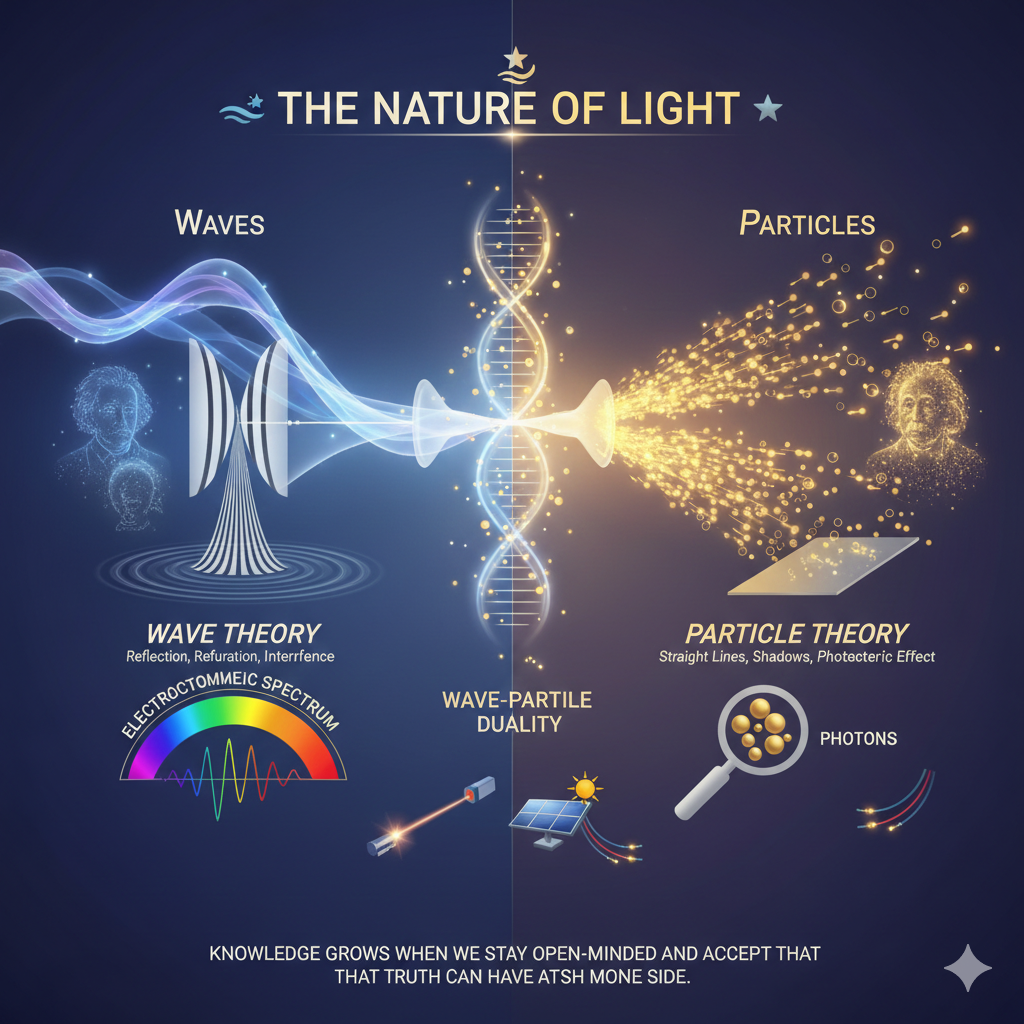
  • ACCL PORTAL DAY 160 TASK STORY POST Badaruddin Chai wala The Nature of Light: Exploring Waves and Particles
    Light is one of the most fascinating mysteries of science. For centuries, scientists tried to understand what light really is. In the 1600s, Isaac Newton believed that light was made of tiny particles, which explained how light travels in straight lines and forms shadows. Later, scientists like Christiaan Huygens suggested that light behaves like a wave, helping explain reflection and refraction. These early ideas began a long journey to uncover the true nature of light.
    In the 1800s, experiments by Thomas Young supported the wave theory. His famous double-slit experiment showed that light can create interference patterns, which is a property of waves. This discovery proved that light behaves like a wave when it spreads out and overlaps. Scientists then understood that light is part of the electromagnetic spectrum, traveling in waves of energy through space.
    However, in the early 1900s, new discoveries changed everything again. Albert Einstein explained the photoelectric effect by proposing that light also behaves like tiny packets of energy called photons. This discovery showed that light has particle-like properties too. Because of this, scientists developed the idea of wave-particle duality, meaning light can act both as a wave and as a particle depending on the situation.
    Today, the study of light helps us develop technologies like lasers, solar panels, and fiber optics. The dual nature of light teaches us that nature is more complex than it first appears. Light is not just a wave or just a particle—it is both. Understanding this mystery continues to inspire scientists around the world.
    Moral: Knowledge grows when we stay open-minded and accept that truth can have more than one side.
    ACCL PORTAL DAY 160 TASK STORY POST Badaruddin Chai wala The Nature of Light: Exploring Waves and Particles 🌟🌊 Light is one of the most fascinating mysteries of science. For centuries, scientists tried to understand what light really is. In the 1600s, Isaac Newton believed that light was made of tiny particles, which explained how light travels in straight lines and forms shadows. Later, scientists like Christiaan Huygens suggested that light behaves like a wave, helping explain reflection and refraction. 🌈🔍 These early ideas began a long journey to uncover the true nature of light. In the 1800s, experiments by Thomas Young supported the wave theory. His famous double-slit experiment showed that light can create interference patterns, which is a property of waves. 🌊✨ This discovery proved that light behaves like a wave when it spreads out and overlaps. Scientists then understood that light is part of the electromagnetic spectrum, traveling in waves of energy through space. However, in the early 1900s, new discoveries changed everything again. Albert Einstein explained the photoelectric effect by proposing that light also behaves like tiny packets of energy called photons. ⚡🔬 This discovery showed that light has particle-like properties too. Because of this, scientists developed the idea of wave-particle duality, meaning light can act both as a wave and as a particle depending on the situation. Today, the study of light helps us develop technologies like lasers, solar panels, and fiber optics. 💡📡 The dual nature of light teaches us that nature is more complex than it first appears. Light is not just a wave or just a particle—it is both. Understanding this mystery continues to inspire scientists around the world. Moral: 🌟 Knowledge grows when we stay open-minded and accept that truth can have more than one side.
    0 Комментарии 0 Поделились 862 Просмотры
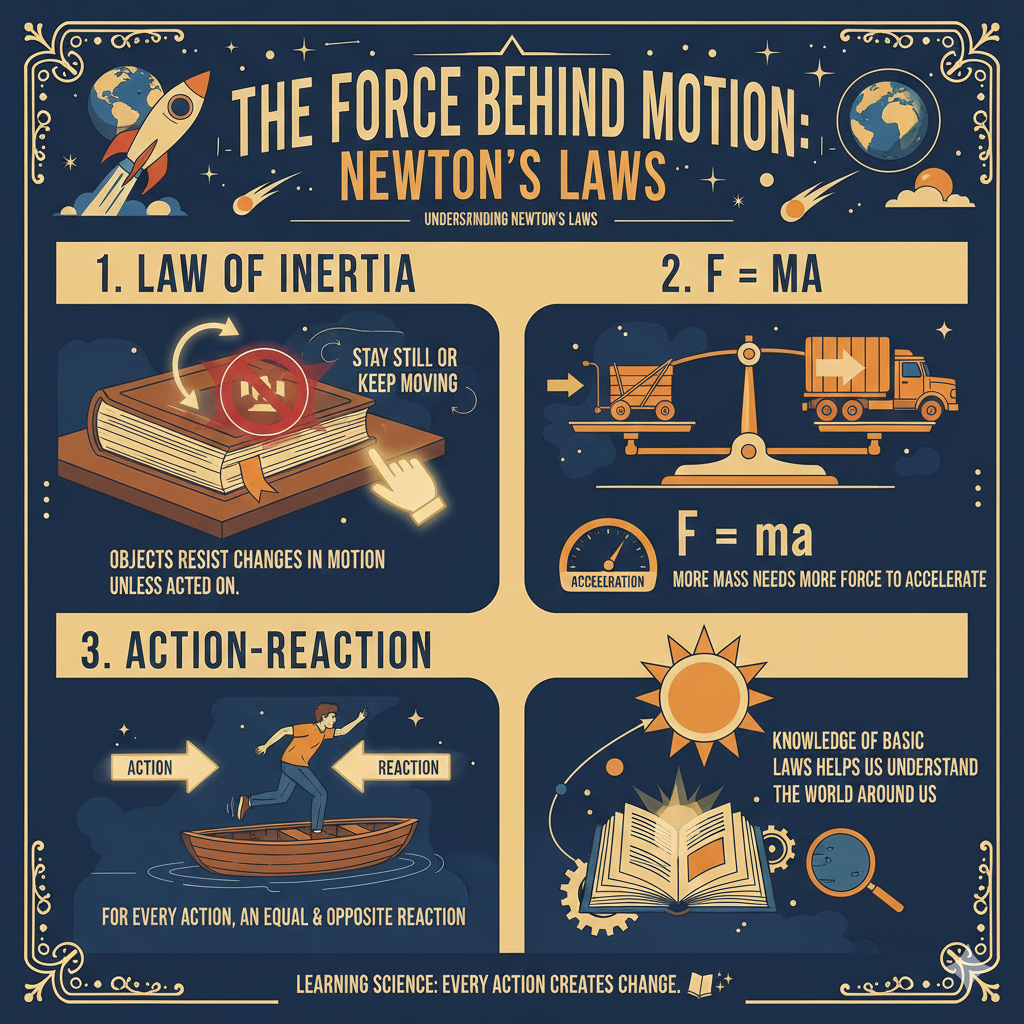
  • ACCL PORTAL DAY 153 TASK STORY POST @Badaruddin Chai wala The Force Behind Motion: Understanding Newton’s Laws
    Paragraph 1:
    In the 17th century, the brilliant scientist Isaac Newton introduced three important laws that explain how and why objects move. These laws, known as Newton’s Laws of Motion, help us understand everything from a rolling football to planets orbiting the sun . His discoveries became the foundation of classical physics and are still studied in schools today .
    Paragraph 2:
    The First Law, also called the Law of Inertia, states that an object will remain at rest or continue moving at the same speed and direction unless acted upon by an external force . For example, a book on a table stays still until someone pushes it. This law teaches us that forces are needed to change motion.
    Paragraph 3:
    The Second Law explains that force equals mass times acceleration (F = ma) . This means that heavier objects need more force to move, and stronger forces cause faster acceleration . For instance, pushing a small cart is easier than pushing a heavy truck because the truck has more mass.
    Paragraph 4:
    The Third Law states that for every action, there is an equal and opposite reaction . When you jump off a small boat, you push the boat backward while you move forward . This law shows that forces always come in pairs and interact with one another.
    Moral of the Topic:
    Knowledge of basic laws helps us understand the world around us. Just like Newton discovered the rules behind motion, learning science teaches us that every action has a consequence and every force creates change.
    ACCL PORTAL DAY 153 TASK STORY POST @Badaruddin Chai wala 🌍 The Force Behind Motion: Understanding Newton’s Laws 🚀 Paragraph 1: In the 17th century, the brilliant scientist Isaac Newton introduced three important laws that explain how and why objects move. These laws, known as Newton’s Laws of Motion, help us understand everything from a rolling football to planets orbiting the sun 🌞. His discoveries became the foundation of classical physics and are still studied in schools today 📚. Paragraph 2: The First Law, also called the Law of Inertia, states that an object will remain at rest or continue moving at the same speed and direction unless acted upon by an external force 🛑➡️. For example, a book on a table stays still until someone pushes it. This law teaches us that forces are needed to change motion. Paragraph 3: The Second Law explains that force equals mass times acceleration (F = ma) ⚖️. This means that heavier objects need more force to move, and stronger forces cause faster acceleration 🚗💨. For instance, pushing a small cart is easier than pushing a heavy truck because the truck has more mass. Paragraph 4: The Third Law states that for every action, there is an equal and opposite reaction 🔄. When you jump off a small boat, you push the boat backward while you move forward 🚣‍♂️. This law shows that forces always come in pairs and interact with one another. 🌟 Moral of the Topic: Knowledge of basic laws helps us understand the world around us. Just like Newton discovered the rules behind motion, learning science teaches us that every action has a consequence and every force creates change. 📖✨
    0 Комментарии 0 Поделились 827 Просмотры
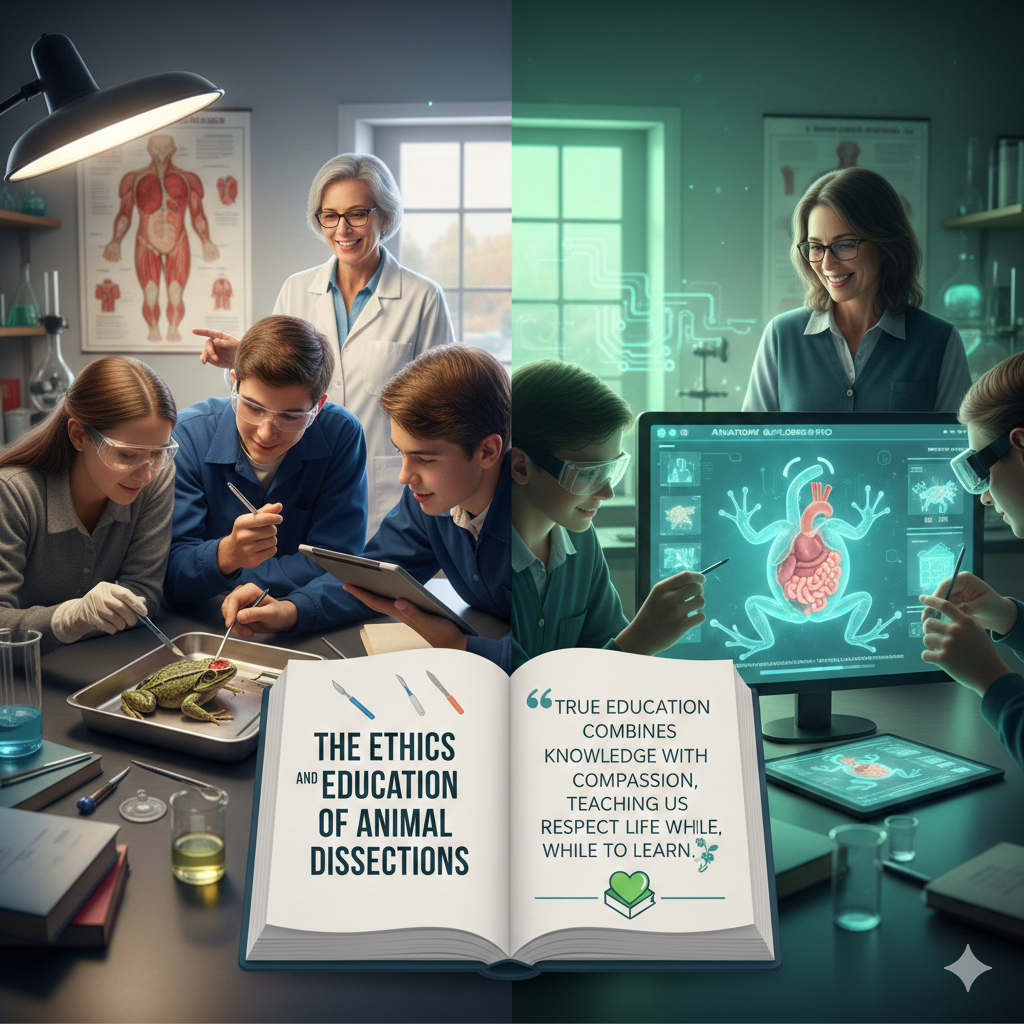
  • ACCL PORTAL DAY 146 TASK STORY POST @Badaruddin Chai wala The Ethics and Education of Animal Dissections
    Animal dissection has been a traditional method in science education for many years. It allows students to explore anatomy in a hands-on way and understand how living organisms function. By examining real organs and tissues, learners can better grasp biological systems such as the circulatory or respiratory system. For some students, this practical experience strengthens curiosity and deepens their understanding of life sciences.
    However, animal dissection also raises ethical concerns. Many people question whether it is right to use animals for educational purposes, especially when alternative methods are available. Respect for life and animal welfare are important values in modern society. Some students may feel uncomfortable or distressed participating in dissections, which can affect their learning experience.
    Today, technology offers alternatives such as virtual dissection software, 3D models, and interactive simulations. These tools can provide detailed anatomical views without harming animals. Schools are increasingly adopting these humane options, balancing scientific learning with compassion. This shift reflects a growing awareness of ethical responsibility in education.
    In conclusion, animal dissection in education is a complex issue that involves both scientific benefits and ethical considerations. While it can enhance understanding, it is important to respect diverse viewpoints and explore humane alternatives. Education should not only teach knowledge but also encourage empathy and responsibility toward all living beings.
    Moral: True education combines knowledge with compassion, teaching us to respect life while we learn.
    ACCL PORTAL DAY 146 TASK STORY POST @Badaruddin Chai wala 🧪🐸 The Ethics and Education of Animal Dissections 🐭📚 Animal dissection has been a traditional method in science education for many years. 🏫🔬 It allows students to explore anatomy in a hands-on way and understand how living organisms function. By examining real organs and tissues, learners can better grasp biological systems such as the circulatory or respiratory system. For some students, this practical experience strengthens curiosity and deepens their understanding of life sciences. 🌱✨ However, animal dissection also raises ethical concerns. 🐾⚖️ Many people question whether it is right to use animals for educational purposes, especially when alternative methods are available. Respect for life and animal welfare are important values in modern society. Some students may feel uncomfortable or distressed participating in dissections, which can affect their learning experience. 💭💔 Today, technology offers alternatives such as virtual dissection software, 3D models, and interactive simulations. 💻🧠 These tools can provide detailed anatomical views without harming animals. Schools are increasingly adopting these humane options, balancing scientific learning with compassion. 🌍💚 This shift reflects a growing awareness of ethical responsibility in education. In conclusion, animal dissection in education is a complex issue that involves both scientific benefits and ethical considerations. 📖⚗️ While it can enhance understanding, it is important to respect diverse viewpoints and explore humane alternatives. Education should not only teach knowledge but also encourage empathy and responsibility toward all living beings. 🐶🌸 🌟 Moral: True education combines knowledge with compassion, teaching us to respect life while we learn. 💚📚
    0 Комментарии 0 Поделились 1064 Просмотры
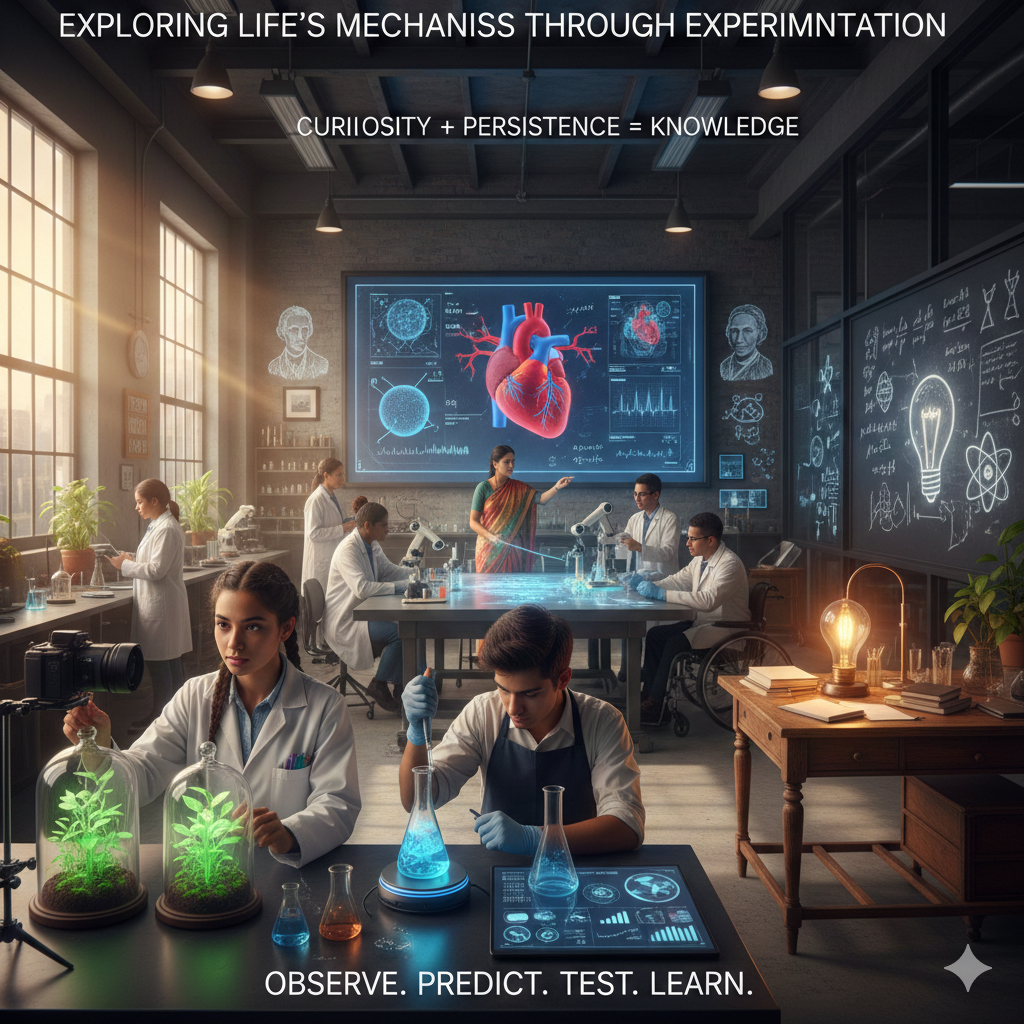
  • ACCL PORTAL DAY 139 TASK STORY POST @Badaruddin Chai wala Exploring Life’s Mechanisms Through Experimentation

    Life is full of mysteries waiting to be uncovered. From the way plants grow toward sunlight to how the human heart beats steadily every second, experimentation helps us understand the hidden mechanisms behind everyday phenomena. Scientists like Isaac Newton and Marie Curie used careful experiments to discover the laws of motion and radioactivity, showing us that curiosity combined with testing ideas can unlock powerful knowledge.

    Experimentation is not only for scientists in laboratories; it is a mindset for life. When students test a hypothesis in a school lab or try different methods to solve a math problem, they are practicing the same process of observation, prediction, and conclusion. Even simple experiments, like observing how temperature affects water evaporation, teach critical thinking and patience.

    Through experimentation, we also learn from failure. Not every test gives the expected result, but mistakes often lead to deeper understanding. Thomas Edison famously tested thousands of materials before perfecting the light bulb. His persistence reminds us that progress is built on repeated trials and continuous learning.

    Ultimately, exploring life’s mechanisms through experimentation builds curiosity, resilience, and wisdom. It encourages us to ask “why” and “how” instead of simply accepting things as they are. By observing carefully and testing thoughtfully, we gain a clearer view of the world and our place within it.

    Moral: Curiosity and persistence in experimentation lead to knowledge, growth, and success.

    ACCL PORTAL DAY 139 TASK STORY POST @Badaruddin Chai wala 🔬 Exploring Life’s Mechanisms Through Experimentation 🌱 Life is full of mysteries waiting to be uncovered. From the way plants grow toward sunlight to how the human heart beats steadily every second, experimentation helps us understand the hidden mechanisms behind everyday phenomena. Scientists like Isaac Newton and Marie Curie used careful experiments to discover the laws of motion and radioactivity, showing us that curiosity combined with testing ideas can unlock powerful knowledge. 🔍✨ Experimentation is not only for scientists in laboratories; it is a mindset for life. When students test a hypothesis in a school lab or try different methods to solve a math problem, they are practicing the same process of observation, prediction, and conclusion. Even simple experiments, like observing how temperature affects water evaporation, teach critical thinking and patience. 🧪📊 Through experimentation, we also learn from failure. Not every test gives the expected result, but mistakes often lead to deeper understanding. Thomas Edison famously tested thousands of materials before perfecting the light bulb. His persistence reminds us that progress is built on repeated trials and continuous learning. 💡🔁 Ultimately, exploring life’s mechanisms through experimentation builds curiosity, resilience, and wisdom. It encourages us to ask “why” and “how” instead of simply accepting things as they are. By observing carefully and testing thoughtfully, we gain a clearer view of the world and our place within it. 🌍🧠 🌟 Moral: Curiosity and persistence in experimentation lead to knowledge, growth, and success.
    0 Комментарии 0 Поделились 849 Просмотры
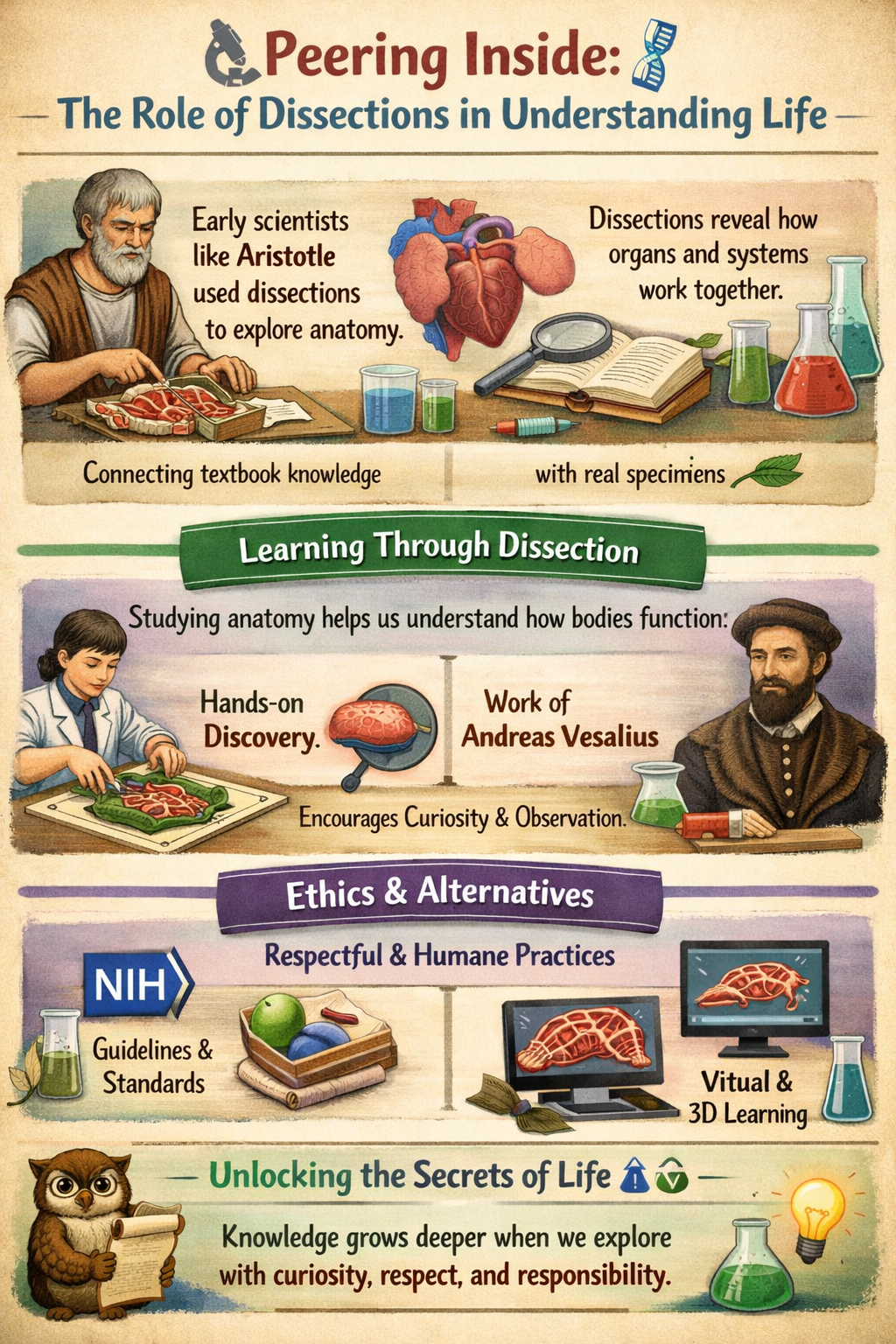
  • ACCL PORTAL DAY 132 TASK STORY POST Badaruddin Chai wala Peering Inside: The Role of Dissections in Understanding Life
    Dissection has long been an important method for learning about the structure of living organisms. From studying plants to examining animals, it allows students to explore how different organs and systems work together. Early scientists like Aristotle used observation and simple dissections to understand life. By carefully examining internal structures, learners can connect textbook knowledge with real-life examples, making science more meaningful and engaging.
    In biology classes, dissections help students understand complex systems such as the circulatory, respiratory, and nervous systems. For example, studying the anatomy of a frog or fish shows how organs are arranged and how they function together. Scientists such as Andreas Vesalius improved medical knowledge through detailed anatomical studies. Dissections encourage curiosity and careful observation, which are essential skills in science.
    However, dissections also raise ethical questions. Schools and laboratories must follow strict guidelines to treat specimens respectfully and responsibly. Many institutions, including organizations like National Institutes of Health, support ethical research standards and humane treatment in scientific studies. Today, virtual dissection software and 3D models are also used to reduce harm while still providing valuable learning experiences.
    Overall, dissections play a key role in understanding life by allowing students to see the hidden complexity inside living beings. They build knowledge, develop practical skills, and inspire future scientists and doctors. When done ethically and thoughtfully, dissections become a bridge between theory and discovery.
    Moral: Knowledge grows deeper when we explore with curiosity, respect, and responsibility.
    ACCL PORTAL DAY 132 TASK STORY POST Badaruddin Chai wala Peering Inside: The Role of Dissections in Understanding Life 🔬🧬 Dissection has long been an important method for learning about the structure of living organisms. From studying plants to examining animals, it allows students to explore how different organs and systems work together. Early scientists like Aristotle used observation and simple dissections to understand life. By carefully examining internal structures, learners can connect textbook knowledge with real-life examples, making science more meaningful and engaging. 📚✨ In biology classes, dissections help students understand complex systems such as the circulatory, respiratory, and nervous systems. For example, studying the anatomy of a frog or fish shows how organs are arranged and how they function together. Scientists such as Andreas Vesalius improved medical knowledge through detailed anatomical studies. Dissections encourage curiosity and careful observation, which are essential skills in science. 🐸🔍 However, dissections also raise ethical questions. Schools and laboratories must follow strict guidelines to treat specimens respectfully and responsibly. Many institutions, including organizations like National Institutes of Health, support ethical research standards and humane treatment in scientific studies. Today, virtual dissection software and 3D models are also used to reduce harm while still providing valuable learning experiences. 💻🌱 Overall, dissections play a key role in understanding life by allowing students to see the hidden complexity inside living beings. They build knowledge, develop practical skills, and inspire future scientists and doctors. When done ethically and thoughtfully, dissections become a bridge between theory and discovery. 🌍🧪 Moral: Knowledge grows deeper when we explore with curiosity, respect, and responsibility. 🌟
    0 Комментарии 0 Поделились 1095 Просмотры
  • ACCL PORTAL DAY 125 TASK STORY POST @Badaruddin Chai wala Why Frogs? Understanding the Anatomy of Life

    Frogs are small, colorful creatures that live both in water and on land. Their bodies are built perfectly for this dual life: webbed feet for swimming, strong legs for jumping, and a long sticky tongue for catching insects. This shows how nature designs each being to survive and thrive in its environment.

    The life of a frog is a journey of change. From tiny eggs in a pond to tadpoles swimming freely, and finally to adult frogs leaping on lily pads, they remind us that transformation is a part of life. Change can be uncomfortable, but it often leads to growth and strength.

    Frogs also play an important role in the ecosystem. They eat pests, serve as food for other animals, and indicate a healthy environment. This teaches us that even small creatures have big impacts. Just like frogs, everyone has a role to play in the world around them.

    Finally, frogs inspire us to embrace our surroundings and adapt to challenges. Life may be full of ups and downs, just like the journey from tadpole to frog, but resilience and patience bring rewards.

    Moral: Life is about growth, change, and understanding your role in the world. Embrace every stage, just like a frog does.
    ACCL PORTAL DAY 125 TASK STORY POST @Badaruddin Chai wala Why Frogs? Understanding the Anatomy of Life 🐸🌿 Frogs are small, colorful creatures that live both in water and on land. 🌊🏞️ Their bodies are built perfectly for this dual life: webbed feet for swimming, strong legs for jumping, and a long sticky tongue for catching insects. 🦟 This shows how nature designs each being to survive and thrive in its environment. 🌱 The life of a frog is a journey of change. 🐸➡️🐛 From tiny eggs in a pond to tadpoles swimming freely, and finally to adult frogs leaping on lily pads, they remind us that transformation is a part of life. 🌼 Change can be uncomfortable, but it often leads to growth and strength. 💪 Frogs also play an important role in the ecosystem. 🌏 They eat pests, serve as food for other animals, and indicate a healthy environment. 🍃 This teaches us that even small creatures have big impacts. Just like frogs, everyone has a role to play in the world around them. 🌟 Finally, frogs inspire us to embrace our surroundings and adapt to challenges. 🌦️ Life may be full of ups and downs, just like the journey from tadpole to frog, but resilience and patience bring rewards. 🐸💚 Moral: Life is about growth, change, and understanding your role in the world. Embrace every stage, just like a frog does. 🌱🐸✨
    0 Комментарии 0 Поделились 775 Просмотры
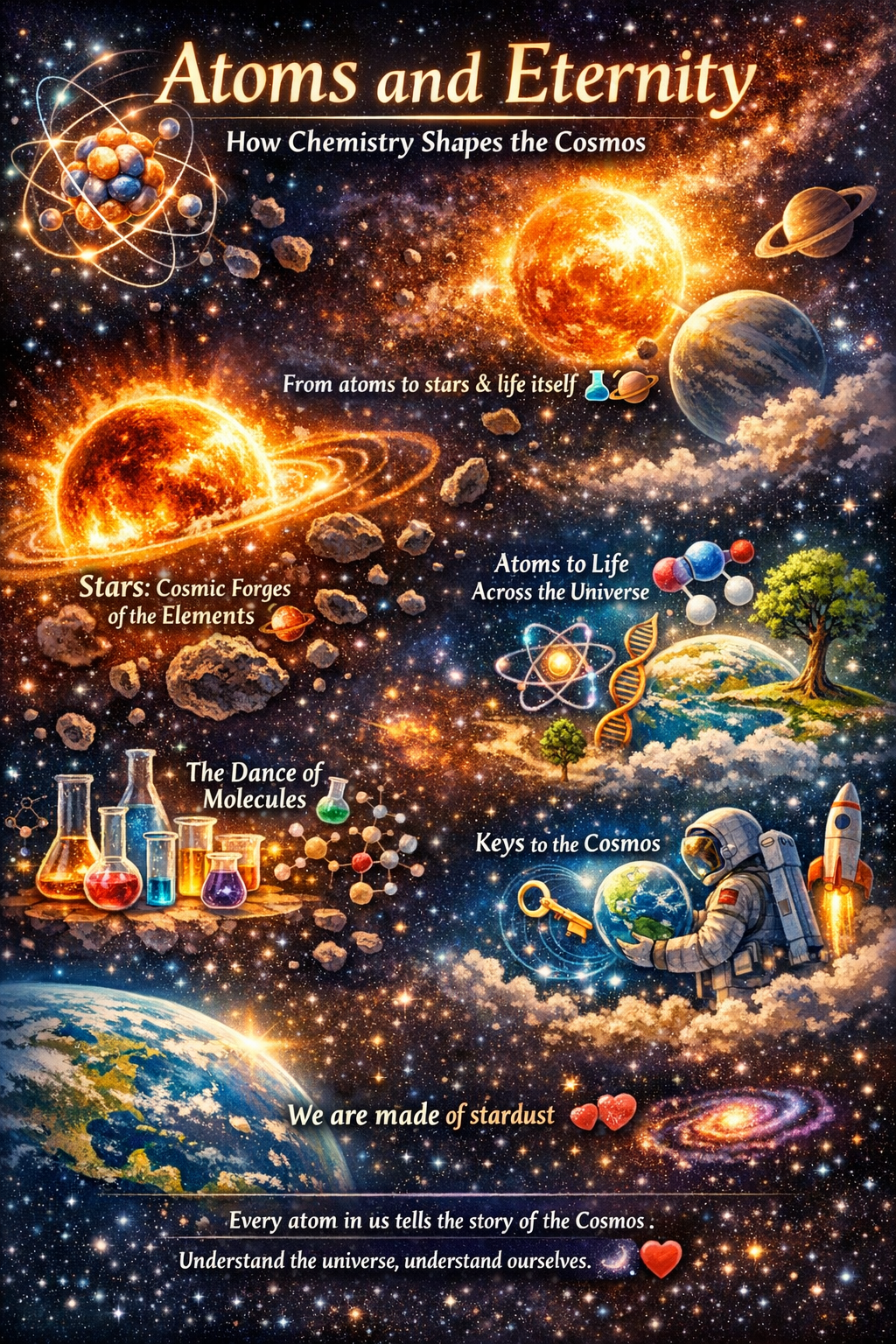
  • ACCL PORTAL DAY 118 TASK STORY POST @Badaruddin Suleman Atoms and Eternity: How Chemistry Shapes the Cosmos

    From the tiniest particles to the vast expanses of space, atoms form the very fabric of our universe. Each atom, composed of protons, neutrons, and electrons, acts like a building block, creating everything from stars and planets to life itself. The laws of chemistry govern how these atoms interact, bond, and transform, giving rise to the incredible diversity we see in the cosmos.

    Stars are not just shining lights; they are cosmic kitchens where atoms are forged. Through nuclear fusion, hydrogen atoms merge to form helium, releasing energy that powers the star and spreads elements across the universe. These elements eventually become part of planets, oceans, and even living beings, connecting every atom in existence to the lifecycle of the cosmos.

    Chemical reactions are the silent artists of the universe, shaping molecules and matter in ways both simple and complex. Water, carbon dioxide, and countless other compounds arise from these interactions, providing the conditions necessary for life. Even the air we breathe and the food we eat are the result of ancient chemical dances performed over billions of years.

    Understanding chemistry is like holding a key to the universe. By studying how atoms behave, scientists can predict cosmic events, create new materials, and even explore possibilities of life beyond Earth. This knowledge reminds us that we are not separate from the universe; we are an expression of its chemistry and eternity.

    Moral: Every atom in us carries the story of the cosmos; by appreciating chemistry, we understand both the universe and ourselves.
    ACCL PORTAL DAY 118 TASK STORY POST @Badaruddin Suleman Atoms and Eternity: How Chemistry Shapes the Cosmos ✨🪐 From the tiniest particles to the vast expanses of space, atoms form the very fabric of our universe. 🧪 Each atom, composed of protons, neutrons, and electrons, acts like a building block, creating everything from stars and planets to life itself. The laws of chemistry govern how these atoms interact, bond, and transform, giving rise to the incredible diversity we see in the cosmos. 🌌 Stars are not just shining lights; they are cosmic kitchens where atoms are forged. 🔥 Through nuclear fusion, hydrogen atoms merge to form helium, releasing energy that powers the star and spreads elements across the universe. These elements eventually become part of planets, oceans, and even living beings, connecting every atom in existence to the lifecycle of the cosmos. 🌟 Chemical reactions are the silent artists of the universe, shaping molecules and matter in ways both simple and complex. 🧬 Water, carbon dioxide, and countless other compounds arise from these interactions, providing the conditions necessary for life. Even the air we breathe and the food we eat are the result of ancient chemical dances performed over billions of years. 🌱 Understanding chemistry is like holding a key to the universe. 🗝️ By studying how atoms behave, scientists can predict cosmic events, create new materials, and even explore possibilities of life beyond Earth. This knowledge reminds us that we are not separate from the universe; we are an expression of its chemistry and eternity. 🌍💫 Moral: Every atom in us carries the story of the cosmos; by appreciating chemistry, we understand both the universe and ourselves. 🌌❤️
    0 Комментарии 0 Поделились 1180 Просмотры
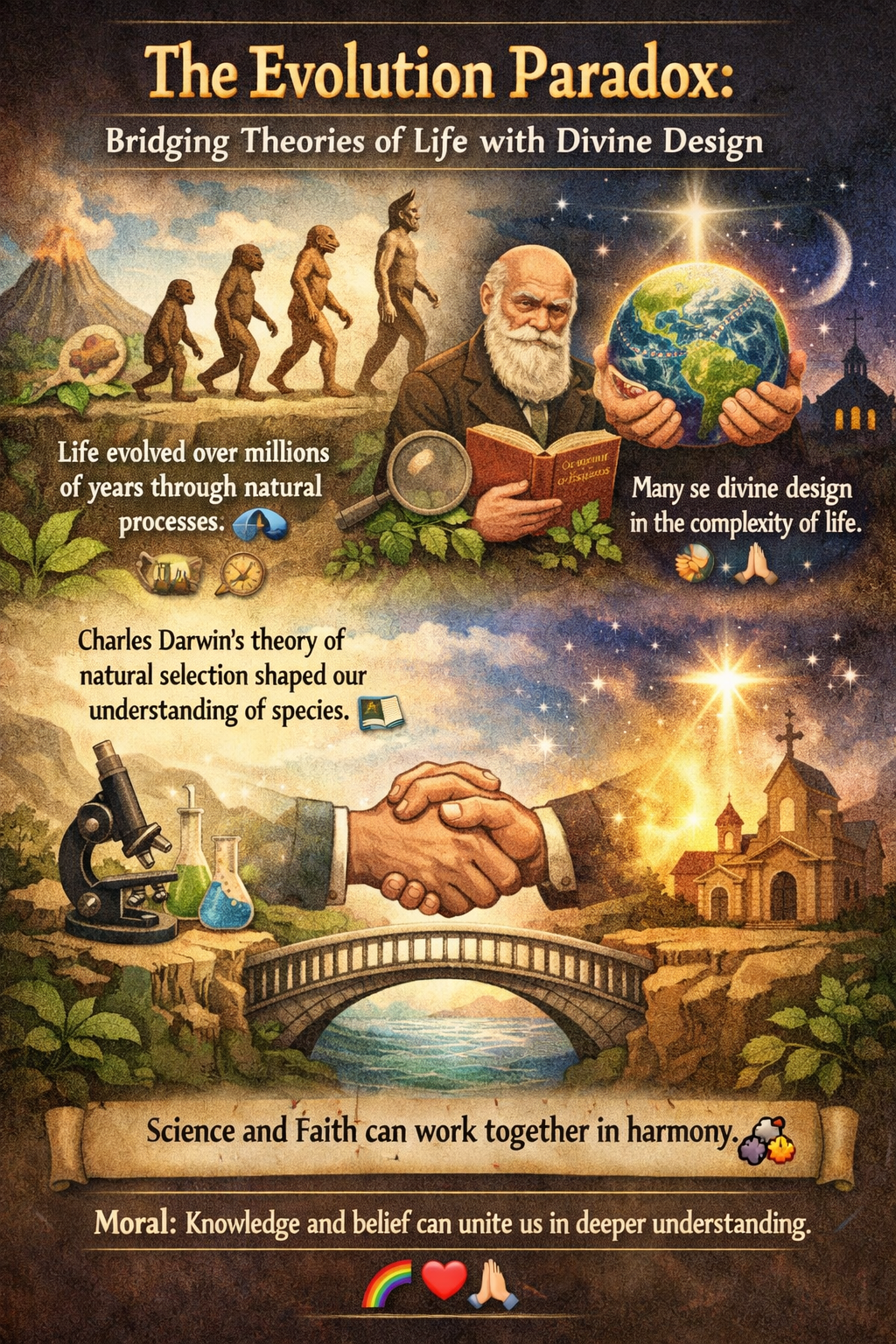
  • ACCL PORTAL DAY 111 TASK STORY POST @Badruddin chaiwala The Evolution Paradox: Bridging Theories of Life with Divine Design

    Life on Earth has always inspired curiosity and wonder. Scientific theories of evolution explain how living organisms gradually changed over millions of years, adapting to their environments through natural processes. From simple single-celled organisms to complex human beings, evolution presents a detailed narrative of development and survival. It highlights the beauty of natural laws and the intricate systems that govern life.

    One of the key figures behind evolutionary theory is Charles Darwin, who proposed the idea of natural selection. According to his observations, species evolve over time because individuals with favorable traits are more likely to survive and reproduce. His work, especially in On the Origin of Species, transformed biological science and provided a framework for understanding biodiversity.

    On the other hand, many people believe that life reflects intentional divine design. This perspective suggests that the complexity and harmony found in nature are signs of a higher purpose. From the precise structure of DNA to the balance of ecosystems, believers see evidence of wisdom and planning. Rather than contradicting science, some thinkers argue that evolution could be the method through which divine will unfolds.

    Bridging these ideas encourages respectful dialogue between science and faith. Instead of seeing them as opposing forces, they can be viewed as complementary ways of exploring truth. Science explains the “how” of life’s processes, while faith often addresses the “why” behind existence. Together, they inspire humility, curiosity, and deeper appreciation for the mystery of life.

    Moral: Knowledge and belief do not have to compete; when we approach both with open minds and respect, we discover greater understanding and harmony.
    ACCL PORTAL DAY 111 TASK STORY POST @Badruddin chaiwala The Evolution Paradox: Bridging Theories of Life with Divine Design 🌍🧬 Life on Earth has always inspired curiosity and wonder. Scientific theories of evolution explain how living organisms gradually changed over millions of years, adapting to their environments through natural processes. From simple single-celled organisms to complex human beings, evolution presents a detailed narrative of development and survival. It highlights the beauty of natural laws and the intricate systems that govern life. 🧫✨ One of the key figures behind evolutionary theory is Charles Darwin, who proposed the idea of natural selection. According to his observations, species evolve over time because individuals with favorable traits are more likely to survive and reproduce. His work, especially in On the Origin of Species, transformed biological science and provided a framework for understanding biodiversity. 🌿📖 On the other hand, many people believe that life reflects intentional divine design. This perspective suggests that the complexity and harmony found in nature are signs of a higher purpose. From the precise structure of DNA to the balance of ecosystems, believers see evidence of wisdom and planning. Rather than contradicting science, some thinkers argue that evolution could be the method through which divine will unfolds. 🌌🙏 Bridging these ideas encourages respectful dialogue between science and faith. Instead of seeing them as opposing forces, they can be viewed as complementary ways of exploring truth. Science explains the “how” of life’s processes, while faith often addresses the “why” behind existence. Together, they inspire humility, curiosity, and deeper appreciation for the mystery of life. 🌟🤝 Moral: Knowledge and belief do not have to compete; when we approach both with open minds and respect, we discover greater understanding and harmony. 🌈
    0 Комментарии 0 Поделились 985 Просмотры
Расширенные страницы