• Story post. 11
    ACCL Day. 76
    “The Quran and Science: A Bond of Knowledge”

    Paragraph 1:
    The Quran is not only a spiritual guide but also a source of knowledge about the natural world . Many verses point to the creation of the universe, the development of life, and the balance in nature. These insights show how faith and scientific understanding can complement each other.

    Paragraph 2:
    Throughout history, scholars have studied the Quran and discovered connections with modern scientific concepts . From the formation of the heavens and the Earth to embryology and the water cycle, the Quran encourages observation, reflection, and learning.

    Paragraph 3:
    Science explains the “how,” and the Quran often provides the “why” . Together, they inspire curiosity, promote knowledge, and encourage humans to explore the universe while staying mindful of their purpose and responsibilities

    Paragraph 4 (Moral):
    The bond between the Quran and science reminds us that knowledge and faith can coexist harmoniously Seeking knowledge is a form of worship, and understanding the universe deepens both our intellect and spirituality

    Hashtags:
    #QuranAndScience #Knowledge #FaithAndScience #STEM #Inspiration #Learning #Universe #Reflection #Wisdom #Education
    Story post. 11 ACCL Day. 76 “The Quran and Science: A Bond of Knowledge” ๐Ÿ“–โœจ Paragraph 1: The Quran is not only a spiritual guide but also a source of knowledge about the natural world ๐ŸŒ๐Ÿ”ฌ. Many verses point to the creation of the universe, the development of life, and the balance in nature. These insights show how faith and scientific understanding can complement each other. Paragraph 2: Throughout history, scholars have studied the Quran and discovered connections with modern scientific concepts ๐Ÿงช๐ŸŒŒ. From the formation of the heavens and the Earth to embryology and the water cycle, the Quran encourages observation, reflection, and learning. Paragraph 3: Science explains the “how,” and the Quran often provides the “why” ๐Ÿ“–๐Ÿ’ก. Together, they inspire curiosity, promote knowledge, and encourage humans to explore the universe while staying mindful of their purpose and responsibilities ๐ŸŒŸ๐Ÿ•Š๏ธ Paragraph 4 (Moral): The bond between the Quran and science reminds us that knowledge and faith can coexist harmoniously ๐ŸŒˆ๐Ÿ’› Seeking knowledge is a form of worship, and understanding the universe deepens both our intellect and spirituality ๐ŸŒŒ๐Ÿ“– Hashtags: #QuranAndScience #Knowledge #FaithAndScience #STEM #Inspiration #Learning #Universe #Reflection #Wisdom #Education
    0 Comments 0 Shares 87 Views
  • Story post. 10
    ACCL Day. 69
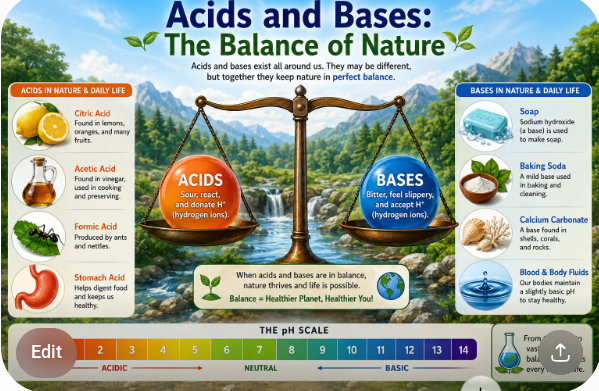
    “Acids and Bases: The Balance of Nature”

    Paragraph 1:
    Acids and bases are two important types of substances found everywhere in nature . Acids have a sour taste and can donate hydrogen ions, while bases are bitter and can accept hydrogen ions. Together, they maintain a delicate balance in our environment, our bodies, and the world of chemistry

    Paragraph 2:
    This balance is essential for life. For example, our stomach uses acids to digest food , while our blood contains weak bases to maintain a stable pH. Plants, rivers, and soils also depend on the right balance of acids and bases to stay healthy

    Paragraph 3:
    When the balance is disturbed, it can cause problems . Acid rain damages forests and lakes, while overly basic soils can harm crops. In our own bodies, too much acidity or alkalinity can affect health. Scientists study acids and bases to understand these effects and restore harmony in nature

    Paragraph 4 (Moral):
    Acids and bases remind us that balance is essential for life . Nature thrives when everything is in harmony, and understanding this balance helps us protect the environment and our health

    Hashtags:
    #AcidsAndBases #Chemistry #Science #NatureBalance #STEM #pH #Learning #Innovation #Environment #Education
    Story post. 10 ACCL Day. 69 “Acids and Bases: The Balance of Nature” โš—๏ธโœจ Paragraph 1: Acids and bases are two important types of substances found everywhere in nature ๐ŸŒฑ๐Ÿ’ง. Acids have a sour taste and can donate hydrogen ions, while bases are bitter and can accept hydrogen ions. Together, they maintain a delicate balance in our environment, our bodies, and the world of chemistry ๐ŸŒŽ๐Ÿ”ฌ Paragraph 2: This balance is essential for life. For example, our stomach uses acids to digest food ๐Ÿฝ๏ธ๐Ÿงช, while our blood contains weak bases to maintain a stable pH. Plants, rivers, and soils also depend on the right balance of acids and bases to stay healthy ๐ŸŒฟ๐Ÿ’ฆ Paragraph 3: When the balance is disturbed, it can cause problems โš ๏ธ๐ŸŒช๏ธ. Acid rain damages forests and lakes, while overly basic soils can harm crops. In our own bodies, too much acidity or alkalinity can affect health. Scientists study acids and bases to understand these effects and restore harmony in nature ๐Ÿ”ฌ๐ŸŒˆ Paragraph 4 (Moral): Acids and bases remind us that balance is essential for life ๐ŸŒŸ๐Ÿ’›. Nature thrives when everything is in harmony, and understanding this balance helps us protect the environment and our health ๐ŸŒฑ๐Ÿ’ง Hashtags: #AcidsAndBases #Chemistry #Science #NatureBalance #STEM #pH #Learning #Innovation #Environment #Education
    0 Comments 0 Shares 121 Views
  • Story post. 9
    ACCL Day. 62
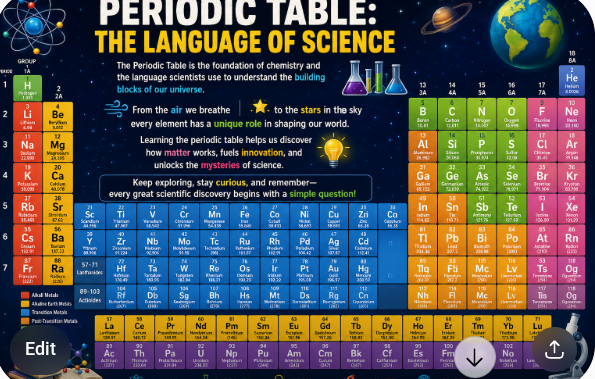
    “Periodic Table: The Language of Science”

    Paragraph 1:
    The Periodic Table is called the “language of science” because it organizes all chemical elements in a way that reveals patterns and relationships. Each element has a symbol, atomic number, and unique properties. Just like letters form words, elements combine to form compounds and reactions that make up the world around us

    Paragraph 2:
    It was developed by Dmitri Mendeleev in 1869. He arranged elements in rows (periods) and columns (groups) based on atomic numbers and chemical properties Elements in the same group often behave similarly, helping scientists predict reactions and understand trends.

    Paragraph 3:
    The periodic table is more than a chart—it is a tool for discovery By studying patterns, scientists can predict new elements, design new materials, and explain natural phenomena. It connects chemistry, physics, and biology, helping us understand the universe better

    Paragraph 4 (Moral):
    The periodic table teaches us that everything in the universe is connected Understanding these connections inspires curiosity, innovation, and scientific exploration. Knowledge of patterns in nature empowers us to create and discover

    Hashtags:
    #PeriodicTable #Chemistry #Science #STEM #Elements #Discovery #Learning #Innovation #Education #Curiosity`````````````````
    Story post. 9 ACCL Day. 62 “Periodic Table: The Language of Science” ๐Ÿงชโœจ Paragraph 1: The Periodic Table is called the “language of science” ๐Ÿงช๐ŸŒ because it organizes all chemical elements in a way that reveals patterns and relationships. Each element has a symbol, atomic number, and unique properties. Just like letters form words, elements combine to form compounds and reactions that make up the world around us ๐ŸŒŒ๐Ÿ’ก Paragraph 2: It was developed by Dmitri Mendeleev in 1869. He arranged elements in rows (periods) and columns (groups) based on atomic numbers and chemical properties ๐Ÿ“Šโœจ Elements in the same group often behave similarly, helping scientists predict reactions and understand trends. Paragraph 3: The periodic table is more than a chart—it is a tool for discovery ๐Ÿ”ฌ๐ŸŒŸ By studying patterns, scientists can predict new elements, design new materials, and explain natural phenomena. It connects chemistry, physics, and biology, helping us understand the universe better ๐ŸŒŒ๐Ÿงฌ Paragraph 4 (Moral): The periodic table teaches us that everything in the universe is connected ๐ŸŒˆ๐Ÿ’› Understanding these connections inspires curiosity, innovation, and scientific exploration. Knowledge of patterns in nature empowers us to create and discover ๐Ÿ”ฌ๐Ÿ’ก Hashtags: #PeriodicTable #Chemistry #Science #STEM #Elements #Discovery #Learning #Innovation #Education #Curiosity`````````````````
    0 Comments 0 Shares 152 Views
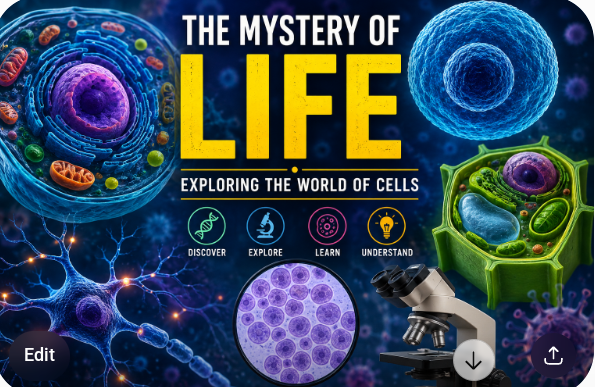
  • Day 41: The Mystery of Life: Exploring the World of Cells
    Description: Complete the task: The Mystery of Life: Exploring the World of Cells

    **The Mystery of Life: Exploring the World of Cells**

    Ayaan had always been curious about life. Sitting in his classroom one day, he wondered, “What really makes us alive?” His teacher smiled and said, “The answer lies in something so small, you can’t even see it—cells.”
    That night, as Ayaan read his science book, he imagined shrinking smaller and smaller until he entered a hidden world inside his own body. Suddenly, he found himself surrounded by tiny, busy structures moving in every direction. It looked like a bustling city.
    A small, glowing figure approached him and said, “Welcome! I am a cell.”
    Ayaan was amazed. “You’re so tiny… but everything here looks so important!”
    The cell smiled and replied, “We may be small, but we are the building blocks of life. Some of us carry oxygen, some fight diseases, and others help you grow and heal. Together, we keep your body working every second.”
    As Ayaan explored further, he saw cells working together like a perfect team—communicating, repairing, and protecting. He realized that every living thing, from the tallest tree to the smallest insect, depends on these invisible units.
    Suddenly, Ayaan was back in his room, holding his book. He looked at his hands with a new sense of wonder.
    He smiled and whispered, “Life really is a mystery… but a beautiful one.”
    Moral: Even the smallest parts of life hold the greatest importance.
    Day 41: The Mystery of Life: Exploring the World of Cells Description: Complete the task: The Mystery of Life: Exploring the World of Cells **The Mystery of Life: Exploring the World of Cells** Ayaan had always been curious about life. Sitting in his classroom one day, he wondered, “What really makes us alive?” His teacher smiled and said, “The answer lies in something so small, you can’t even see it—cells.” That night, as Ayaan read his science book, he imagined shrinking smaller and smaller until he entered a hidden world inside his own body. Suddenly, he found himself surrounded by tiny, busy structures moving in every direction. It looked like a bustling city. A small, glowing figure approached him and said, “Welcome! I am a cell.” Ayaan was amazed. “You’re so tiny… but everything here looks so important!” The cell smiled and replied, “We may be small, but we are the building blocks of life. Some of us carry oxygen, some fight diseases, and others help you grow and heal. Together, we keep your body working every second.” As Ayaan explored further, he saw cells working together like a perfect team—communicating, repairing, and protecting. He realized that every living thing, from the tallest tree to the smallest insect, depends on these invisible units. Suddenly, Ayaan was back in his room, holding his book. He looked at his hands with a new sense of wonder. He smiled and whispered, “Life really is a mystery… but a beautiful one.” Moral: Even the smallest parts of life hold the greatest importance.
    0 Comments 0 Shares 67 Views
  • Story post. 8
    ACCL Day. 55
    Winds and Environment: The Impact of Change

    Paragraph 1:
    Wind is one of nature’s most powerful and invisible forces. It shapes landscapes, moves clouds across the sky , and carries seeds and moisture from one place to another. Though we cannot see it directly, we can feel its presence everywhere .

    Paragraph 2:
    Winds are created when the sun heats the Earth unevenly . Warm air rises, cool air moves in, and this movement creates air currents. These currents influence weather patterns, storms, and even ocean waves .

    Paragraph 3:
    Changes in climate can affect wind patterns . Stronger winds may increase storms, while shifting air currents can impact rainfall and temperatures. These environmental changes can influence agriculture, wildlife, and daily human life .

    Paragraph 4:
    Understanding wind helps scientists predict weather and protect communities . Wind energy is also used to produce clean electricity , showing how natural forces can benefit the environment when used wisely. Even invisible forces can create powerful change .

    Moral:
    Understanding natural forces helps us protect and sustain our environment.

    Hashtags:
    #WindEnergy #Environment #ClimateChange #ScienceStory #EarthCare
    Story post. 8 ACCL Day. 55 Winds and Environment: The Impact of Change Paragraph 1: Wind ๐ŸŒฌ๏ธ is one of nature’s most powerful and invisible forces. It shapes landscapes, moves clouds across the sky โ˜๏ธ, and carries seeds and moisture from one place to another. Though we cannot see it directly, we can feel its presence everywhere ๐Ÿ˜Š. Paragraph 2: Winds are created when the sun heats the Earth unevenly โ˜€๏ธ๐ŸŒ. Warm air rises, cool air moves in, and this movement creates air currents. These currents influence weather patterns, storms, and even ocean waves ๐ŸŒŠ. Paragraph 3: Changes in climate can affect wind patterns ๐ŸŒช๏ธ. Stronger winds may increase storms, while shifting air currents can impact rainfall and temperatures. These environmental changes can influence agriculture, wildlife, and daily human life ๐Ÿค”. Paragraph 4: Understanding wind helps scientists predict weather and protect communities ๐Ÿ›ฐ๏ธ. Wind energy is also used to produce clean electricity โšก, showing how natural forces can benefit the environment when used wisely. Even invisible forces can create powerful change โœจ. Moral: Understanding natural forces helps us protect and sustain our environment. Hashtags: #WindEnergy #Environment #ClimateChange #ScienceStory #EarthCare
    0 Comments 0 Shares 117 Views
  • Story post. 7
    ACCL Day. 48
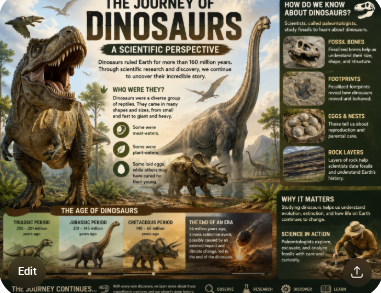
    The Journey of Dinosaurs: A Scientific Perspective

    Paragraph 1:
    Millions of years ago , dinosaurs ruled the Earth during the Mesozoic Era. They lived in forests, deserts, and near oceans, growing into many shapes and sizes. Some were as small as chickens, while others were taller than buildings .

    Paragraph 2:
    Scientists study fossils to understand how dinosaurs lived. Fossils are preserved remains or traces of ancient life found in rocks. Through careful research, scientists have learned about dinosaur diets, movement, and even possible behaviors .

    Paragraph 3:
    There were different types of dinosaurs . Herbivores like long-necked plant-eaters survived on vegetation, while carnivores hunted other animals. Their bodies were specially designed for survival, whether for speed, strength, or defense .

    Paragraph 4:
    About 66 million years ago , a massive asteroid impact and environmental changes led to their extinction. However, their story did not truly end—modern birds are considered their closest living relatives . Dinosaurs continue to teach us about Earth’s history and evolution.

    Moral:
    Studying the past helps us better understand the present and the future.

    Hashtags:
    #Dinosaurs #ScienceStory #Paleontology #EarthHistory #LearningJourney
    Story post. 7 ACCL Day. 48 The Journey of Dinosaurs: A Scientific Perspective Paragraph 1: Millions of years ago ๐Ÿฆ–๐ŸŒ, dinosaurs ruled the Earth during the Mesozoic Era. They lived in forests, deserts, and near oceans, growing into many shapes and sizes. Some were as small as chickens, while others were taller than buildings ๐Ÿ˜ฎ. Paragraph 2: Scientists study fossils ๐Ÿฆด๐Ÿ”ฌ to understand how dinosaurs lived. Fossils are preserved remains or traces of ancient life found in rocks. Through careful research, scientists have learned about dinosaur diets, movement, and even possible behaviors ๐Ÿค”. Paragraph 3: There were different types of dinosaurs ๐ŸŒฟ๐Ÿ–. Herbivores like long-necked plant-eaters survived on vegetation, while carnivores hunted other animals. Their bodies were specially designed for survival, whether for speed, strength, or defense โšก. Paragraph 4: About 66 million years ago โ˜„๏ธ, a massive asteroid impact and environmental changes led to their extinction. However, their story did not truly end—modern birds are considered their closest living relatives ๐Ÿฆโœจ. Dinosaurs continue to teach us about Earth’s history and evolution. Moral: Studying the past helps us better understand the present and the future. Hashtags: #Dinosaurs #ScienceStory #Paleontology #EarthHistory #LearningJourney
    0 Comments 0 Shares 109 Views
  • Story post. 6
    ACCL Day. 41
    The Mystery of Life: Exploring the World of Cells

    Paragraph 1:
    Deep inside every living thing , there exists a tiny world invisible to the naked eye. Cells are the basic building blocks of life, forming plants, animals, and even humans. Though microscopic, they carry out powerful tasks that keep life moving every single moment .

    Paragraph 2:
    Each cell works like a small factory . It takes in nutrients, produces energy, and removes waste. Some cells help us think , some help us move , and others protect us from illness. Every type has a special role to perform.

    Paragraph 3:
    There are different kinds of cells in the body . For example, red blood cells carry oxygen, while nerve cells send messages throughout the body . Even plants have their own special cells that help them grow and make food through sunlight .

    Paragraph 4:
    The more scientists study cells , the more they discover about the mystery of life. These tiny structures show us that even the smallest parts can have the greatest importance. Life’s biggest secrets often exist in the smallest places .

    Moral:
    Even the smallest things can hold the greatest power and importance.

    Hashtags:
    #Cells #ScienceStory #BiologyBasics #MysteryOfLife #LearningJourney
    Story post. 6 ACCL Day. 41 The Mystery of Life: Exploring the World of Cells Paragraph 1: Deep inside every living thing ๐Ÿงฌโœจ, there exists a tiny world invisible to the naked eye. Cells are the basic building blocks of life, forming plants, animals, and even humans. Though microscopic, they carry out powerful tasks that keep life moving every single moment ๐Ÿ˜Š. Paragraph 2: Each cell works like a small factory ๐Ÿญ๐Ÿ”ฌ. It takes in nutrients, produces energy, and removes waste. Some cells help us think ๐Ÿง , some help us move ๐Ÿ’ช, and others protect us from illness. Every type has a special role to perform. Paragraph 3: There are different kinds of cells in the body ๐ŸŒฑ. For example, red blood cells carry oxygen, while nerve cells send messages throughout the body โšก. Even plants have their own special cells that help them grow and make food through sunlight โ˜€๏ธ. Paragraph 4: The more scientists study cells ๐Ÿ”, the more they discover about the mystery of life. These tiny structures show us that even the smallest parts can have the greatest importance. Life’s biggest secrets often exist in the smallest places ๐ŸŒŸ. Moral: Even the smallest things can hold the greatest power and importance. Hashtags: #Cells #ScienceStory #BiologyBasics #MysteryOfLife #LearningJourney
    0 Comments 0 Shares 117 Views
  • ## What Lessons Can We Learn from Past Pandemics?

    Past pandemics like the *Black Death, **Spanish Flu, and **COVID-19* have taught humanity many powerful lessons. These global health crises showed us how diseases can spread quickly across countries because of travel and trade.

    One important lesson is the value of *hygiene and cleanliness*. ๐Ÿซง Washing hands, keeping surroundings clean, and practicing good health habits can save millions of lives.

    Another lesson is the importance of *science and medical research*. Vaccines and medicines help control and prevent deadly diseases. Governments and scientists must work together to protect people.

    Pandemics also teach us about *teamwork and global cooperation*. Countries must share information and support each other during crises.

    We also learn the importance of *preparedness*. Having strong healthcare systems, emergency plans, and trained medical staff helps reduce damage.

    Finally, pandemics remind us to care for one another. Helping the elderly, supporting the sick, and staying calm during difficult times makes society stronger.
    https://youtu.be/l7FaKth1zgk
    ## ๐ŸŒ What Lessons Can We Learn from Past Pandemics? ๐Ÿฆ  Past pandemics like the *Black Death, **Spanish Flu, and **COVID-19* have taught humanity many powerful lessons. ๐Ÿ“š These global health crises showed us how diseases can spread quickly across countries because of travel and trade. โœˆ๏ธ๐Ÿšข One important lesson is the value of *hygiene and cleanliness*. ๐Ÿงผ๐Ÿซง Washing hands, keeping surroundings clean, and practicing good health habits can save millions of lives. Another lesson is the importance of *science and medical research*. ๐Ÿ”ฌ๐Ÿ’‰ Vaccines and medicines help control and prevent deadly diseases. Governments and scientists must work together to protect people. ๐Ÿ‘ฉ‍โš•๏ธ๐Ÿ‘จ‍๐Ÿ”ฌ Pandemics also teach us about *teamwork and global cooperation*. ๐Ÿค๐ŸŒŽ Countries must share information and support each other during crises. We also learn the importance of *preparedness*. ๐Ÿฅ Having strong healthcare systems, emergency plans, and trained medical staff helps reduce damage. Finally, pandemics remind us to care for one another. โค๏ธ Helping the elderly, supporting the sick, and staying calm during difficult times makes society stronger. ๐Ÿ’ชโœจ https://youtu.be/l7FaKth1zgk
    0 Comments 0 Shares 182 Views
  • https://youtu.be/OLnFypxQcq8

    #rsisb
    Roll no 159
    Foundation Level Student
    Date: 19 February 2026

    Description:
    The song “Energy and Power: The Invisible Forces That Shape Our World” explores the unseen forces that drive everything around us. It explains how energy and power are present in nature, technology, and daily life, shaping our world in ways we often take for granted. The song highlights the idea that these invisible forces are essential for movement, growth, and progress, whether in machines, living beings, or the environment. With inspiring and educational lyrics, it encourages listeners to understand and appreciate the role of energy in creating change and sustaining life. Overall, the song celebrates the impact of these hidden forces, showing how they connect science, nature, and human innovation in shaping the universe.
    https://youtu.be/OLnFypxQcq8 #rsisb Roll no 159 Foundation Level Student Date: 19 February 2026 Description: The song “Energy and Power: The Invisible Forces That Shape Our World” explores the unseen forces that drive everything around us. It explains how energy and power are present in nature, technology, and daily life, shaping our world in ways we often take for granted. The song highlights the idea that these invisible forces are essential for movement, growth, and progress, whether in machines, living beings, or the environment. With inspiring and educational lyrics, it encourages listeners to understand and appreciate the role of energy in creating change and sustaining life. Overall, the song celebrates the impact of these hidden forces, showing how they connect science, nature, and human innovation in shaping the universe.
    0 Comments 0 Shares 256 Views
  • https://youtu.be/nX4WtBaL2eI

    #rsisb
    Roll no 159
    Foundation Level Student
    Date: 19 February 2026

    Description:
    The song “From Specimens to Knowledge: The Purpose of Science Experiments” explores how scientific experiments transform simple observations into meaningful understanding. It highlights the journey of studying specimens, collecting data, and analyzing results to uncover the laws of nature and the secrets of life. The song emphasizes that experiments are not just routine tasks, but powerful tools for learning, discovery, and expanding human knowledge. Through its thoughtful lyrics, it inspires curiosity, careful observation, and the pursuit of truth, showing that science helps us make sense of the world and turn questions into answers. Overall, it celebrates the purpose and value of scientific exploration, encouraging listeners to appreciate the process of turning experiments into knowledge.
    https://youtu.be/nX4WtBaL2eI #rsisb Roll no 159 Foundation Level Student Date: 19 February 2026 Description: The song “From Specimens to Knowledge: The Purpose of Science Experiments” explores how scientific experiments transform simple observations into meaningful understanding. It highlights the journey of studying specimens, collecting data, and analyzing results to uncover the laws of nature and the secrets of life. The song emphasizes that experiments are not just routine tasks, but powerful tools for learning, discovery, and expanding human knowledge. Through its thoughtful lyrics, it inspires curiosity, careful observation, and the pursuit of truth, showing that science helps us make sense of the world and turn questions into answers. Overall, it celebrates the purpose and value of scientific exploration, encouraging listeners to appreciate the process of turning experiments into knowledge.
    0 Comments 0 Shares 229 Views
More Results