• #rsisb
    roll no 163
    story post no 6

    The Evolution Paradox: Bridging Theories of Life with Divine Design explores the fascinating relationship between scientific explanations of life and the idea of a purposeful creator. It discusses how the theory of evolution explains the development of living organisms through natural processes, while many people also believe that life reflects a deeper, intelligent design. Instead of seeing science and faith as opposites, this topic encourages thoughtful dialogue between both perspectives. It invites readers to consider how discoveries in biology, genetics, and the history of life can coexist with spiritual beliefs about creation and purpose. Ultimately, it highlights the possibility that science and faith can work together to help us better understand the mystery of life and our place in the universe.

    #EvolutionParadox
    #ScienceAndFaith
    #OriginOfLife
    #DivineDesign
    #EvolutionTheory
    #LifeMystery
    #PhilosophyOfLife
    #KnowledgeAndFaith
    #ExploreTheUniverse
    #DeepThinking
    #rsisb roll no 163 story post no 6 The Evolution Paradox: Bridging Theories of Life with Divine Design explores the fascinating relationship between scientific explanations of life and the idea of a purposeful creator. It discusses how the theory of evolution explains the development of living organisms through natural processes, while many people also believe that life reflects a deeper, intelligent design. Instead of seeing science and faith as opposites, this topic encourages thoughtful dialogue between both perspectives. It invites readers to consider how discoveries in biology, genetics, and the history of life can coexist with spiritual beliefs about creation and purpose. Ultimately, it highlights the possibility that science and faith can work together to help us better understand the mystery of life and our place in the universe. #EvolutionParadox 🧬 #ScienceAndFaith 🌌 #OriginOfLife 🌍 #DivineDesign ✨ #EvolutionTheory 🔬 #LifeMystery 🧠 #PhilosophyOfLife 📚 #KnowledgeAndFaith 💡 #ExploreTheUniverse 🚀 #DeepThinking 🤔
    0 التعليقات 0 المشاركات 1924 مشاهدة
  • ACCL PORTAL DAY 132 TASK STORY POST Badaruddin Chai wala Peering Inside: The Role of Dissections in Understanding Life
    Dissection has long been an important method for learning about the structure of living organisms. From studying plants to examining animals, it allows students to explore how different organs and systems work together. Early scientists like Aristotle used observation and simple dissections to understand life. By carefully examining internal structures, learners can connect textbook knowledge with real-life examples, making science more meaningful and engaging.
    In biology classes, dissections help students understand complex systems such as the circulatory, respiratory, and nervous systems. For example, studying the anatomy of a frog or fish shows how organs are arranged and how they function together. Scientists such as Andreas Vesalius improved medical knowledge through detailed anatomical studies. Dissections encourage curiosity and careful observation, which are essential skills in science.
    However, dissections also raise ethical questions. Schools and laboratories must follow strict guidelines to treat specimens respectfully and responsibly. Many institutions, including organizations like National Institutes of Health, support ethical research standards and humane treatment in scientific studies. Today, virtual dissection software and 3D models are also used to reduce harm while still providing valuable learning experiences.
    Overall, dissections play a key role in understanding life by allowing students to see the hidden complexity inside living beings. They build knowledge, develop practical skills, and inspire future scientists and doctors. When done ethically and thoughtfully, dissections become a bridge between theory and discovery.
    Moral: Knowledge grows deeper when we explore with curiosity, respect, and responsibility.
    ACCL PORTAL DAY 132 TASK STORY POST Badaruddin Chai wala Peering Inside: The Role of Dissections in Understanding Life 🔬🧬 Dissection has long been an important method for learning about the structure of living organisms. From studying plants to examining animals, it allows students to explore how different organs and systems work together. Early scientists like Aristotle used observation and simple dissections to understand life. By carefully examining internal structures, learners can connect textbook knowledge with real-life examples, making science more meaningful and engaging. 📚✨ In biology classes, dissections help students understand complex systems such as the circulatory, respiratory, and nervous systems. For example, studying the anatomy of a frog or fish shows how organs are arranged and how they function together. Scientists such as Andreas Vesalius improved medical knowledge through detailed anatomical studies. Dissections encourage curiosity and careful observation, which are essential skills in science. 🐸🔍 However, dissections also raise ethical questions. Schools and laboratories must follow strict guidelines to treat specimens respectfully and responsibly. Many institutions, including organizations like National Institutes of Health, support ethical research standards and humane treatment in scientific studies. Today, virtual dissection software and 3D models are also used to reduce harm while still providing valuable learning experiences. 💻🌱 Overall, dissections play a key role in understanding life by allowing students to see the hidden complexity inside living beings. They build knowledge, develop practical skills, and inspire future scientists and doctors. When done ethically and thoughtfully, dissections become a bridge between theory and discovery. 🌍🧪 Moral: Knowledge grows deeper when we explore with curiosity, respect, and responsibility. 🌟
    0 التعليقات 0 المشاركات 1300 مشاهدة
  • ACCL PORTAL DAY 97 TASK STORY POST @Badaruddin Chai wala The Earth’s Chemistry: Connecting Biology and Chemistry
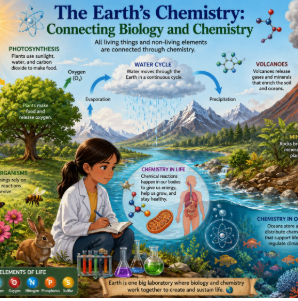
    The Earth is like a giant laboratory where chemistry and biology work together every second. Atoms such as carbon, hydrogen, oxygen, and nitrogen combine to form molecules that create life. These chemical elements are found in the air, water, soil, and even inside our bodies. Without Earth’s unique chemical balance, life would not exist.
    One of the most important connections between biology and chemistry is the carbon cycle. Carbon atoms move through the atmosphere, plants, animals, and the soil in a continuous cycle. Through photosynthesis, plants use sunlight to turn carbon dioxide and water into glucose and oxygen. This chemical reaction supports almost all life on Earth and shows how chemistry powers biological processes.
    Water is another powerful example. Its chemical structure (H₂O) gives it special properties like cohesion and the ability to dissolve many substances. Because of this, water helps transport nutrients in plants and animals. In living cells, chemical reactions happen in water, making it essential for survival. Biology depends on the chemical properties of water every day.
    Even the soil beneath our feet shows the link between biology and chemistry. Minerals and nutrients in the soil are products of chemical reactions in rocks and organic matter. Microorganisms break down dead plants and animals, returning important chemicals to the Earth. This recycling process keeps ecosystems balanced and life continuing.
    Moral:
    Science is deeply connected—when chemistry and biology work together, they create and sustain life on Earth.
    ACCL PORTAL DAY 97 TASK STORY POST @Badaruddin Chai wala The Earth’s Chemistry: Connecting Biology and Chemistry The Earth is like a giant laboratory where chemistry and biology work together every second. 🌍 Atoms such as carbon, hydrogen, oxygen, and nitrogen combine to form molecules that create life. These chemical elements are found in the air, water, soil, and even inside our bodies. Without Earth’s unique chemical balance, life would not exist. One of the most important connections between biology and chemistry is the carbon cycle. 🌱 Carbon atoms move through the atmosphere, plants, animals, and the soil in a continuous cycle. Through photosynthesis, plants use sunlight to turn carbon dioxide and water into glucose and oxygen. This chemical reaction supports almost all life on Earth and shows how chemistry powers biological processes. Water is another powerful example. 💧 Its chemical structure (H₂O) gives it special properties like cohesion and the ability to dissolve many substances. Because of this, water helps transport nutrients in plants and animals. In living cells, chemical reactions happen in water, making it essential for survival. Biology depends on the chemical properties of water every day. Even the soil beneath our feet shows the link between biology and chemistry. 🌾 Minerals and nutrients in the soil are products of chemical reactions in rocks and organic matter. Microorganisms break down dead plants and animals, returning important chemicals to the Earth. This recycling process keeps ecosystems balanced and life continuing. Moral: Science is deeply connected—when chemistry and biology work together, they create and sustain life on Earth. 🌎✨
    0 التعليقات 0 المشاركات 908 مشاهدة
  • Story post. 9
    ACCL Day. 62
    “Periodic Table: The Language of Science”

    Paragraph 1:
    The Periodic Table is called the “language of science” because it organizes all chemical elements in a way that reveals patterns and relationships. Each element has a symbol, atomic number, and unique properties. Just like letters form words, elements combine to form compounds and reactions that make up the world around us

    Paragraph 2:
    It was developed by Dmitri Mendeleev in 1869. He arranged elements in rows (periods) and columns (groups) based on atomic numbers and chemical properties Elements in the same group often behave similarly, helping scientists predict reactions and understand trends.

    Paragraph 3:
    The periodic table is more than a chart—it is a tool for discovery By studying patterns, scientists can predict new elements, design new materials, and explain natural phenomena. It connects chemistry, physics, and biology, helping us understand the universe better

    Paragraph 4 (Moral):
    The periodic table teaches us that everything in the universe is connected Understanding these connections inspires curiosity, innovation, and scientific exploration. Knowledge of patterns in nature empowers us to create and discover

    Hashtags:
    #PeriodicTable #Chemistry #Science #STEM #Elements #Discovery #Learning #Innovation #Education #Curiosity`````````````````
    Story post. 9 ACCL Day. 62 “Periodic Table: The Language of Science” 🧪✨ Paragraph 1: The Periodic Table is called the “language of science” 🧪🌍 because it organizes all chemical elements in a way that reveals patterns and relationships. Each element has a symbol, atomic number, and unique properties. Just like letters form words, elements combine to form compounds and reactions that make up the world around us 🌌💡 Paragraph 2: It was developed by Dmitri Mendeleev in 1869. He arranged elements in rows (periods) and columns (groups) based on atomic numbers and chemical properties 📊✨ Elements in the same group often behave similarly, helping scientists predict reactions and understand trends. Paragraph 3: The periodic table is more than a chart—it is a tool for discovery 🔬🌟 By studying patterns, scientists can predict new elements, design new materials, and explain natural phenomena. It connects chemistry, physics, and biology, helping us understand the universe better 🌌🧬 Paragraph 4 (Moral): The periodic table teaches us that everything in the universe is connected 🌈💛 Understanding these connections inspires curiosity, innovation, and scientific exploration. Knowledge of patterns in nature empowers us to create and discover 🔬💡 Hashtags: #PeriodicTable #Chemistry #Science #STEM #Elements #Discovery #Learning #Innovation #Education #Curiosity`````````````````
    0 التعليقات 0 المشاركات 3856 مشاهدة
  • Story post. 6
    ACCL Day. 41
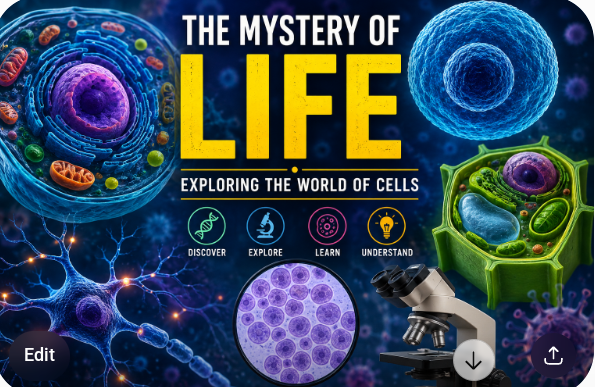
    The Mystery of Life: Exploring the World of Cells

    Paragraph 1:
    Deep inside every living thing , there exists a tiny world invisible to the naked eye. Cells are the basic building blocks of life, forming plants, animals, and even humans. Though microscopic, they carry out powerful tasks that keep life moving every single moment .

    Paragraph 2:
    Each cell works like a small factory . It takes in nutrients, produces energy, and removes waste. Some cells help us think , some help us move , and others protect us from illness. Every type has a special role to perform.

    Paragraph 3:
    There are different kinds of cells in the body . For example, red blood cells carry oxygen, while nerve cells send messages throughout the body . Even plants have their own special cells that help them grow and make food through sunlight .

    Paragraph 4:
    The more scientists study cells , the more they discover about the mystery of life. These tiny structures show us that even the smallest parts can have the greatest importance. Life’s biggest secrets often exist in the smallest places .

    Moral:
    Even the smallest things can hold the greatest power and importance.

    Hashtags:
    #Cells #ScienceStory #BiologyBasics #MysteryOfLife #LearningJourney
    Story post. 6 ACCL Day. 41 The Mystery of Life: Exploring the World of Cells Paragraph 1: Deep inside every living thing 🧬✨, there exists a tiny world invisible to the naked eye. Cells are the basic building blocks of life, forming plants, animals, and even humans. Though microscopic, they carry out powerful tasks that keep life moving every single moment 😊. Paragraph 2: Each cell works like a small factory 🏭🔬. It takes in nutrients, produces energy, and removes waste. Some cells help us think 🧠, some help us move 💪, and others protect us from illness. Every type has a special role to perform. Paragraph 3: There are different kinds of cells in the body 🌱. For example, red blood cells carry oxygen, while nerve cells send messages throughout the body ⚡. Even plants have their own special cells that help them grow and make food through sunlight ☀️. Paragraph 4: The more scientists study cells 🔍, the more they discover about the mystery of life. These tiny structures show us that even the smallest parts can have the greatest importance. Life’s biggest secrets often exist in the smallest places 🌟. Moral: Even the smallest things can hold the greatest power and importance. Hashtags: #Cells #ScienceStory #BiologyBasics #MysteryOfLife #LearningJourney
    0 التعليقات 0 المشاركات 1689 مشاهدة
  • https://youtu.be/JsBUezaItfM

    #rsisb
    Roll no 159
    Foundation Level Student
    Date: 19 February 2026

    Description:
    The song “Why Do We Experiment? The Search for Truth in Biology” explores the curiosity and determination that drive scientific discovery. It reflects on how experiments help us understand life at its deepest levels, from tiny cells to complex living systems. The song highlights the idea that biology is not just about facts, but about questioning, testing, and learning through exploration. It portrays scientists as seekers of truth who use experiments to uncover the hidden patterns of life and nature. With an inspiring and thoughtful tone, the song celebrates curiosity, persistence, and the human desire to understand the living world, reminding listeners that every experiment is a step closer to truth and knowledge.
    https://youtu.be/JsBUezaItfM #rsisb Roll no 159 Foundation Level Student Date: 19 February 2026 Description: The song “Why Do We Experiment? The Search for Truth in Biology” explores the curiosity and determination that drive scientific discovery. It reflects on how experiments help us understand life at its deepest levels, from tiny cells to complex living systems. The song highlights the idea that biology is not just about facts, but about questioning, testing, and learning through exploration. It portrays scientists as seekers of truth who use experiments to uncover the hidden patterns of life and nature. With an inspiring and thoughtful tone, the song celebrates curiosity, persistence, and the human desire to understand the living world, reminding listeners that every experiment is a step closer to truth and knowledge.
    0 التعليقات 0 المشاركات 1122 مشاهدة
  • #rsisb
    Roll No 138
    story No 20

    Periodic Table: The Language of Science

    The periodic table is often called the language of science because it organizes all known chemical elements in a clear, logical system that scientists around the world understand and use. Just like letters form words and sentences, elements in the periodic table combine to form everything in the universe—from the air we breathe to the stars in the sky.

    This powerful table arranges elements by their atomic number, chemical properties, and electron structure, revealing patterns that help scientists predict how elements will react with each other. Metals, non-metals, and metalloids each have their own place, making the table a map of matter itself.

    More than just a chart, the periodic table tells a story of discovery, innovation, and human curiosity. It helps students learn the basics of chemistry, supports researchers in creating new materials and medicines, and connects physics, biology, and environmental science under one universal system.

    In short, the periodic table is not just a scientific tool—it is a universal language that explains how the world is built, how it changes, and how we can understand it.
    #rsisb Roll No 138 story No 20 🧪 Periodic Table: The Language of Science The periodic table is often called the language of science because it organizes all known chemical elements in a clear, logical system that scientists around the world understand and use. Just like letters form words and sentences, elements in the periodic table combine to form everything in the universe—from the air we breathe to the stars in the sky. This powerful table arranges elements by their atomic number, chemical properties, and electron structure, revealing patterns that help scientists predict how elements will react with each other. Metals, non-metals, and metalloids each have their own place, making the table a map of matter itself. More than just a chart, the periodic table tells a story of discovery, innovation, and human curiosity. It helps students learn the basics of chemistry, supports researchers in creating new materials and medicines, and connects physics, biology, and environmental science under one universal system. In short, the periodic table is not just a scientific tool—it is a universal language that explains how the world is built, how it changes, and how we can understand it. 🌍✨
    1
    0 التعليقات 0 المشاركات 2075 مشاهدة
  • Story : 6
    Day 41: The Mystery of Life: Exploring the World of Cells
    Task: 41

    Cells ki Khufia Dunya: Zindagi ka Asal Raaz
    Tasawwur karein ek aisi azimushaan imarat ka jo itni chhoti hai ke aam aankh se nazar nahi aati, magar uske andar hazaron log din raat kaam kar rahe hain. Hamari zindagi ka aaghaz bhi aise hi ek nanhe se "Cell" se hota hai. Ye cells hamare jism ke wo nanhe mistry hain jo har waqt murammat, tanaee (energy) banane, aur hamein zinda rakhne mein masroof rehte hain. In ki dunya itni pur-asrar hai ke har cell ke andar ek pura "shahar" basa hota hai. microscopic

    Har cell ke darmiyan ek "Nucleus" hota hai, jo bilkul kisi shahar ke control room ya computer ki tarah kaam karta hai. Is ke paas hamari zindagi ka pura naksha (DNA) maujood hota hai. Is ke aas paas "Mitochondria" naam ke nanhe bijli ghar (power plants) hote hain jo hamein bhagne, khelne aur sochne ke liye tanaee faraham karte hain. Agar ye nanhe saathi apna kaam rok dein, to zindagi ki ye saari rounaq ek pal mein khatam ho jaye. factory

    In cells ki sab se hairat-angez baat unka aapas mein taluq aur ittehad hai. Arabon cells mil kar ek dil banate hain jo dhadakta hai, aur fefde (lungs) banate hain jo saans lete hain. Inhein pata hota hai ke kab purane ho kar hat jana hai aur kab naye cells ko jagah deni hai. Ye sab ek makhsoos nizaam ke tehat hota hai jise dekh kar insaan ki aqal dang reh jati hai ke itni microscopic satah par itna bara nizam kaise chal raha hai!

    Jab hum apni body ke is "Mystery of Life" ko samajhte hain, to hamein ehsas hota hai ke hum akele nahi hain. Hamare andar ek puri kaaynat dhadak rahi hai. Har cell ek nishani hai ke zindagi kitni qeemti aur munazzam (organized) hai. In nanhe cells ki koshishon ka natija hi hai ke hum aaj zinda hain aur is khubsurat dunya ka mushahida kar rahe hain.

    Moral: Zindagi ki har chhoti cheez ki qadr karein, kyunke badi kamyabiyan hamesha nanhe aur pur-khuloos qadmon (cells) ke milne se hi banti hain.

    #CellBiology #MysteryOfLife #ScienceMagic #MicroscopicWorld #LifeLessons #HumanBody #ScienceIsBeautiful
    Story : 6 Day 41: The Mystery of Life: Exploring the World of Cells Task: 41 Cells ki Khufia Dunya: Zindagi ka Asal Raaz 🧬 Tasawwur karein ek aisi azimushaan imarat ka jo itni chhoti hai ke aam aankh se nazar nahi aati, magar uske andar hazaron log din raat kaam kar rahe hain. Hamari zindagi ka aaghaz bhi aise hi ek nanhe se "Cell" se hota hai. Ye cells hamare jism ke wo nanhe mistry hain jo har waqt murammat, tanaee (energy) banane, aur hamein zinda rakhne mein masroof rehte hain. In ki dunya itni pur-asrar hai ke har cell ke andar ek pura "shahar" basa hota hai. 🏗️ microscopic Har cell ke darmiyan ek "Nucleus" hota hai, jo bilkul kisi shahar ke control room ya computer ki tarah kaam karta hai. Is ke paas hamari zindagi ka pura naksha (DNA) maujood hota hai. Is ke aas paas "Mitochondria" naam ke nanhe bijli ghar (power plants) hote hain jo hamein bhagne, khelne aur sochne ke liye tanaee faraham karte hain. Agar ye nanhe saathi apna kaam rok dein, to zindagi ki ye saari rounaq ek pal mein khatam ho jaye. ⚡ factory In cells ki sab se hairat-angez baat unka aapas mein taluq aur ittehad hai. Arabon cells mil kar ek dil banate hain jo dhadakta hai, aur fefde (lungs) banate hain jo saans lete hain. Inhein pata hota hai ke kab purane ho kar hat jana hai aur kab naye cells ko jagah deni hai. Ye sab ek makhsoos nizaam ke tehat hota hai jise dekh kar insaan ki aqal dang reh jati hai ke itni microscopic satah par itna bara nizam kaise chal raha hai! 🤝🧠 Jab hum apni body ke is "Mystery of Life" ko samajhte hain, to hamein ehsas hota hai ke hum akele nahi hain. Hamare andar ek puri kaaynat dhadak rahi hai. Har cell ek nishani hai ke zindagi kitni qeemti aur munazzam (organized) hai. In nanhe cells ki koshishon ka natija hi hai ke hum aaj zinda hain aur is khubsurat dunya ka mushahida kar rahe hain. 🌍✨ Moral: Zindagi ki har chhoti cheez ki qadr karein, kyunke badi kamyabiyan hamesha nanhe aur pur-khuloos qadmon (cells) ke milne se hi banti hain. #CellBiology #MysteryOfLife #ScienceMagic #MicroscopicWorld #LifeLessons #HumanBody #ScienceIsBeautiful 🧪🔬
    0 التعليقات 0 المشاركات 5185 مشاهدة
  • RSISB
    Story post
    Post No 110
    Roll No 58
    Bio Detectives: Unveiling the DNA Code
    Step into the fascinating world of biology where curiosity meets science!
    In Bio Detectives: Unveiling the DNA Code, we explore the hidden secrets inside our DNA — the blueprint of life. From understanding genetic clues to discovering how traits are passed on, this journey reveals how science helps us decode life itself.
    Get ready to think, explore, and discover like a true bio detective!
    Hashtags:
    #BioDetectives
    #DNA
    #ScienceStory
    #Biology
    #Genetics
    #LearningIsFun
    #STEM
    #ScienceEducation
    #FutureScientists
    #ExploreScience
    Asma Shaheen EducationWali
    Saima Happinesswali
    Irum Asim
    RSISB Story post Post No 110 Roll No 58 🧬 Bio Detectives: Unveiling the DNA Code 🔍 Step into the fascinating world of biology where curiosity meets science! 🧪✨ In Bio Detectives: Unveiling the DNA Code, we explore the hidden secrets inside our DNA — the blueprint of life. From understanding genetic clues to discovering how traits are passed on, this journey reveals how science helps us decode life itself. Get ready to think, explore, and discover like a true bio detective! 🧠🧬 🔖 Hashtags: #BioDetectives #DNA #ScienceStory #Biology #Genetics #LearningIsFun #STEM #ScienceEducation #FutureScientists #ExploreScience Asma Shaheen EducationWali Saima Happinesswali Irum Asim
    0 التعليقات 0 المشاركات 4475 مشاهدة
  • At-Home Molecular Testing Market Forecast: Shaping the Future of Home Diagnostics

    The At-Home Molecular Testing Market forecast indicates robust growth as consumer interest in home diagnostics intensifies. Rising health consciousness and convenience-driven healthcare solutions are pushing individuals toward molecular testing kits that deliver rapid, reliable results. These kits cover a spectrum of applications, including infectious disease detection, genetic predisposition analysis, and wellness monitoring. Advances in molecular biology, coupled with mobile app integration, have streamlined sample collection, analysis, and reporting. The market is also witnessing partnerships between diagnostics companies and telehealth providers, creating a seamless continuum of care.

    https://www.marketresearchfuture.com/reports/at-home-molecular-testing-market-37046

    Looking ahead, innovation in sample-to-result technologies and AI-powered data interpretation is expected to drive market expansion. Companies focusing on user-friendly, cost-effective solutions will gain a competitive edge. Additionally, regional growth patterns suggest higher adoption in urban areas with tech-savvy populations, while educational campaigns target wider demographics. As awareness spreads, consumer trust continues to strengthen, positioning the At-Home Molecular Testing Market forecast for significant development over the next decade.

    FAQs:
    Q1: How fast are at-home molecular test results?
    A1: Many tests provide results within minutes to a few hours, depending on the complexity.

    Q2: Can these tests detect infectious diseases?
    A2: Yes, they are designed to identify various pathogens accurately.

    Q3: Are at-home tests suitable for routine health monitoring?
    A3: Absolutely; they are convenient tools for ongoing wellness checks and preventive care.
    At-Home Molecular Testing Market Forecast: Shaping the Future of Home Diagnostics The At-Home Molecular Testing Market forecast indicates robust growth as consumer interest in home diagnostics intensifies. Rising health consciousness and convenience-driven healthcare solutions are pushing individuals toward molecular testing kits that deliver rapid, reliable results. These kits cover a spectrum of applications, including infectious disease detection, genetic predisposition analysis, and wellness monitoring. Advances in molecular biology, coupled with mobile app integration, have streamlined sample collection, analysis, and reporting. The market is also witnessing partnerships between diagnostics companies and telehealth providers, creating a seamless continuum of care. https://www.marketresearchfuture.com/reports/at-home-molecular-testing-market-37046 Looking ahead, innovation in sample-to-result technologies and AI-powered data interpretation is expected to drive market expansion. Companies focusing on user-friendly, cost-effective solutions will gain a competitive edge. Additionally, regional growth patterns suggest higher adoption in urban areas with tech-savvy populations, while educational campaigns target wider demographics. As awareness spreads, consumer trust continues to strengthen, positioning the At-Home Molecular Testing Market forecast for significant development over the next decade. FAQs: Q1: How fast are at-home molecular test results? A1: Many tests provide results within minutes to a few hours, depending on the complexity. Q2: Can these tests detect infectious diseases? A2: Yes, they are designed to identify various pathogens accurately. Q3: Are at-home tests suitable for routine health monitoring? A3: Absolutely; they are convenient tools for ongoing wellness checks and preventive care.
    WWW.MARKETRESEARCHFUTURE.COM
    At-Home Molecular Testing Market Size, Share, Trends, 2035
    At-Home Molecular Testing Market growth is projected to reach USD 19.40 Billion, at a 9.42% CAGR by driving industry size, share, top company analysis, segments research, trends and forecast report 2025 to 2035.
    0 التعليقات 0 المشاركات 4582 مشاهدة
الصفحات المعززة