Story post. 9
ACCL Day. 62
“Periodic Table: The Language of Science”
Paragraph 1:
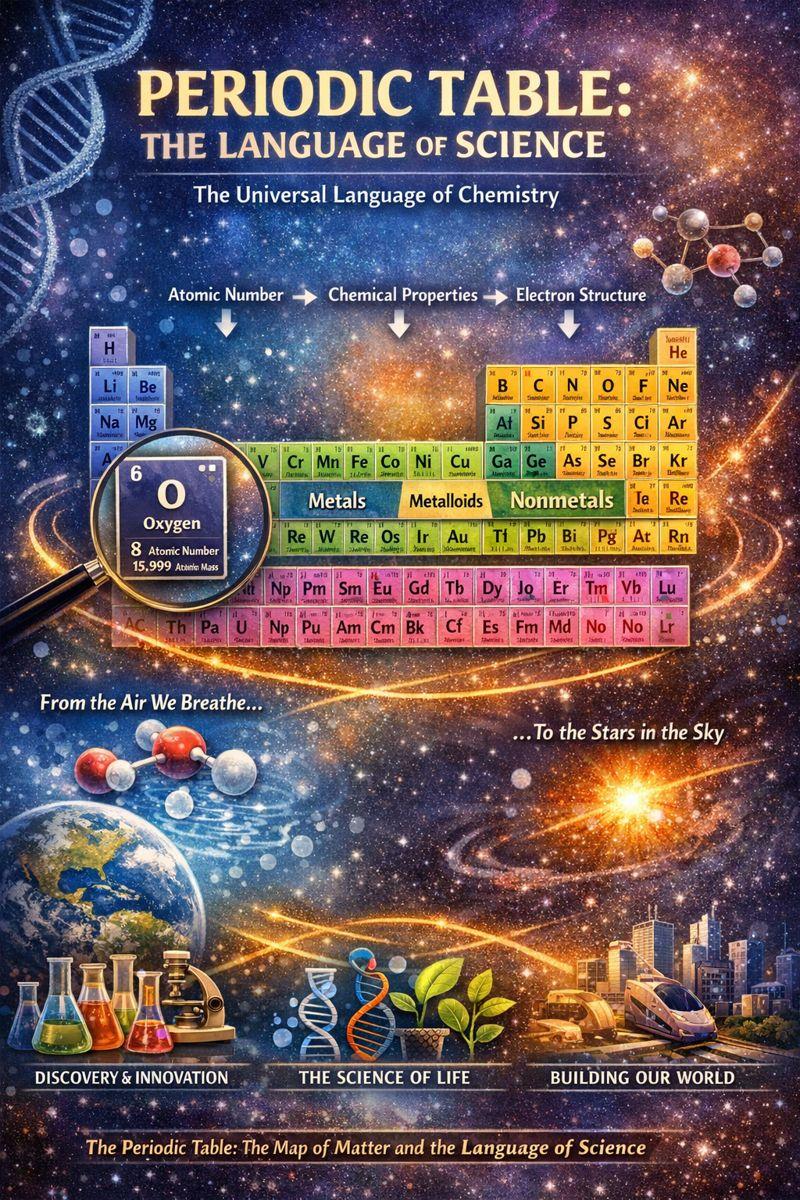
The Periodic Table is called the “language of science” because it organizes all chemical elements in a way that reveals patterns and relationships. Each element has a symbol, atomic number, and unique properties. Just like letters form words, elements combine to form compounds and reactions that make up the world around us
Paragraph 2:
It was developed by Dmitri Mendeleev in 1869. He arranged elements in rows (periods) and columns (groups) based on atomic numbers and chemical properties Elements in the same group often behave similarly, helping scientists predict reactions and understand trends.
Paragraph 3:
The periodic table is more than a chart—it is a tool for discovery By studying patterns, scientists can predict new elements, design new materials, and explain natural phenomena. It connects chemistry, physics, and biology, helping us understand the universe better
Paragraph 4 (Moral):
The periodic table teaches us that everything in the universe is connected Understanding these connections inspires curiosity, innovation, and scientific exploration. Knowledge of patterns in nature empowers us to create and discover
Hashtags:
#PeriodicTable #Chemistry #Science #STEM #Elements #Discovery #Learning #Innovation #Education #Curiosity`````````````````
ACCL Day. 62
“Periodic Table: The Language of Science”
Paragraph 1:
The Periodic Table is called the “language of science” because it organizes all chemical elements in a way that reveals patterns and relationships. Each element has a symbol, atomic number, and unique properties. Just like letters form words, elements combine to form compounds and reactions that make up the world around us
Paragraph 2:
It was developed by Dmitri Mendeleev in 1869. He arranged elements in rows (periods) and columns (groups) based on atomic numbers and chemical properties Elements in the same group often behave similarly, helping scientists predict reactions and understand trends.
Paragraph 3:
The periodic table is more than a chart—it is a tool for discovery By studying patterns, scientists can predict new elements, design new materials, and explain natural phenomena. It connects chemistry, physics, and biology, helping us understand the universe better
Paragraph 4 (Moral):
The periodic table teaches us that everything in the universe is connected Understanding these connections inspires curiosity, innovation, and scientific exploration. Knowledge of patterns in nature empowers us to create and discover
Hashtags:
#PeriodicTable #Chemistry #Science #STEM #Elements #Discovery #Learning #Innovation #Education #Curiosity`````````````````
Story post. 9
ACCL Day. 62
“Periodic Table: The Language of Science” 🧪✨
Paragraph 1:
The Periodic Table is called the “language of science” 🧪🌍 because it organizes all chemical elements in a way that reveals patterns and relationships. Each element has a symbol, atomic number, and unique properties. Just like letters form words, elements combine to form compounds and reactions that make up the world around us 🌌💡
Paragraph 2:
It was developed by Dmitri Mendeleev in 1869. He arranged elements in rows (periods) and columns (groups) based on atomic numbers and chemical properties 📊✨ Elements in the same group often behave similarly, helping scientists predict reactions and understand trends.
Paragraph 3:
The periodic table is more than a chart—it is a tool for discovery 🔬🌟 By studying patterns, scientists can predict new elements, design new materials, and explain natural phenomena. It connects chemistry, physics, and biology, helping us understand the universe better 🌌🧬
Paragraph 4 (Moral):
The periodic table teaches us that everything in the universe is connected 🌈💛 Understanding these connections inspires curiosity, innovation, and scientific exploration. Knowledge of patterns in nature empowers us to create and discover 🔬💡
Hashtags:
#PeriodicTable #Chemistry #Science #STEM #Elements #Discovery #Learning #Innovation #Education #Curiosity`````````````````

0 Commentarios
0 Acciones
451 Views