• #rsisb
    roll no 163
    song no 2

    The relationship of molecules is one of the most fascinating concepts in the field of Chemistry, as it explains how the smallest units of matter come together to form everything we see and experience in our daily lives. From the air we breathe to the food we eat and even the cells in our bodies, molecules play a vital role in shaping the structure and function of all matter.

    A molecule is formed when two or more atoms bond together through a process known as Chemical Bonding. These bonds can be strong or weak, depending on how atoms share or transfer electrons. The most common types include covalent bonds (where electrons are shared) and ionic bonds (where electrons are transferred). This bonding creates stable structures that give substances their unique properties, such as color, texture, and state (solid, liquid, or gas).

    The relationship between molecules goes beyond just bonding—it also includes how molecules interact with each other. Forces like intermolecular attractions determine how substances behave under different conditions. For example, the reason water sticks together and forms droplets is due to these molecular interactions. These relationships are essential in understanding natural phenomena such as evaporation, condensation, and even weather patterns.

    In the human body, molecular relationships are even more complex and important. The process of Photosynthesis in plants and cellular respiration in humans both rely on precise molecular interactions to produce energy. Without these processes, life as we know it would not exist. Molecules like proteins, DNA, and enzymes work together in highly organized ways to support growth, repair, and survival.

    Molecular relationships also drive innovation in science and technology. By understanding how molecules behave, scientists can create new medicines, develop advanced materials, and solve environmental challenges. For example, designing drugs that target specific molecules in the body helps treat diseases more effectively.

    In simple terms, the relationship of molecules is the foundation of everything in the universe. When atoms connect, they form molecules—and when molecules interact, they create systems that support life and the world around us. Understanding these relationships not only helps us learn science but also opens the door to discovering new possibilities for the future.


    #Chemistry #Molecules #Science #ChemicalBonding #Atoms #STEM #Education #Biology #ExploreScience #Knowledge

    https://youtu.be/3PcRtIb7Xfw?si=x5JY_AJBzwfUIiwp
    #rsisb roll no 163 song no 2 The relationship of molecules is one of the most fascinating concepts in the field of Chemistry, as it explains how the smallest units of matter come together to form everything we see and experience in our daily lives. 🌍 From the air we breathe to the food we eat and even the cells in our bodies, molecules play a vital role in shaping the structure and function of all matter. A molecule is formed when two or more atoms bond together through a process known as Chemical Bonding. These bonds can be strong or weak, depending on how atoms share or transfer electrons. The most common types include covalent bonds (where electrons are shared) and ionic bonds (where electrons are transferred). βš›οΈβœ¨ This bonding creates stable structures that give substances their unique properties, such as color, texture, and state (solid, liquid, or gas). The relationship between molecules goes beyond just bonding—it also includes how molecules interact with each other. Forces like intermolecular attractions determine how substances behave under different conditions. For example, the reason water sticks together and forms droplets is due to these molecular interactions. πŸ’§ These relationships are essential in understanding natural phenomena such as evaporation, condensation, and even weather patterns. 🌦️ In the human body, molecular relationships are even more complex and important. The process of Photosynthesis in plants and cellular respiration in humans both rely on precise molecular interactions to produce energy. 🧬 Without these processes, life as we know it would not exist. Molecules like proteins, DNA, and enzymes work together in highly organized ways to support growth, repair, and survival. Molecular relationships also drive innovation in science and technology. By understanding how molecules behave, scientists can create new medicines, develop advanced materials, and solve environmental challenges. 🌱 For example, designing drugs that target specific molecules in the body helps treat diseases more effectively. In simple terms, the relationship of molecules is the foundation of everything in the universe. When atoms connect, they form molecules—and when molecules interact, they create systems that support life and the world around us. πŸ’‘ Understanding these relationships not only helps us learn science but also opens the door to discovering new possibilities for the future. πŸš€ #Chemistry πŸ§ͺ #Molecules βš›οΈ #Science 🌍 #ChemicalBonding πŸ’« #Atoms πŸ”¬ #STEM πŸš€ #Education πŸ“š #Biology 🧬 #ExploreScience 🌟 #Knowledge πŸ’‘ https://youtu.be/3PcRtIb7Xfw?si=x5JY_AJBzwfUIiwp
    0 Commenti 0 condivisioni 694 Views
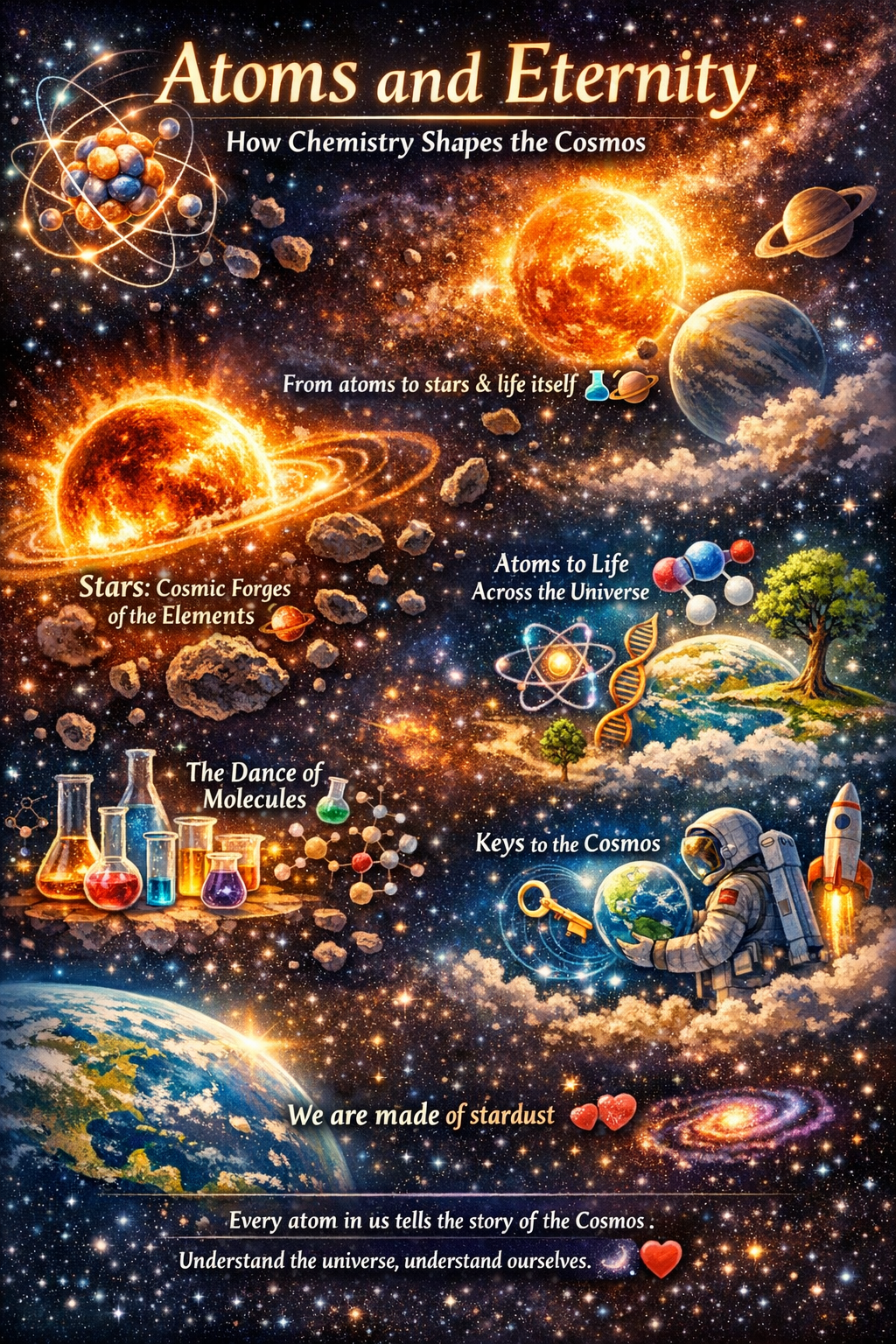
  • ACCL PORTAL DAY 118 TASK STORY POST @Badaruddin Suleman Atoms and Eternity: How Chemistry Shapes the Cosmos

    From the tiniest particles to the vast expanses of space, atoms form the very fabric of our universe. Each atom, composed of protons, neutrons, and electrons, acts like a building block, creating everything from stars and planets to life itself. The laws of chemistry govern how these atoms interact, bond, and transform, giving rise to the incredible diversity we see in the cosmos.

    Stars are not just shining lights; they are cosmic kitchens where atoms are forged. Through nuclear fusion, hydrogen atoms merge to form helium, releasing energy that powers the star and spreads elements across the universe. These elements eventually become part of planets, oceans, and even living beings, connecting every atom in existence to the lifecycle of the cosmos.

    Chemical reactions are the silent artists of the universe, shaping molecules and matter in ways both simple and complex. Water, carbon dioxide, and countless other compounds arise from these interactions, providing the conditions necessary for life. Even the air we breathe and the food we eat are the result of ancient chemical dances performed over billions of years.

    Understanding chemistry is like holding a key to the universe. By studying how atoms behave, scientists can predict cosmic events, create new materials, and even explore possibilities of life beyond Earth. This knowledge reminds us that we are not separate from the universe; we are an expression of its chemistry and eternity.

    Moral: Every atom in us carries the story of the cosmos; by appreciating chemistry, we understand both the universe and ourselves.
    ACCL PORTAL DAY 118 TASK STORY POST @Badaruddin Suleman Atoms and Eternity: How Chemistry Shapes the Cosmos ✨πŸͺ From the tiniest particles to the vast expanses of space, atoms form the very fabric of our universe. πŸ§ͺ Each atom, composed of protons, neutrons, and electrons, acts like a building block, creating everything from stars and planets to life itself. The laws of chemistry govern how these atoms interact, bond, and transform, giving rise to the incredible diversity we see in the cosmos. 🌌 Stars are not just shining lights; they are cosmic kitchens where atoms are forged. πŸ”₯ Through nuclear fusion, hydrogen atoms merge to form helium, releasing energy that powers the star and spreads elements across the universe. These elements eventually become part of planets, oceans, and even living beings, connecting every atom in existence to the lifecycle of the cosmos. 🌟 Chemical reactions are the silent artists of the universe, shaping molecules and matter in ways both simple and complex. 🧬 Water, carbon dioxide, and countless other compounds arise from these interactions, providing the conditions necessary for life. Even the air we breathe and the food we eat are the result of ancient chemical dances performed over billions of years. 🌱 Understanding chemistry is like holding a key to the universe. πŸ—οΈ By studying how atoms behave, scientists can predict cosmic events, create new materials, and even explore possibilities of life beyond Earth. This knowledge reminds us that we are not separate from the universe; we are an expression of its chemistry and eternity. πŸŒπŸ’« Moral: Every atom in us carries the story of the cosmos; by appreciating chemistry, we understand both the universe and ourselves. 🌌❀️
    0 Commenti 0 condivisioni 1816 Views
  • What Are Atoms, and Why Are They the Building Blocks of Everything?

    Atoms are the smallest units of matter that still keep the properties of an element . Everything around us—air , water , plants , animals , people , stars , and planets —is made of atoms. Atoms are so tiny that millions of them can fit on the tip of a needle !

    Each atom has three main parts:

    Protons (positive charge)

    Neutrons (no charge)

    Electrons (negative charge)

    Atoms join together to form molecules , and molecules form everything we see and touch . That’s why atoms are called the building blocks of everything—without atoms, nothing would exist .
    https://youtu.be/LHL7uARfVuw
    🌟 What Are Atoms, and Why Are They the Building Blocks of Everything? βš›οΈ Atoms are the smallest units of matter that still keep the properties of an element βš›οΈ. Everything around us—air 🌬️, water πŸ’§, plants 🌱, animals 🐾, people πŸ‘§πŸ‘¦, stars ⭐, and planets 🌍—is made of atoms. Atoms are so tiny that millions of them can fit on the tip of a needle πŸͺ‘! Each atom has three main parts: Protons βž• (positive charge) Neutrons βšͺ (no charge) Electrons βž– (negative charge) Atoms join together to form molecules πŸ”—, and molecules form everything we see and touch 🀲. That’s why atoms are called the building blocks of everything—without atoms, nothing would exist 🚫✨. https://youtu.be/LHL7uARfVuw
    0 Commenti 0 condivisioni 348 Views
  • ACCL PORTAL DAY 104 TASK STORY POST @Badruddin chaiwala The Blueprint of Existence: Unraveling DNA and the Origins of Life
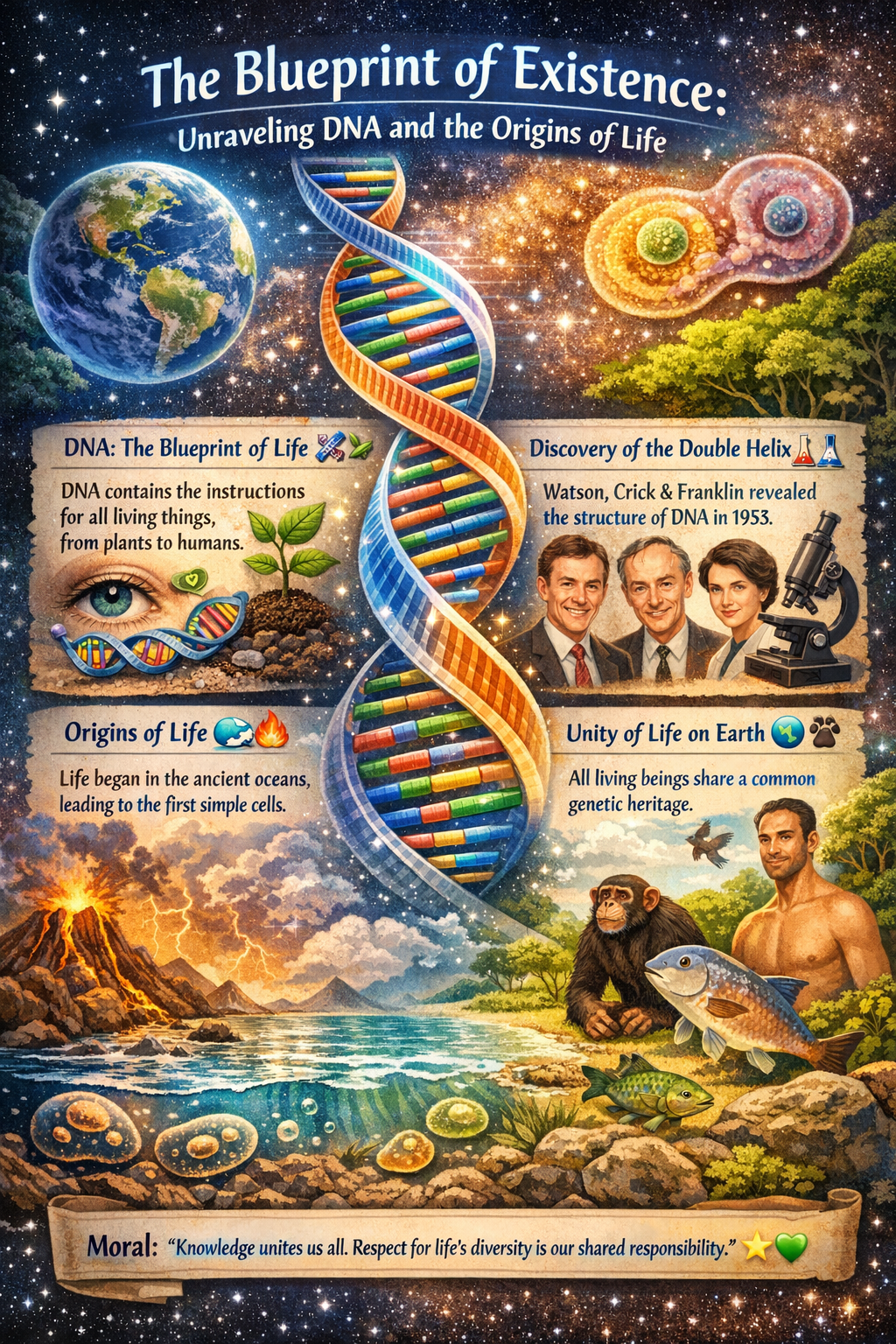
    Life on Earth begins with a tiny but powerful molecule called DNA . Deoxyribonucleic acid carries the instructions that guide how living organisms grow, function, and reproduce. From the color of our eyes to the way plants perform photosynthesis , DNA acts like a biological blueprint. Inside every cell, this twisted ladder-shaped structure stores information that has been passed down for billions of years, connecting all living things in one great chain of life.
    The discovery of DNA’s structure by scientists like James Watson and Francis Crick in 1953 was a turning point in science . Their work, along with crucial contributions from Rosalind Franklin, revealed the double-helix structure of DNA. This discovery helped scientists understand how genetic information is copied and inherited. It opened doors to modern genetics, medicine, and biotechnology, allowing us to study diseases and even explore genetic engineering.
    But DNA’s story goes back even further—back to the origins of life itself . Scientists believe that life may have started in Earth’s early oceans, where simple molecules combined to form more complex compounds. Over time, these molecules developed the ability to replicate, leading to the first simple cells. Through evolution, guided by natural selection, these early life forms gradually became the diverse plants, animals, and humans we see today .
    Understanding DNA reminds us that all living beings share a common origin . Whether it is a tiny bacterium or a human being, the same genetic code forms the foundation of life. This knowledge not only deepens our respect for science but also strengthens our appreciation for the unity and diversity of life on Earth.
    Moral :
    Knowledge is the key to understanding our existence. When we explore the secrets of nature with curiosity and respect, we discover that all life is connected, and every living being deserves care and responsibility.
    ACCL PORTAL DAY 104 TASK STORY POST @Badruddin chaiwala The Blueprint of Existence: Unraveling DNA and the Origins of Life 🧬🌍 Life on Earth begins with a tiny but powerful molecule called DNA 🧬. Deoxyribonucleic acid carries the instructions that guide how living organisms grow, function, and reproduce. From the color of our eyes to the way plants perform photosynthesis 🌱, DNA acts like a biological blueprint. Inside every cell, this twisted ladder-shaped structure stores information that has been passed down for billions of years, connecting all living things in one great chain of life. The discovery of DNA’s structure by scientists like James Watson and Francis Crick in 1953 was a turning point in science πŸ”¬. Their work, along with crucial contributions from Rosalind Franklin, revealed the double-helix structure of DNA. This discovery helped scientists understand how genetic information is copied and inherited. It opened doors to modern genetics, medicine, and biotechnology, allowing us to study diseases and even explore genetic engineering. But DNA’s story goes back even further—back to the origins of life itself 🌊πŸ”₯. Scientists believe that life may have started in Earth’s early oceans, where simple molecules combined to form more complex compounds. Over time, these molecules developed the ability to replicate, leading to the first simple cells. Through evolution, guided by natural selection, these early life forms gradually became the diverse plants, animals, and humans we see today 🐾🌿. Understanding DNA reminds us that all living beings share a common origin 🌎✨. Whether it is a tiny bacterium or a human being, the same genetic code forms the foundation of life. This knowledge not only deepens our respect for science but also strengthens our appreciation for the unity and diversity of life on Earth. Moral 🌟: Knowledge is the key to understanding our existence. When we explore the secrets of nature with curiosity and respect, we discover that all life is connected, and every living being deserves care and responsibility.
    0 Commenti 0 condivisioni 2078 Views
  • ACCL PORTAL DAY 97 TASK STORY POST @Badaruddin Chai wala The Earth’s Chemistry: Connecting Biology and Chemistry
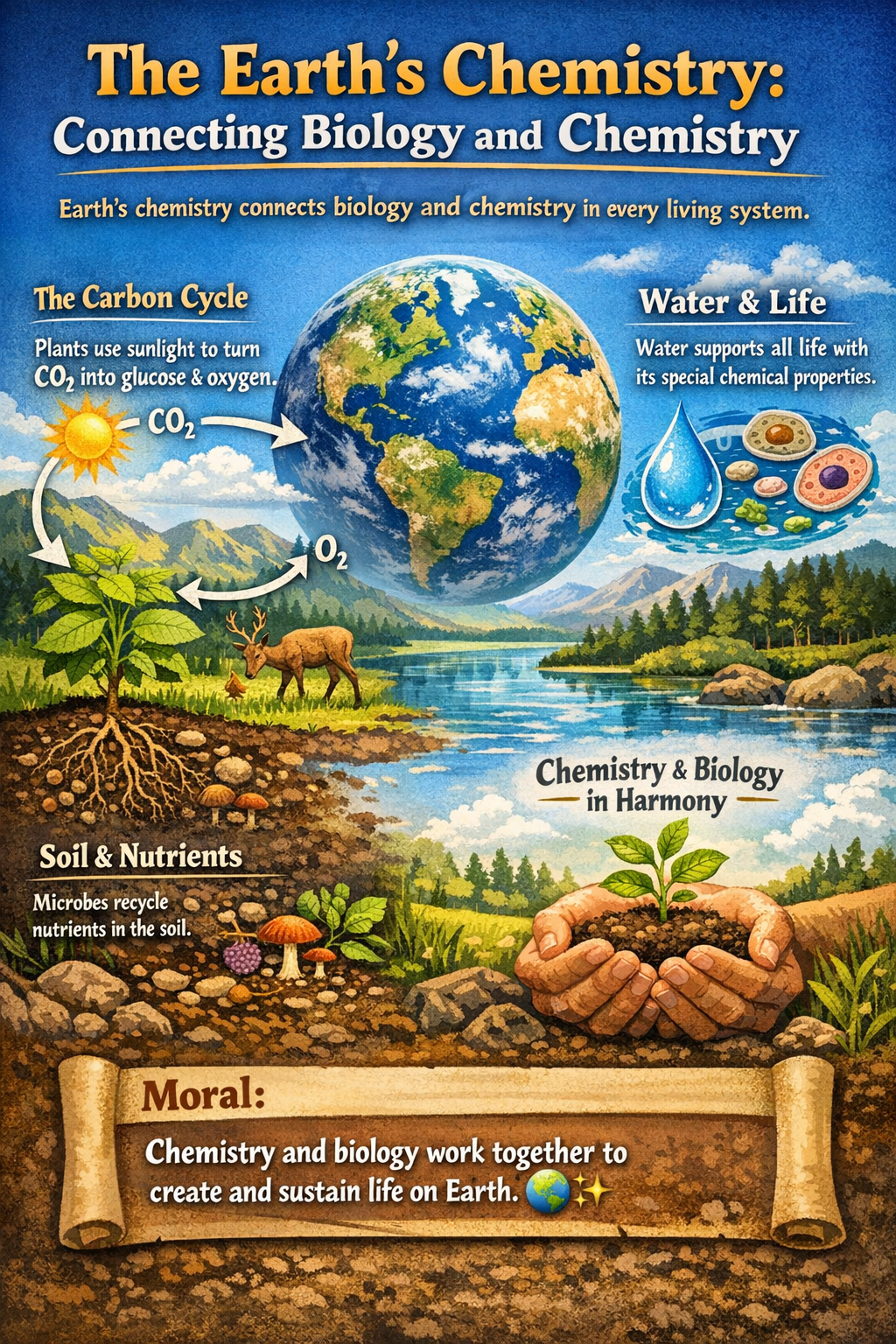
    The Earth is like a giant laboratory where chemistry and biology work together every second. Atoms such as carbon, hydrogen, oxygen, and nitrogen combine to form molecules that create life. These chemical elements are found in the air, water, soil, and even inside our bodies. Without Earth’s unique chemical balance, life would not exist.
    One of the most important connections between biology and chemistry is the carbon cycle. Carbon atoms move through the atmosphere, plants, animals, and the soil in a continuous cycle. Through photosynthesis, plants use sunlight to turn carbon dioxide and water into glucose and oxygen. This chemical reaction supports almost all life on Earth and shows how chemistry powers biological processes.
    Water is another powerful example. Its chemical structure (Hβ‚‚O) gives it special properties like cohesion and the ability to dissolve many substances. Because of this, water helps transport nutrients in plants and animals. In living cells, chemical reactions happen in water, making it essential for survival. Biology depends on the chemical properties of water every day.
    Even the soil beneath our feet shows the link between biology and chemistry. Minerals and nutrients in the soil are products of chemical reactions in rocks and organic matter. Microorganisms break down dead plants and animals, returning important chemicals to the Earth. This recycling process keeps ecosystems balanced and life continuing.
    Moral:
    Science is deeply connected—when chemistry and biology work together, they create and sustain life on Earth.
    ACCL PORTAL DAY 97 TASK STORY POST @Badaruddin Chai wala The Earth’s Chemistry: Connecting Biology and Chemistry The Earth is like a giant laboratory where chemistry and biology work together every second. 🌍 Atoms such as carbon, hydrogen, oxygen, and nitrogen combine to form molecules that create life. These chemical elements are found in the air, water, soil, and even inside our bodies. Without Earth’s unique chemical balance, life would not exist. One of the most important connections between biology and chemistry is the carbon cycle. 🌱 Carbon atoms move through the atmosphere, plants, animals, and the soil in a continuous cycle. Through photosynthesis, plants use sunlight to turn carbon dioxide and water into glucose and oxygen. This chemical reaction supports almost all life on Earth and shows how chemistry powers biological processes. Water is another powerful example. πŸ’§ Its chemical structure (Hβ‚‚O) gives it special properties like cohesion and the ability to dissolve many substances. Because of this, water helps transport nutrients in plants and animals. In living cells, chemical reactions happen in water, making it essential for survival. Biology depends on the chemical properties of water every day. Even the soil beneath our feet shows the link between biology and chemistry. 🌾 Minerals and nutrients in the soil are products of chemical reactions in rocks and organic matter. Microorganisms break down dead plants and animals, returning important chemicals to the Earth. This recycling process keeps ecosystems balanced and life continuing. Moral: Science is deeply connected—when chemistry and biology work together, they create and sustain life on Earth. 🌎✨
    0 Commenti 0 condivisioni 1198 Views
  • #rsisb
    roll no 163
    story post 4

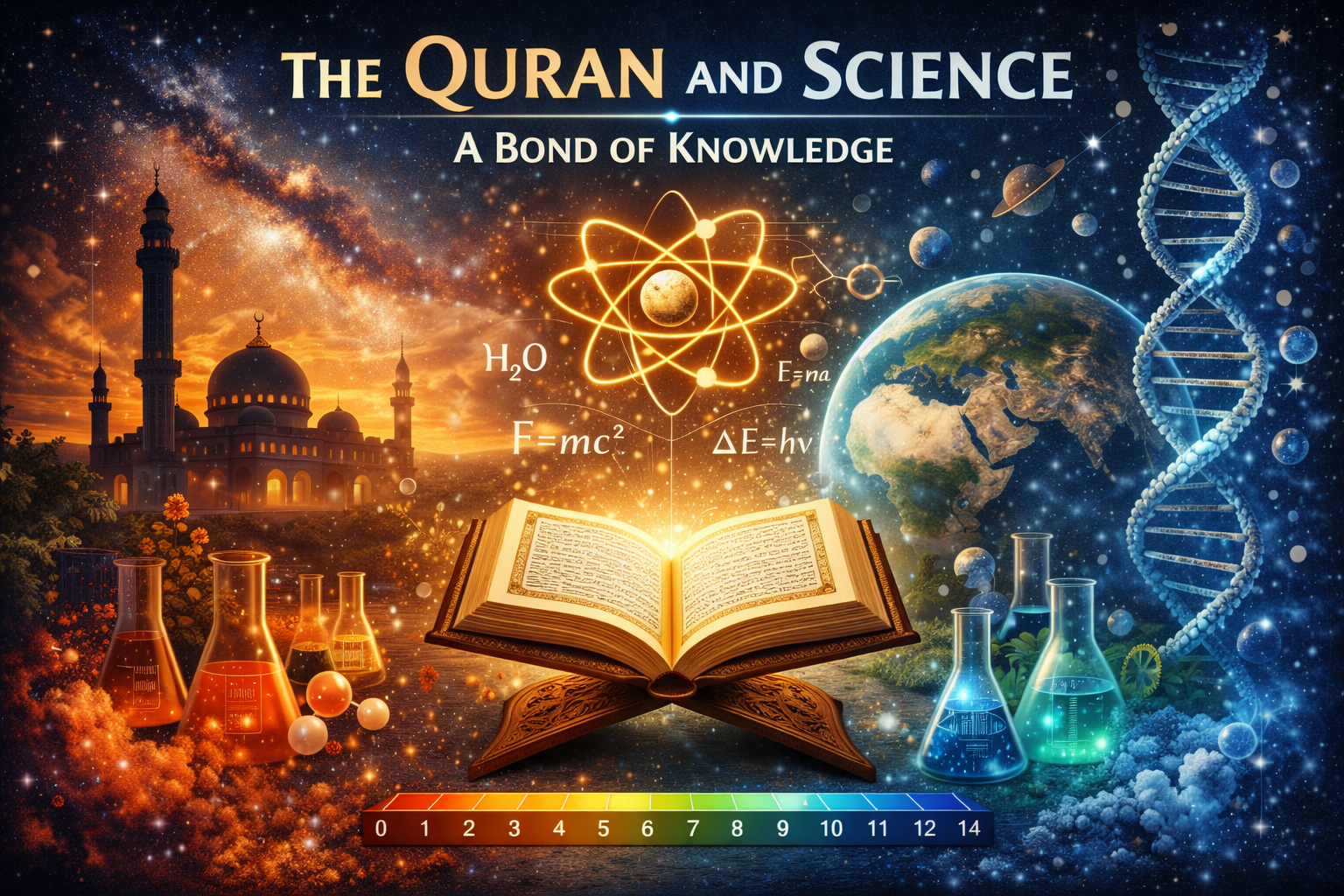
    The Quran and Science are often seen as two distinct sources of knowledge, but they beautifully complement each other. The Quran encourages reflection, observation, and understanding of the natural world, while science provides the tools to explore, experiment, and discover its intricacies. Together, they form a bond of knowledge, showing how faith and reason can coexist harmoniously.

    From the microscopic world of DNA and molecules to the vast cosmos, the teachings of the Quran inspire curiosity and inquiry, guiding us to seek wisdom and understanding. This connection reminds us that the pursuit of knowledge is a noble path, and that exploring the wonders of creation can deepen both scientific insight and spiritual awareness.

    #QuranAndScience #KnowledgeIsPower #FaithAndReason #ExploreTheUniverse #ScientificDiscovery #DivineWisdom #Curiosity #STEMAndFaith #LearnAndReflect #HarmonyOfKnowledge
    #rsisb roll no 163 story post 4 The Quran and Science are often seen as two distinct sources of knowledge, but they beautifully complement each other. πŸŒŒπŸ“– The Quran encourages reflection, observation, and understanding of the natural world, while science provides the tools to explore, experiment, and discover its intricacies. Together, they form a bond of knowledge, showing how faith and reason can coexist harmoniously. From the microscopic world of DNA and molecules to the vast cosmos, the teachings of the Quran inspire curiosity and inquiry, guiding us to seek wisdom and understanding. πŸ”¬βœ¨ This connection reminds us that the pursuit of knowledge is a noble path, and that exploring the wonders of creation can deepen both scientific insight and spiritual awareness. πŸŒπŸ’‘ #QuranAndScience πŸ“–πŸ”¬ #KnowledgeIsPower 🌟 #FaithAndReason ✨🧠 #ExploreTheUniverse 🌌 #ScientificDiscovery πŸš€ #DivineWisdom πŸ™ #Curiosity 🌱 #STEMAndFaith πŸ’‘ #LearnAndReflect πŸ“ #HarmonyOfKnowledge βš–οΈ
    0 Commenti 0 condivisioni 4520 Views
  • #rsisb
    Teacher Training
    Story Post No:15
    Date:18-10-2025

    The Blueprint of Existence: Unraveling DNA and the Origins of Life

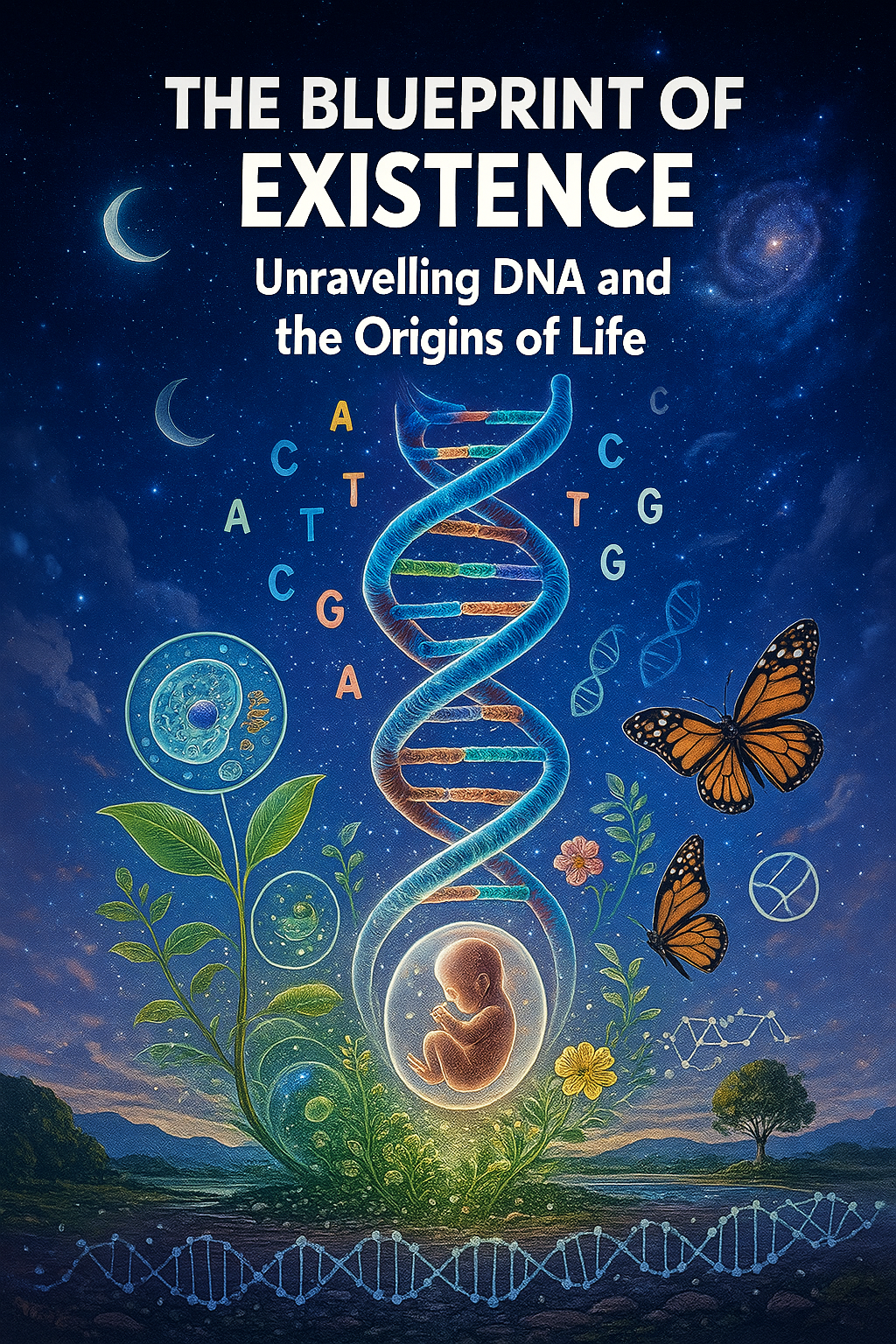
    Every living being carries within it a hidden code — a blueprint written in DNA, the molecule of life itself. From the tiniest microbe to the most complex human, DNA stores the instructions that shape who we are, how we grow, and how life continues through generations.

    This story explores the mystery of DNA, the double helix that revolutionized biology and unlocked the secrets of evolution, genetics, and the origins of life on Earth. It’s a tale of how four simple letters — A, T, C, and G — come together to write the grand story of existence.

    Discover how scientists decode this genetic language to cure diseases , trace ancestry , and even explore possibilities of life beyond our planet . DNA connects us all — humans, animals, and nature — as part of one vast, interconnected web of life.

    Let’s journey into the heart of creation, where chemistry becomes consciousness and molecules become miracles.

    #DNA #OriginOfLife #GeneticCode #ScienceAndDiscovery #LifeOnEarth #MolecularBiology #Genetics #Evolution #ExploreScience #BlueprintOfLife
    #rsisb Teacher Training Story Post No:15 Date:18-10-2025 🧬 The Blueprint of Existence: Unraveling DNA and the Origins of Life 🌍✨ Every living being carries within it a hidden code — a blueprint written in DNA, the molecule of life itself. πŸ’« From the tiniest microbe to the most complex human, DNA stores the instructions that shape who we are, how we grow, and how life continues through generations. πŸŒ±πŸ‘Ά This story explores the mystery of DNA, the double helix that revolutionized biology and unlocked the secrets of evolution, genetics, and the origins of life on Earth. πŸ”πŸŒΏ It’s a tale of how four simple letters — A, T, C, and G — come together to write the grand story of existence. πŸ“œπŸ§  Discover how scientists decode this genetic language to cure diseases πŸ’‰, trace ancestry 🌍, and even explore possibilities of life beyond our planet πŸš€. DNA connects us all — humans, animals, and nature — as part of one vast, interconnected web of life. πŸŒΊπŸ•ΈοΈ Let’s journey into the heart of creation, where chemistry becomes consciousness and molecules become miracles. πŸŒŒπŸ’– #DNA #OriginOfLife #GeneticCode #ScienceAndDiscovery #LifeOnEarth #MolecularBiology #Genetics #Evolution #ExploreScience #BlueprintOfLife 🧬🌿🌍
    0 Commenti 0 condivisioni 12352 Views