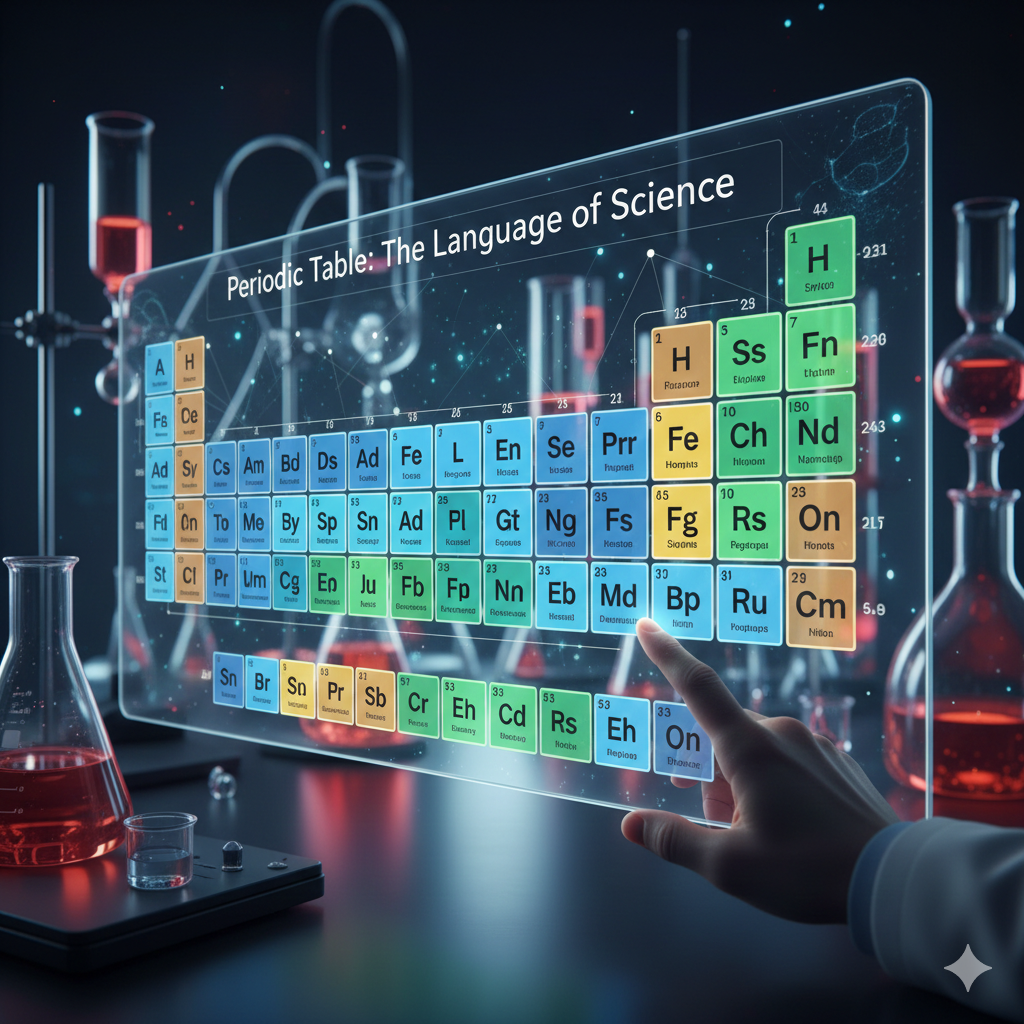
ACCL PORTAL DAY 62 task story post Badaruddin Chai wala Periodic Table: The Language of Science
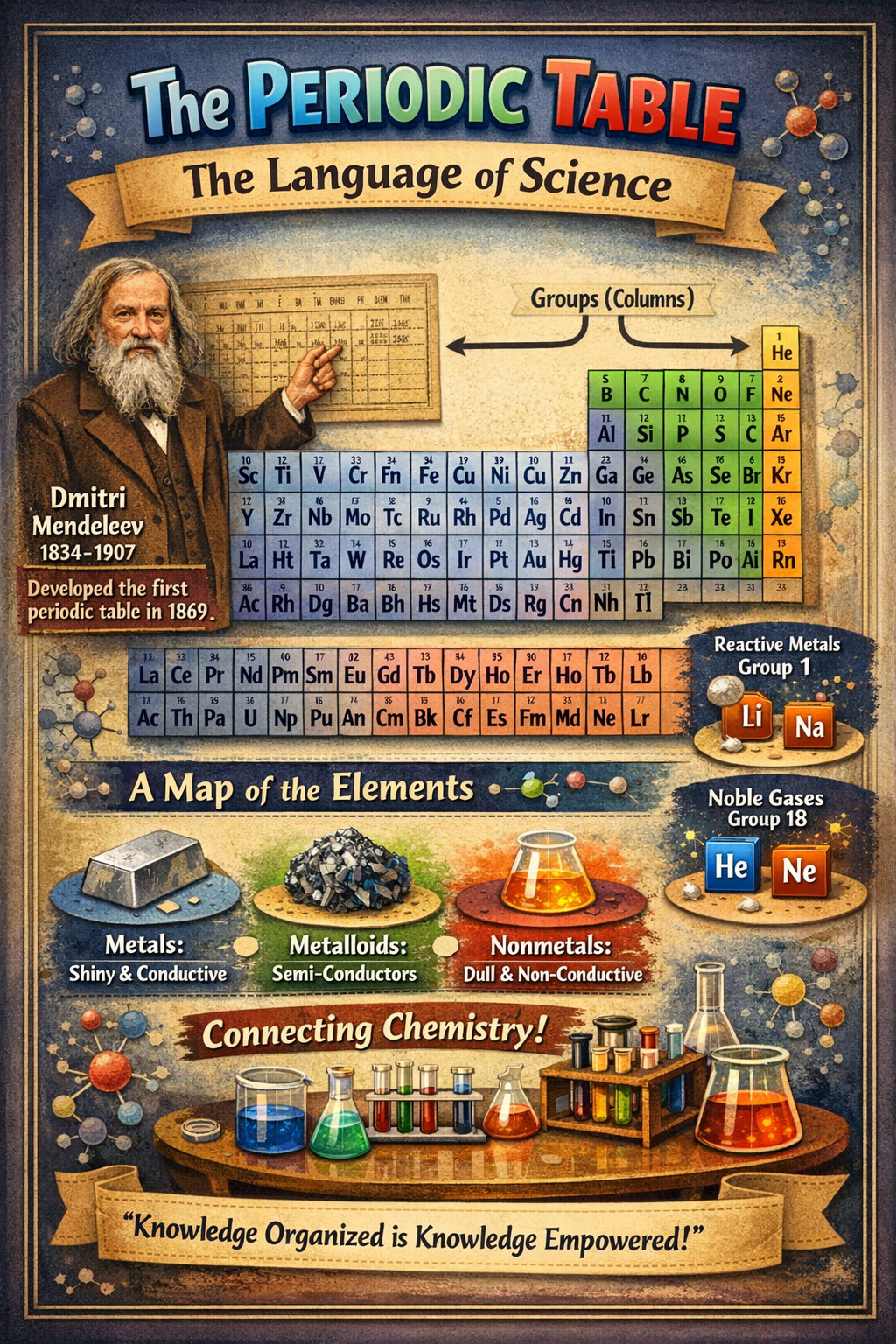
The Periodic Table is one of the most important tools in science. It organizes all known chemical elements in a systematic way. It was first developed by Dmitri Mendeleev in 1869. He arranged elements according to their atomic mass and noticed repeating patterns in their properties. Today, the modern periodic table is arranged by atomic number, which makes it even more accurate.
The periodic table is divided into rows called periods and columns called groups. Elements in the same group have similar chemical properties. For example, Group 1 contains highly reactive metals like lithium and sodium, while Group 18 contains noble gases that are very stable and do not react easily. This arrangement helps scientists predict how elements will behave in chemical reactions.
The table is also divided into different types of elements: metals, nonmetals, and metalloids. Metals are usually shiny, good conductors of heat and electricity, and malleable. Nonmetals have opposite properties, and metalloids share characteristics of both. This classification makes the periodic table easier to understand and use in experiments and research.
In simple words, the periodic table is like a map of the elements. It helps scientists, teachers, and students understand the building blocks of matter. Without the periodic table, studying chemistry would be much more difficult. It truly acts as the language of science, connecting different concepts in a clear and organized way.
Moral:
Knowledge becomes powerful when it is organized and understood clearly.
The Periodic Table is one of the most important tools in science. It organizes all known chemical elements in a systematic way. It was first developed by Dmitri Mendeleev in 1869. He arranged elements according to their atomic mass and noticed repeating patterns in their properties. Today, the modern periodic table is arranged by atomic number, which makes it even more accurate.
The periodic table is divided into rows called periods and columns called groups. Elements in the same group have similar chemical properties. For example, Group 1 contains highly reactive metals like lithium and sodium, while Group 18 contains noble gases that are very stable and do not react easily. This arrangement helps scientists predict how elements will behave in chemical reactions.
The table is also divided into different types of elements: metals, nonmetals, and metalloids. Metals are usually shiny, good conductors of heat and electricity, and malleable. Nonmetals have opposite properties, and metalloids share characteristics of both. This classification makes the periodic table easier to understand and use in experiments and research.
In simple words, the periodic table is like a map of the elements. It helps scientists, teachers, and students understand the building blocks of matter. Without the periodic table, studying chemistry would be much more difficult. It truly acts as the language of science, connecting different concepts in a clear and organized way.
Moral:
Knowledge becomes powerful when it is organized and understood clearly.
ACCL PORTAL DAY 62 task story post Badaruddin Chai wala 🧪 Periodic Table: The Language of Science
The Periodic Table is one of the most important tools in science. It organizes all known chemical elements in a systematic way. It was first developed by Dmitri Mendeleev in 1869. He arranged elements according to their atomic mass and noticed repeating patterns in their properties. Today, the modern periodic table is arranged by atomic number, which makes it even more accurate.
The periodic table is divided into rows called periods and columns called groups. Elements in the same group have similar chemical properties. For example, Group 1 contains highly reactive metals like lithium and sodium, while Group 18 contains noble gases that are very stable and do not react easily. This arrangement helps scientists predict how elements will behave in chemical reactions.
The table is also divided into different types of elements: metals, nonmetals, and metalloids. Metals are usually shiny, good conductors of heat and electricity, and malleable. Nonmetals have opposite properties, and metalloids share characteristics of both. This classification makes the periodic table easier to understand and use in experiments and research.
In simple words, the periodic table is like a map of the elements. It helps scientists, teachers, and students understand the building blocks of matter. Without the periodic table, studying chemistry would be much more difficult. It truly acts as the language of science, connecting different concepts in a clear and organized way.
🌟 Moral:
Knowledge becomes powerful when it is organized and understood clearly.
0 Comments
0 Shares
1269 Views