• #rsisb
    Roll no 159
    Foundation Level Student
    Date: April 4, 2026

    Description: “Air” – Breathing Life into Language

    Air is one of the most basic elements of human existence , yet its role goes far beyond simply keeping us alive. It is the invisible force that gives life to language, turning silent thoughts into spoken words . Every sentence we speak, every emotion we express, and every story we share begins with a single breath. Without air, language would remain locked inside us, unable to reach the world.

    Breathing is not just a physical act; it is deeply connected to how we communicate . The way we control our breath shapes our voice, tone, and clarity. A calm, steady breath creates confident and clear speech, while rapid or uneven breathing can reflect fear, anxiety, or excitement . In this way, air becomes more than a tool—it becomes a mirror of our inner state, revealing emotions even when words try to hide them.

    “Air” also highlights the powerful connection between body and mind . When we speak, our thoughts travel through breath and transform into sound. This process shows how closely language is tied to our physical existence. Even small changes in breath—like a sigh, a whisper, or a pause—can carry deep meaning without the need for complex words . Sometimes, a simple exhale can express more than a long explanation.

    In communication, breath creates rhythm and flow . It determines how fast or slow we speak, where we pause, and how we emphasize certain ideas. Great speakers, singers, and performers understand this and train their breathing to improve their expression . Through controlled breath, they are able to deliver words with power, emotion, and impact, making their message more effective and memorable.

    Moreover, air connects us to others in a subtle but meaningful way . When we speak, our breath carries our voice through space, reaching another person and creating understanding. Even in silence, shared breathing can create a sense of presence and connection. This shows that communication is not only about words but also about the unseen forces that carry them.

    In today’s fast-paced world , we often overlook the importance of breathing. We speak quickly, react instantly, and rarely pause to take a breath. However, learning to control and understand our breath can improve not only our communication but also our emotional balance and self-awareness . It allows us to speak with intention, listen more carefully, and respond more thoughtfully.

    In conclusion, “Air” is the foundation of language and expression . It transforms thoughts into voice, connects emotions with words, and links individuals through communication. By understanding the role of breath, we begin to see language not just as words, but as living expressions carried by the very air we breath


    https://youtu.be/C4pJTCX3Faw
    #rsisb Roll no 159 Foundation Level Student Date: April 4, 2026 Description: “Air” – Breathing Life into Language Air is one of the most basic elements of human existence 🌬️, yet its role goes far beyond simply keeping us alive. It is the invisible force that gives life to language, turning silent thoughts into spoken words 🗣️. Every sentence we speak, every emotion we express, and every story we share begins with a single breath. Without air, language would remain locked inside us, unable to reach the world. Breathing is not just a physical act; it is deeply connected to how we communicate 💭. The way we control our breath shapes our voice, tone, and clarity. A calm, steady breath creates confident and clear speech, while rapid or uneven breathing can reflect fear, anxiety, or excitement 😌😰. In this way, air becomes more than a tool—it becomes a mirror of our inner state, revealing emotions even when words try to hide them. “Air” also highlights the powerful connection between body and mind 🧠. When we speak, our thoughts travel through breath and transform into sound. This process shows how closely language is tied to our physical existence. Even small changes in breath—like a sigh, a whisper, or a pause—can carry deep meaning without the need for complex words 🤫. Sometimes, a simple exhale can express more than a long explanation. In communication, breath creates rhythm and flow 🎶. It determines how fast or slow we speak, where we pause, and how we emphasize certain ideas. Great speakers, singers, and performers understand this and train their breathing to improve their expression 🎤. Through controlled breath, they are able to deliver words with power, emotion, and impact, making their message more effective and memorable. Moreover, air connects us to others in a subtle but meaningful way 🤝. When we speak, our breath carries our voice through space, reaching another person and creating understanding. Even in silence, shared breathing can create a sense of presence and connection. This shows that communication is not only about words but also about the unseen forces that carry them. In today’s fast-paced world ⏳, we often overlook the importance of breathing. We speak quickly, react instantly, and rarely pause to take a breath. However, learning to control and understand our breath can improve not only our communication but also our emotional balance and self-awareness 🌱. It allows us to speak with intention, listen more carefully, and respond more thoughtfully. In conclusion, “Air” is the foundation of language and expression 🌍. It transforms thoughts into voice, connects emotions with words, and links individuals through communication. By understanding the role of breath, we begin to see language not just as words, but as living expressions carried by the very air we breath https://youtu.be/C4pJTCX3Faw
    0 Comentários 0 Compartilhamentos 137 Visualizações
  • #rsisb
    Roll no 159
    Foundation Level Student
    Date: April 4, 2026

    Description: “Air” – Breathing Life into Language

    Air is one of the most basic elements of human existence , yet its role goes far beyond simply keeping us alive. It is the invisible force that gives life to language, turning silent thoughts into spoken words . Every sentence we speak, every emotion we express, and every story we share begins with a single breath. Without air, language would remain locked inside us, unable to reach the world.

    Breathing is not just a physical act; it is deeply connected to how we communicate . The way we control our breath shapes our voice, tone, and clarity. A calm, steady breath creates confident and clear speech, while rapid or uneven breathing can reflect fear, anxiety, or excitement . In this way, air becomes more than a tool—it becomes a mirror of our inner state, revealing emotions even when words try to hide them.

    “Air” also highlights the powerful connection between body and mind . When we speak, our thoughts travel through breath and transform into sound. This process shows how closely language is tied to our physical existence. Even small changes in breath—like a sigh, a whisper, or a pause—can carry deep meaning without the need for complex words . Sometimes, a simple exhale can express more than a long explanation.

    In communication, breath creates rhythm and flow . It determines how fast or slow we speak, where we pause, and how we emphasize certain ideas. Great speakers, singers, and performers understand this and train their breathing to improve their expression . Through controlled breath, they are able to deliver words with power, emotion, and impact, making their message more effective and memorable.

    Moreover, air connects us to others in a subtle but meaningful way . When we speak, our breath carries our voice through space, reaching another person and creating understanding. Even in silence, shared breathing can create a sense of presence and connection. This shows that communication is not only about words but also about the unseen forces that carry them.

    In today’s fast-paced world , we often overlook the importance of breathing. We speak quickly, react instantly, and rarely pause to take a breath. However, learning to control and understand our breath can improve not only our communication but also our emotional balance and self-awareness . It allows us to speak with intention, listen more carefully, and respond more thoughtfully.

    In conclusion, “Air” is the foundation of language and expression . It transforms thoughts into voice, connects emotions with words, and links individuals through communication. By understanding the role of breath, we begin to see language not just as words, but as living expressions carried by the very air we breathe.

    Hashtags

    #Air #Breath #Language #Communication #Voice #Expression #MindAndBody #PublicSpeaking #SelfAwareness #DeepThinking #Silence #Speech #HumanConnection #Emotions #Life #Learning #FoundationLevel #RSISB


    https://youtu.be/C4pJTCX3Faw
    #rsisb Roll no 159 Foundation Level Student Date: April 4, 2026 Description: “Air” – Breathing Life into Language Air is one of the most basic elements of human existence 🌬️, yet its role goes far beyond simply keeping us alive. It is the invisible force that gives life to language, turning silent thoughts into spoken words 🗣️. Every sentence we speak, every emotion we express, and every story we share begins with a single breath. Without air, language would remain locked inside us, unable to reach the world. Breathing is not just a physical act; it is deeply connected to how we communicate 💭. The way we control our breath shapes our voice, tone, and clarity. A calm, steady breath creates confident and clear speech, while rapid or uneven breathing can reflect fear, anxiety, or excitement 😌😰. In this way, air becomes more than a tool—it becomes a mirror of our inner state, revealing emotions even when words try to hide them. “Air” also highlights the powerful connection between body and mind 🧠. When we speak, our thoughts travel through breath and transform into sound. This process shows how closely language is tied to our physical existence. Even small changes in breath—like a sigh, a whisper, or a pause—can carry deep meaning without the need for complex words 🤫. Sometimes, a simple exhale can express more than a long explanation. In communication, breath creates rhythm and flow 🎶. It determines how fast or slow we speak, where we pause, and how we emphasize certain ideas. Great speakers, singers, and performers understand this and train their breathing to improve their expression 🎤. Through controlled breath, they are able to deliver words with power, emotion, and impact, making their message more effective and memorable. Moreover, air connects us to others in a subtle but meaningful way 🤝. When we speak, our breath carries our voice through space, reaching another person and creating understanding. Even in silence, shared breathing can create a sense of presence and connection. This shows that communication is not only about words but also about the unseen forces that carry them. In today’s fast-paced world ⏳, we often overlook the importance of breathing. We speak quickly, react instantly, and rarely pause to take a breath. However, learning to control and understand our breath can improve not only our communication but also our emotional balance and self-awareness 🌱. It allows us to speak with intention, listen more carefully, and respond more thoughtfully. In conclusion, “Air” is the foundation of language and expression 🌍. It transforms thoughts into voice, connects emotions with words, and links individuals through communication. By understanding the role of breath, we begin to see language not just as words, but as living expressions carried by the very air we breathe. ✨ Hashtags #Air #Breath #Language #Communication #Voice #Expression #MindAndBody #PublicSpeaking #SelfAwareness #DeepThinking #Silence #Speech #HumanConnection #Emotions #Life #Learning #FoundationLevel #RSISB https://youtu.be/C4pJTCX3Faw
    0 Comentários 0 Compartilhamentos 176 Visualizações
  • #rsisb
    Roll no 159
    Foundation Level Student
    Date: April 4, 2026

    Description: “Air” – Breathing Life into Language

    Air is one of the most basic elements of human existence , yet its role goes far beyond simply keeping us alive. It is the invisible force that gives life to language, turning silent thoughts into spoken words . Every sentence we speak, every emotion we express, and every story we share begins with a single breath. Without air, language would remain locked inside us, unable to reach the world.

    Breathing is not just a physical act; it is deeply connected to how we communicate . The way we control our breath shapes our voice, tone, and clarity. A calm, steady breath creates confident and clear speech, while rapid or uneven breathing can reflect fear, anxiety, or excitement . In this way, air becomes more than a tool—it becomes a mirror of our inner state, revealing emotions even when words try to hide them.

    “Air” also highlights the powerful connection between body and mind . When we speak, our thoughts travel through breath and transform into sound. This process shows how closely language is tied to our physical existence. Even small changes in breath—like a sigh, a whisper, or a pause—can carry deep meaning without the need for complex words . Sometimes, a simple exhale can express more than a long explanation.

    In communication, breath creates rhythm and flow . It determines how fast or slow we speak, where we pause, and how we emphasize certain ideas. Great speakers, singers, and performers understand this and train their breathing to improve their expression . Through controlled breath, they are able to deliver words with power, emotion, and impact, making their message more effective and memorable.

    Moreover, air connects us to others in a subtle but meaningful way . When we speak, our breath carries our voice through space, reaching another person and creating understanding. Even in silence, shared breathing can create a sense of presence and connection. This shows that communication is not only about words but also about the unseen forces that carry them.

    In today’s fast-paced world , we often overlook the importance of breathing. We speak quickly, react instantly, and rarely pause to take a breath. However, learning to control and understand our breath can improve not only our communication but also our emotional balance and self-awareness . It allows us to speak with intention, listen more carefully, and respond more thoughtfully.

    In conclusion, “Air” is the foundation of language and expression . It transforms thoughts into voice, connects emotions with words, and links individuals through communication. By understanding the role of breath, we begin to see language not just as words, but as living expressions carried by the very air we breathe.

    Hashtags

    #Air #Breath #Language #Communication #Voice #Expression #MindAndBody #PublicSpeaking #SelfAwareness #DeepThinking #Silence #Speech #HumanConnection #Emotions #Life #Learning #FoundationLevel #RSISB
    https://youtu.be/C4pJTCX3Faw
    #rsisb Roll no 159 Foundation Level Student Date: April 4, 2026 Description: “Air” – Breathing Life into Language Air is one of the most basic elements of human existence 🌬️, yet its role goes far beyond simply keeping us alive. It is the invisible force that gives life to language, turning silent thoughts into spoken words 🗣️. Every sentence we speak, every emotion we express, and every story we share begins with a single breath. Without air, language would remain locked inside us, unable to reach the world. Breathing is not just a physical act; it is deeply connected to how we communicate 💭. The way we control our breath shapes our voice, tone, and clarity. A calm, steady breath creates confident and clear speech, while rapid or uneven breathing can reflect fear, anxiety, or excitement 😌😰. In this way, air becomes more than a tool—it becomes a mirror of our inner state, revealing emotions even when words try to hide them. “Air” also highlights the powerful connection between body and mind 🧠. When we speak, our thoughts travel through breath and transform into sound. This process shows how closely language is tied to our physical existence. Even small changes in breath—like a sigh, a whisper, or a pause—can carry deep meaning without the need for complex words 🤫. Sometimes, a simple exhale can express more than a long explanation. In communication, breath creates rhythm and flow 🎶. It determines how fast or slow we speak, where we pause, and how we emphasize certain ideas. Great speakers, singers, and performers understand this and train their breathing to improve their expression 🎤. Through controlled breath, they are able to deliver words with power, emotion, and impact, making their message more effective and memorable. Moreover, air connects us to others in a subtle but meaningful way 🤝. When we speak, our breath carries our voice through space, reaching another person and creating understanding. Even in silence, shared breathing can create a sense of presence and connection. This shows that communication is not only about words but also about the unseen forces that carry them. In today’s fast-paced world ⏳, we often overlook the importance of breathing. We speak quickly, react instantly, and rarely pause to take a breath. However, learning to control and understand our breath can improve not only our communication but also our emotional balance and self-awareness 🌱. It allows us to speak with intention, listen more carefully, and respond more thoughtfully. In conclusion, “Air” is the foundation of language and expression 🌍. It transforms thoughts into voice, connects emotions with words, and links individuals through communication. By understanding the role of breath, we begin to see language not just as words, but as living expressions carried by the very air we breathe. ✨ Hashtags #Air #Breath #Language #Communication #Voice #Expression #MindAndBody #PublicSpeaking #SelfAwareness #DeepThinking #Silence #Speech #HumanConnection #Emotions #Life #Learning #FoundationLevel #RSISB https://youtu.be/C4pJTCX3Faw
    0 Comentários 0 Compartilhamentos 169 Visualizações
  • https://youtu.be/ukRLV-_guIU

    #rsisb
    Roll no 159
    Foundation Level Student
    Date: April 4, 2026

    Description: “Shhh” – The Power of Silence

    “Shhh” is more than just a simple sound we use to quiet someone—it is a powerful symbol of silence, control, reflection, and unspoken meaning. In everyday life, we often use “shhh” to ask for quiet, but beneath this small expression lies a deeper message about how silence shapes our thoughts, emotions, and relationships.

    Silence is not empty; it is full of meaning. Sometimes, silence speaks louder than words. In moments of deep emotion—whether it is love, grief, respect, or fear—people often struggle to find the right words. In such situations, silence becomes the purest form of communication. A quiet presence can comfort more than a thousand sentences, and a pause in conversation can reveal truths that words might hide.

    At the same time, “shhh” can represent control and authority. When someone tells us to be quiet, it can mean respect for a situation, such as in a classroom or a place of worship. However, it can also raise important questions—are we being asked to listen, or are we being silenced? This dual meaning makes silence both powerful and complex. It can create peace, but it can also hide voices that need to be heard.

    In today’s fast and noisy world, silence has become rare. Technology, social media, and constant communication leave little space for quiet thinking. Yet, silence is essential for personal growth. It allows us to reflect, understand ourselves, and make better decisions. Without moments of silence, our minds become crowded, and we lose the ability to truly listen—to others and to ourselves.

    “Shhh” also plays an important role in relationships. Comfortable silence between two people often shows trust and understanding, while awkward silence may reveal tension or distance. Learning when to speak and when to remain silent is a key life skill that helps build stronger connections.

    In conclusion, “Shhh” is not just about being quiet—it is about balance. It teaches us when to pause, when to listen, and when to speak up. Silence can heal, connect, and empower, but it can also suppress and isolate if used wrongly. Understanding the true meaning of silence helps us use it wisely, making it a powerful tool in both communication and personal development.
    https://youtu.be/ukRLV-_guIU #rsisb Roll no 159 Foundation Level Student Date: April 4, 2026 Description: “Shhh” – The Power of Silence “Shhh” is more than just a simple sound we use to quiet someone—it is a powerful symbol of silence, control, reflection, and unspoken meaning. In everyday life, we often use “shhh” to ask for quiet, but beneath this small expression lies a deeper message about how silence shapes our thoughts, emotions, and relationships. Silence is not empty; it is full of meaning. Sometimes, silence speaks louder than words. In moments of deep emotion—whether it is love, grief, respect, or fear—people often struggle to find the right words. In such situations, silence becomes the purest form of communication. A quiet presence can comfort more than a thousand sentences, and a pause in conversation can reveal truths that words might hide. At the same time, “shhh” can represent control and authority. When someone tells us to be quiet, it can mean respect for a situation, such as in a classroom or a place of worship. However, it can also raise important questions—are we being asked to listen, or are we being silenced? This dual meaning makes silence both powerful and complex. It can create peace, but it can also hide voices that need to be heard. In today’s fast and noisy world, silence has become rare. Technology, social media, and constant communication leave little space for quiet thinking. Yet, silence is essential for personal growth. It allows us to reflect, understand ourselves, and make better decisions. Without moments of silence, our minds become crowded, and we lose the ability to truly listen—to others and to ourselves. “Shhh” also plays an important role in relationships. Comfortable silence between two people often shows trust and understanding, while awkward silence may reveal tension or distance. Learning when to speak and when to remain silent is a key life skill that helps build stronger connections. In conclusion, “Shhh” is not just about being quiet—it is about balance. It teaches us when to pause, when to listen, and when to speak up. Silence can heal, connect, and empower, but it can also suppress and isolate if used wrongly. Understanding the true meaning of silence helps us use it wisely, making it a powerful tool in both communication and personal development.
    0 Comentários 0 Compartilhamentos 132 Visualizações
  • What is Self-Discipline?
    Self-discipline is the ability to control your actions, emotions, and habits to achieve your goals—even when you don’t feel like it . It means doing what needs to be done, not just what feels easy or fun.
    It helps you stay focused , avoid distractions , and build strong habits that lead to success . Whether it's studying , working , or improving yourself , self-discipline is the key that turns dreams into reality .
    Self-discipline is not about being perfect —it’s about being consistent . Small daily actions can create big results over time .
    https://youtu.be/LF8BWSSAK04
    🌟 What is Self-Discipline? Self-discipline is the ability to control your actions, emotions, and habits to achieve your goals—even when you don’t feel like it 💪✨. It means doing what needs to be done, not just what feels easy or fun. It helps you stay focused 🎯, avoid distractions 🚫📱, and build strong habits that lead to success 📈. Whether it's studying 📚, working 💻, or improving yourself 🌱, self-discipline is the key that turns dreams into reality 🔑. Self-discipline is not about being perfect ❌—it’s about being consistent 🔁. Small daily actions can create big results over time ⏳🌟. https://youtu.be/LF8BWSSAK04
    0 Comentários 0 Compartilhamentos 595 Visualizações
  • https://youtu.be/FRP6bgp1CWM


    #rsisb
    Roll no 159
    Foundation Level Student
    Date: 13 March 2026

    Description:

    The simple sound “Shhh” is one of the most recognizable and widely understood signals in human communication. Even though it is not a traditional word in many languages, people across different cultures immediately understand that it is a request for silence. This tiny sound carries a powerful meaning because it helps control noise, focus attention, and create moments of calm in environments where quietness is important. From classrooms and libraries to theaters and places of worship, the sound “Shhh” has become a universal command that encourages people to stop speaking and listen carefully.

    The origin of this quiet command may go back to early human societies where communication needed to be quick and subtle. In situations like hunting or hiding from danger, people had to signal each other to stay quiet without speaking loudly. Over time, the soft hushing sound became a natural way to communicate the need for silence. As human societies developed and organized environments such as schools, religious gatherings, and public performances, the sound gradually evolved into a social tool used to maintain order and respect.

    Another interesting aspect of “Shhh” is its psychological effect. When people hear this sound, they often react instantly by lowering their voices or becoming silent. This reaction usually develops during childhood, when parents, teachers, and caregivers use the sound to calm babies or quiet groups of children. Because of repeated exposure from a young age, the brain begins to associate the sound with calmness, attention, and self-control. As a result, even adults respond to it quickly and instinctively.

    The meaning of “Shhh” can also change depending on tone, context, and intention. Sometimes it is used gently to comfort someone or to create a peaceful atmosphere. In other situations, it can be used more strictly as a command to control noise or stop interruptions. This difference shows how communication is not only about words or sounds but also about emotions, body language, and social relationships.

    In modern society, the use of “Shhh” continues to evolve. With the rise of digital communication, online meetings, and virtual classrooms, silence is sometimes maintained by muting microphones instead of making a sound. However, the idea behind “Shhh” still remains the same: it is a signal that encourages people to pause, listen, and respect the moment of quiet.

    Overall, the evolution of the quiet command “Shhh” demonstrates how even the smallest sounds can carry powerful meaning in human communication. It reminds us that silence itself can be important, allowing people to focus, reflect, and listen more carefully in a world that is often filled with constant noise.
    https://youtu.be/FRP6bgp1CWM #rsisb Roll no 159 Foundation Level Student Date: 13 March 2026 Description: The simple sound “Shhh” is one of the most recognizable and widely understood signals in human communication. Even though it is not a traditional word in many languages, people across different cultures immediately understand that it is a request for silence. This tiny sound carries a powerful meaning because it helps control noise, focus attention, and create moments of calm in environments where quietness is important. From classrooms and libraries to theaters and places of worship, the sound “Shhh” has become a universal command that encourages people to stop speaking and listen carefully. The origin of this quiet command may go back to early human societies where communication needed to be quick and subtle. In situations like hunting or hiding from danger, people had to signal each other to stay quiet without speaking loudly. Over time, the soft hushing sound became a natural way to communicate the need for silence. As human societies developed and organized environments such as schools, religious gatherings, and public performances, the sound gradually evolved into a social tool used to maintain order and respect. Another interesting aspect of “Shhh” is its psychological effect. When people hear this sound, they often react instantly by lowering their voices or becoming silent. This reaction usually develops during childhood, when parents, teachers, and caregivers use the sound to calm babies or quiet groups of children. Because of repeated exposure from a young age, the brain begins to associate the sound with calmness, attention, and self-control. As a result, even adults respond to it quickly and instinctively. The meaning of “Shhh” can also change depending on tone, context, and intention. Sometimes it is used gently to comfort someone or to create a peaceful atmosphere. In other situations, it can be used more strictly as a command to control noise or stop interruptions. This difference shows how communication is not only about words or sounds but also about emotions, body language, and social relationships. In modern society, the use of “Shhh” continues to evolve. With the rise of digital communication, online meetings, and virtual classrooms, silence is sometimes maintained by muting microphones instead of making a sound. However, the idea behind “Shhh” still remains the same: it is a signal that encourages people to pause, listen, and respect the moment of quiet. Overall, the evolution of the quiet command “Shhh” demonstrates how even the smallest sounds can carry powerful meaning in human communication. It reminds us that silence itself can be important, allowing people to focus, reflect, and listen more carefully in a world that is often filled with constant noise.
    0 Comentários 0 Compartilhamentos 1409 Visualizações
  • #rsisb
    Roll no 159
    Foundation Level Student
    Date: March 6, 2026

    **Description:**
    This presentation explores the topic **“Wow – The Origin of an Expression of Surprise.”** The purpose of this discussion is to understand how the simple word *wow* became one of the most common expressions people use when they feel amazed, impressed, or surprised. Even though the word is very short, it carries strong emotion and is used in everyday conversations, movies, books, online comments, and social media posts across the world.

    During this discussion, a series of extremely detailed and thought-provoking questions are asked to explore the history, linguistic meaning, psychological impact, and cultural spread of the expression *wow*. The questions examine how the word may have first appeared in the English language, how it evolved from a natural human reaction into a recognized dictionary word, and how it became widely understood by people from different cultures and language backgrounds.

    The discussion also looks at how humans often use short emotional sounds or interjections to quickly express feelings of amazement or admiration when they see something unexpected or impressive. By analyzing this expression, we can better understand how language allows people to communicate emotions instantly without needing long explanations.

    Another important focus of this topic is how modern media, entertainment, movies, television, and the internet helped spread the word *wow* globally so that even people who are not native English speakers easily recognize and understand its meaning. The questions in this activity encourage deeper thinking about how simple words can have powerful emotional impact and how language evolves over time as societies and communication methods change.

    Overall, this topic demonstrates how a single short expression like *wow* can reveal interesting insights about human emotions, communication, and the way language grows and adapts throughout history.
    https://youtu.be/mshPMYeGptE
    #rsisb Roll no 159 Foundation Level Student Date: March 6, 2026 **Description:** This presentation explores the topic **“Wow – The Origin of an Expression of Surprise.”** The purpose of this discussion is to understand how the simple word *wow* became one of the most common expressions people use when they feel amazed, impressed, or surprised. Even though the word is very short, it carries strong emotion and is used in everyday conversations, movies, books, online comments, and social media posts across the world. During this discussion, a series of extremely detailed and thought-provoking questions are asked to explore the history, linguistic meaning, psychological impact, and cultural spread of the expression *wow*. The questions examine how the word may have first appeared in the English language, how it evolved from a natural human reaction into a recognized dictionary word, and how it became widely understood by people from different cultures and language backgrounds. The discussion also looks at how humans often use short emotional sounds or interjections to quickly express feelings of amazement or admiration when they see something unexpected or impressive. By analyzing this expression, we can better understand how language allows people to communicate emotions instantly without needing long explanations. Another important focus of this topic is how modern media, entertainment, movies, television, and the internet helped spread the word *wow* globally so that even people who are not native English speakers easily recognize and understand its meaning. The questions in this activity encourage deeper thinking about how simple words can have powerful emotional impact and how language evolves over time as societies and communication methods change. Overall, this topic demonstrates how a single short expression like *wow* can reveal interesting insights about human emotions, communication, and the way language grows and adapts throughout history. https://youtu.be/mshPMYeGptE
    0 Comentários 0 Compartilhamentos 1566 Visualizações
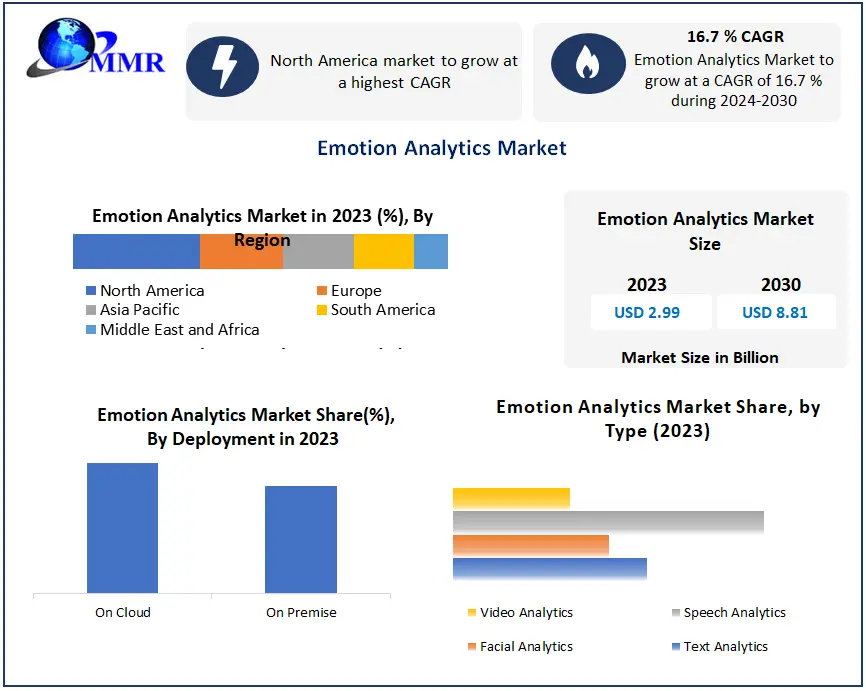
  • The Global Emotion Analytics Market, valued at USD 2.99 billion in 2023, is poised for remarkable growth, projected to reach nearly USD 8.81 billion by 2030, registering a robust CAGR of 16.7% over the forecast period of 2024-2030. Emotion analytics, an advanced software solution designed to detect, analyze, and interpret human emotions, is revolutionizing how organizations understand customer behavior, improve engagement, and enhance operational efficiencies across sectors.

    Get a Free Sample PDF Of This Report (Get Higher Priority for Corporate Email ID):- https://www.maximizemarketresearch.com/request-sample/32391/

    Key Market Drivers

    The primary driver of the emotion analytics market is the increasing emphasis on informed decision-making rooted in understanding human behavior. Businesses across industries are integrating emotion analytics into their operations to optimize customer interactions, enhance product development, and improve workforce engagement. The convergence of emotion analytics with the Internet of Things (IoT) is redefining commercial strategies, enabling real-time emotion detection in smart devices, automobiles, and wearable technologies.

    Rising Demand in Automotive Industry

    Key Market Trends and Opportunities

    Ethnic and Global Applications
    Convenience and Cloud-Based Platforms
    Sustainability and Ethical Use
    Market Segmentation

    The emotion analytics market is segmented into:

    By Type: Speech Analytics, Facial Analytics, Text Analytics, Video Analytics. Speech analytics dominates, driven by smart voice assistants and the growing relevance of voice-based customer interactions.

    By Technology: Pattern Recognition, 3D Modeling, Biometrics & Neuroscience, Artificial Intelligence, Record Management, Others. Artificial intelligence remains the fastest-growing segment, facilitating accurate emotion detection and advanced insights.

    By Deployment: On-Cloud, On-Premise. On-cloud deployment leads adoption, offering scalability and integration with AI-driven platforms.

    By End-Users: Media & Entertainment, Automotive, IT & Telecommunication, BFSI, Retail, Healthcare, Others. Retail and automotive sectors are witnessing the highest adoption, leveraging emotion insights for customer engagement, safety, and operational optimization.

    Get a Free Sample PDF Of This Report (Get Higher Priority for Corporate Email ID):- https://www.maximizemarketresearch.com/request-sample/32391/

    Regional Outlook

    North America, led by the United States and Canada, holds the largest market share due to high retail penetration, IoT adoption, and substantial R&D investments. Marketing and advertising sectors increasingly rely on emotion analytics for consumer insights, driving growth.

    The Asia Pacific (APAC) region is expected to register the fastest growth, fueled by increasing digitization in China and India, expanding service industries, and government support for biometric technology. Japan, South Korea, Singapore, Malaysia, and Thailand also contribute to regional momentum, emphasizing customer experience and technological integration across industries.

    Europe maintains a steady growth trajectory, with the UK, Germany, Sweden, and the Netherlands leading in adoption, particularly in retail and automotive applications. Meanwhile, the Middle East and Africa, driven by innovation in Israel and the GCC countries, and South America, led by Brazil and Argentina, are emerging markets with growing potential.

    Leading Brands and Products

    Key global players shaping the emotion analytics market include:

    North America: Affectiva Inc., Lexalytics, Lionbridge, Emotient, Eyeris (EmoVu), IBM Corp., Microsoft Corp., Kairos AR Inc., Neuromore Inc., SAS Institute Inc., Google, Cogito, Retainad Virtual Reality Inc., Repustate.

    Europe: Realeyes, TextRazor Ltd., Adoreboard, Tobii, Sentiance, Aylien, SAP AG, iMotions A/S, nViso SA, Noldus Information Technology.

    Middle East & Africa: Beyond Verbal (Israel).

    These companies offer advanced facial recognition, speech and video analysis, and AI-powered emotion insights that cater to automotive, retail, healthcare, and media sectors.

    Connect With Us:

    MAXIMIZE MARKET RESEARCH PVT. LTD.
    2nd Floor, Navale IT park Phase 3,
    Pune Banglore Highway, Narhe
    Pune, Maharashtra 411041, India.
    +91 9607365656
    sales@maximizemarketresearch.com

    About Maximize Market Research:

    Maximize Market Research is one of the fastest-growing market research and business consulting firms serving clients globally. Our revenue impact and focused growth-driven research initiatives make us a proud partner of majority of the Fortune 500 companies. We have a diversified portfolio and serve a variety of industries such as IT & telecom, chemical, food & beverage, aerospace & defense, healthcare and others.
    The Global Emotion Analytics Market, valued at USD 2.99 billion in 2023, is poised for remarkable growth, projected to reach nearly USD 8.81 billion by 2030, registering a robust CAGR of 16.7% over the forecast period of 2024-2030. Emotion analytics, an advanced software solution designed to detect, analyze, and interpret human emotions, is revolutionizing how organizations understand customer behavior, improve engagement, and enhance operational efficiencies across sectors. Get a Free Sample PDF Of This Report (Get Higher Priority for Corporate Email ID):- https://www.maximizemarketresearch.com/request-sample/32391/ Key Market Drivers The primary driver of the emotion analytics market is the increasing emphasis on informed decision-making rooted in understanding human behavior. Businesses across industries are integrating emotion analytics into their operations to optimize customer interactions, enhance product development, and improve workforce engagement. The convergence of emotion analytics with the Internet of Things (IoT) is redefining commercial strategies, enabling real-time emotion detection in smart devices, automobiles, and wearable technologies. Rising Demand in Automotive Industry Key Market Trends and Opportunities Ethnic and Global Applications Convenience and Cloud-Based Platforms Sustainability and Ethical Use Market Segmentation The emotion analytics market is segmented into: By Type: Speech Analytics, Facial Analytics, Text Analytics, Video Analytics. Speech analytics dominates, driven by smart voice assistants and the growing relevance of voice-based customer interactions. By Technology: Pattern Recognition, 3D Modeling, Biometrics & Neuroscience, Artificial Intelligence, Record Management, Others. Artificial intelligence remains the fastest-growing segment, facilitating accurate emotion detection and advanced insights. By Deployment: On-Cloud, On-Premise. On-cloud deployment leads adoption, offering scalability and integration with AI-driven platforms. By End-Users: Media & Entertainment, Automotive, IT & Telecommunication, BFSI, Retail, Healthcare, Others. Retail and automotive sectors are witnessing the highest adoption, leveraging emotion insights for customer engagement, safety, and operational optimization. Get a Free Sample PDF Of This Report (Get Higher Priority for Corporate Email ID):- https://www.maximizemarketresearch.com/request-sample/32391/ Regional Outlook North America, led by the United States and Canada, holds the largest market share due to high retail penetration, IoT adoption, and substantial R&D investments. Marketing and advertising sectors increasingly rely on emotion analytics for consumer insights, driving growth. The Asia Pacific (APAC) region is expected to register the fastest growth, fueled by increasing digitization in China and India, expanding service industries, and government support for biometric technology. Japan, South Korea, Singapore, Malaysia, and Thailand also contribute to regional momentum, emphasizing customer experience and technological integration across industries. Europe maintains a steady growth trajectory, with the UK, Germany, Sweden, and the Netherlands leading in adoption, particularly in retail and automotive applications. Meanwhile, the Middle East and Africa, driven by innovation in Israel and the GCC countries, and South America, led by Brazil and Argentina, are emerging markets with growing potential. Leading Brands and Products Key global players shaping the emotion analytics market include: North America: Affectiva Inc., Lexalytics, Lionbridge, Emotient, Eyeris (EmoVu), IBM Corp., Microsoft Corp., Kairos AR Inc., Neuromore Inc., SAS Institute Inc., Google, Cogito, Retainad Virtual Reality Inc., Repustate. Europe: Realeyes, TextRazor Ltd., Adoreboard, Tobii, Sentiance, Aylien, SAP AG, iMotions A/S, nViso SA, Noldus Information Technology. Middle East & Africa: Beyond Verbal (Israel). These companies offer advanced facial recognition, speech and video analysis, and AI-powered emotion insights that cater to automotive, retail, healthcare, and media sectors. Connect With Us: MAXIMIZE MARKET RESEARCH PVT. LTD. 2nd Floor, Navale IT park Phase 3, Pune Banglore Highway, Narhe Pune, Maharashtra 411041, India. +91 9607365656 sales@maximizemarketresearch.com About Maximize Market Research: Maximize Market Research is one of the fastest-growing market research and business consulting firms serving clients globally. Our revenue impact and focused growth-driven research initiatives make us a proud partner of majority of the Fortune 500 companies. We have a diversified portfolio and serve a variety of industries such as IT & telecom, chemical, food & beverage, aerospace & defense, healthcare and others.
    0 Comentários 0 Compartilhamentos 5126 Visualizações
  • Why Do We Need to Sleep?

    Sleep is one of the most important things our body needs to stay healthy and strong . When we sleep, our body and brain are not just “resting” — they are working in a different way to repair, recharge, and refresh us .

    What Happens When We Sleep?

    Brain Reset: Our brain organizes memories and information. It helps us remember what we learned during the day .

    Body Repair: Muscles grow and repair. Cells fix themselves .

    Heart & Health Support: Blood pressure and heart rate slow down, giving the heart a rest .

    Stronger Immune System: Our body fights germs better when we get enough sleep .

    Better Mood: Sleep helps control emotions and reduces stress .

    Children and teenagers especially need more sleep because their bodies and brains are still growing .

    What Happens If We Don’t Sleep?

    If we don’t get enough sleep, many problems can happen :

    Feeling very tired during the day

    Mood swings and irritation

    Trouble focusing and remembering things

    Poor school performance

    Headaches and body weakness

    Slower reaction time

    Getting sick more often

    Feeling sad or stressed

    Long-term lack of sleep can affect heart health, weight, and mental well-being .
    https://youtu.be/_rJSh3ddV8g
    😴 Why Do We Need to Sleep? Sleep is one of the most important things our body needs to stay healthy and strong 💪✨. When we sleep, our body and brain are not just “resting” — they are working in a different way to repair, recharge, and refresh us 🔄🧠. 🌙 What Happens When We Sleep? 🧠 Brain Reset: Our brain organizes memories and information. It helps us remember what we learned during the day 📚✨. 💪 Body Repair: Muscles grow and repair. Cells fix themselves 🔧🩹. ❤️ Heart & Health Support: Blood pressure and heart rate slow down, giving the heart a rest ❤️. 🛡️ Stronger Immune System: Our body fights germs better when we get enough sleep 🤧🦠. 😊 Better Mood: Sleep helps control emotions and reduces stress 😌🌸. Children and teenagers especially need more sleep because their bodies and brains are still growing 🌱🧒👧. 🚫 What Happens If We Don’t Sleep? If we don’t get enough sleep, many problems can happen 😟: 😴 Feeling very tired during the day 😠 Mood swings and irritation 🧠 Trouble focusing and remembering things 🏫 Poor school performance 🤕 Headaches and body weakness 🛑 Slower reaction time 🦠 Getting sick more often 😞 Feeling sad or stressed Long-term lack of sleep can affect heart health, weight, and mental well-being ⚠️. https://youtu.be/_rJSh3ddV8g
    0 Comentários 0 Compartilhamentos 918 Visualizações
  • Day 10: Mulla Nasrudin & the Donkey's Price
    Description: Complete the task: Mulla Nasrudin & the Donkey's Price


    **Mulla Nasrudin & the Donkey’s Price**

    One day, **Mulla Nasrudin** decided to sell his old donkey in the village market. The donkey was not very strong, a bit slow, and honestly not worth much. Nasrudin thought, “If I can get even a small price, I’ll be happy.”
    At the market, a clever-looking trader approached him and asked, “How much for the donkey?”
    Nasrudin scratched his beard and said, “Well… it’s a very special donkey. It knows the way to every village, never gets lost, and understands human emotions.”
    The trader was surprised. “Really? That sounds like an amazing donkey! I’ll give you a good price for it.”
    Just as the deal was about to happen, Nasrudin looked at his donkey again. He thought about all the “qualities” he had just described. The more he spoke, the more valuable the donkey seemed—even to himself.
    He suddenly pulled the rope back and said, “Wait! I can’t sell this donkey.”
    The trader asked, “Why not? We agreed on a price!”
    Nasrudin smiled and replied, “After hearing all these wonderful things about my donkey, I’ve realized it’s far more valuable than I thought. I’d be a fool to sell it now!”
    And with that, Nasrudin walked away happily with his donkey, leaving the trader confused.
    **Moral:** Sometimes, the stories we tell can change how we see value—even our own.
    Day 10: Mulla Nasrudin & the Donkey's Price Description: Complete the task: Mulla Nasrudin & the Donkey's Price **Mulla Nasrudin & the Donkey’s Price** One day, **Mulla Nasrudin** decided to sell his old donkey in the village market. The donkey was not very strong, a bit slow, and honestly not worth much. Nasrudin thought, “If I can get even a small price, I’ll be happy.” At the market, a clever-looking trader approached him and asked, “How much for the donkey?” Nasrudin scratched his beard and said, “Well… it’s a very special donkey. It knows the way to every village, never gets lost, and understands human emotions.” The trader was surprised. “Really? That sounds like an amazing donkey! I’ll give you a good price for it.” Just as the deal was about to happen, Nasrudin looked at his donkey again. He thought about all the “qualities” he had just described. The more he spoke, the more valuable the donkey seemed—even to himself. He suddenly pulled the rope back and said, “Wait! I can’t sell this donkey.” The trader asked, “Why not? We agreed on a price!” Nasrudin smiled and replied, “After hearing all these wonderful things about my donkey, I’ve realized it’s far more valuable than I thought. I’d be a fool to sell it now!” And with that, Nasrudin walked away happily with his donkey, leaving the trader confused. **Moral:** Sometimes, the stories we tell can change how we see value—even our own.
    0 Comentários 0 Compartilhamentos 608 Visualizações
Páginas impulsionada