• #rsisb
    Roll no 159
    Foundation Level Student
    Date: April 4, 2026

    Description: “Air” – Breathing Life into Language

    Air is one of the most basic elements of human existence , yet its role goes far beyond simply keeping us alive. It is the invisible force that gives life to language, turning silent thoughts into spoken words . Every sentence we speak, every emotion we express, and every story we share begins with a single breath. Without air, language would remain locked inside us, unable to reach the world.

    Breathing is not just a physical act; it is deeply connected to how we communicate . The way we control our breath shapes our voice, tone, and clarity. A calm, steady breath creates confident and clear speech, while rapid or uneven breathing can reflect fear, anxiety, or excitement . In this way, air becomes more than a tool—it becomes a mirror of our inner state, revealing emotions even when words try to hide them.

    “Air” also highlights the powerful connection between body and mind . When we speak, our thoughts travel through breath and transform into sound. This process shows how closely language is tied to our physical existence. Even small changes in breath—like a sigh, a whisper, or a pause—can carry deep meaning without the need for complex words . Sometimes, a simple exhale can express more than a long explanation.

    In communication, breath creates rhythm and flow . It determines how fast or slow we speak, where we pause, and how we emphasize certain ideas. Great speakers, singers, and performers understand this and train their breathing to improve their expression . Through controlled breath, they are able to deliver words with power, emotion, and impact, making their message more effective and memorable.

    Moreover, air connects us to others in a subtle but meaningful way . When we speak, our breath carries our voice through space, reaching another person and creating understanding. Even in silence, shared breathing can create a sense of presence and connection. This shows that communication is not only about words but also about the unseen forces that carry them.

    In today’s fast-paced world , we often overlook the importance of breathing. We speak quickly, react instantly, and rarely pause to take a breath. However, learning to control and understand our breath can improve not only our communication but also our emotional balance and self-awareness . It allows us to speak with intention, listen more carefully, and respond more thoughtfully.

    In conclusion, “Air” is the foundation of language and expression . It transforms thoughts into voice, connects emotions with words, and links individuals through communication. By understanding the role of breath, we begin to see language not just as words, but as living expressions carried by the very air we breath


    https://youtu.be/C4pJTCX3Faw
    #rsisb Roll no 159 Foundation Level Student Date: April 4, 2026 Description: “Air” – Breathing Life into Language Air is one of the most basic elements of human existence 🌬️, yet its role goes far beyond simply keeping us alive. It is the invisible force that gives life to language, turning silent thoughts into spoken words 🗣️. Every sentence we speak, every emotion we express, and every story we share begins with a single breath. Without air, language would remain locked inside us, unable to reach the world. Breathing is not just a physical act; it is deeply connected to how we communicate 💭. The way we control our breath shapes our voice, tone, and clarity. A calm, steady breath creates confident and clear speech, while rapid or uneven breathing can reflect fear, anxiety, or excitement 😌😰. In this way, air becomes more than a tool—it becomes a mirror of our inner state, revealing emotions even when words try to hide them. “Air” also highlights the powerful connection between body and mind 🧠. When we speak, our thoughts travel through breath and transform into sound. This process shows how closely language is tied to our physical existence. Even small changes in breath—like a sigh, a whisper, or a pause—can carry deep meaning without the need for complex words 🤫. Sometimes, a simple exhale can express more than a long explanation. In communication, breath creates rhythm and flow 🎶. It determines how fast or slow we speak, where we pause, and how we emphasize certain ideas. Great speakers, singers, and performers understand this and train their breathing to improve their expression 🎤. Through controlled breath, they are able to deliver words with power, emotion, and impact, making their message more effective and memorable. Moreover, air connects us to others in a subtle but meaningful way 🤝. When we speak, our breath carries our voice through space, reaching another person and creating understanding. Even in silence, shared breathing can create a sense of presence and connection. This shows that communication is not only about words but also about the unseen forces that carry them. In today’s fast-paced world ⏳, we often overlook the importance of breathing. We speak quickly, react instantly, and rarely pause to take a breath. However, learning to control and understand our breath can improve not only our communication but also our emotional balance and self-awareness 🌱. It allows us to speak with intention, listen more carefully, and respond more thoughtfully. In conclusion, “Air” is the foundation of language and expression 🌍. It transforms thoughts into voice, connects emotions with words, and links individuals through communication. By understanding the role of breath, we begin to see language not just as words, but as living expressions carried by the very air we breath https://youtu.be/C4pJTCX3Faw
    0 Yorumlar 0 hisse senetleri 138 Views
  • #rsisb
    Roll no 159
    Foundation Level Student
    Date: April 4, 2026

    Description: “Air” – Breathing Life into Language

    Air is one of the most basic elements of human existence , yet its role goes far beyond simply keeping us alive. It is the invisible force that gives life to language, turning silent thoughts into spoken words . Every sentence we speak, every emotion we express, and every story we share begins with a single breath. Without air, language would remain locked inside us, unable to reach the world.

    Breathing is not just a physical act; it is deeply connected to how we communicate . The way we control our breath shapes our voice, tone, and clarity. A calm, steady breath creates confident and clear speech, while rapid or uneven breathing can reflect fear, anxiety, or excitement . In this way, air becomes more than a tool—it becomes a mirror of our inner state, revealing emotions even when words try to hide them.

    “Air” also highlights the powerful connection between body and mind . When we speak, our thoughts travel through breath and transform into sound. This process shows how closely language is tied to our physical existence. Even small changes in breath—like a sigh, a whisper, or a pause—can carry deep meaning without the need for complex words . Sometimes, a simple exhale can express more than a long explanation.

    In communication, breath creates rhythm and flow . It determines how fast or slow we speak, where we pause, and how we emphasize certain ideas. Great speakers, singers, and performers understand this and train their breathing to improve their expression . Through controlled breath, they are able to deliver words with power, emotion, and impact, making their message more effective and memorable.

    Moreover, air connects us to others in a subtle but meaningful way . When we speak, our breath carries our voice through space, reaching another person and creating understanding. Even in silence, shared breathing can create a sense of presence and connection. This shows that communication is not only about words but also about the unseen forces that carry them.

    In today’s fast-paced world , we often overlook the importance of breathing. We speak quickly, react instantly, and rarely pause to take a breath. However, learning to control and understand our breath can improve not only our communication but also our emotional balance and self-awareness . It allows us to speak with intention, listen more carefully, and respond more thoughtfully.

    In conclusion, “Air” is the foundation of language and expression . It transforms thoughts into voice, connects emotions with words, and links individuals through communication. By understanding the role of breath, we begin to see language not just as words, but as living expressions carried by the very air we breathe.

    Hashtags

    #Air #Breath #Language #Communication #Voice #Expression #MindAndBody #PublicSpeaking #SelfAwareness #DeepThinking #Silence #Speech #HumanConnection #Emotions #Life #Learning #FoundationLevel #RSISB


    https://youtu.be/C4pJTCX3Faw
    #rsisb Roll no 159 Foundation Level Student Date: April 4, 2026 Description: “Air” – Breathing Life into Language Air is one of the most basic elements of human existence 🌬️, yet its role goes far beyond simply keeping us alive. It is the invisible force that gives life to language, turning silent thoughts into spoken words 🗣️. Every sentence we speak, every emotion we express, and every story we share begins with a single breath. Without air, language would remain locked inside us, unable to reach the world. Breathing is not just a physical act; it is deeply connected to how we communicate 💭. The way we control our breath shapes our voice, tone, and clarity. A calm, steady breath creates confident and clear speech, while rapid or uneven breathing can reflect fear, anxiety, or excitement 😌😰. In this way, air becomes more than a tool—it becomes a mirror of our inner state, revealing emotions even when words try to hide them. “Air” also highlights the powerful connection between body and mind 🧠. When we speak, our thoughts travel through breath and transform into sound. This process shows how closely language is tied to our physical existence. Even small changes in breath—like a sigh, a whisper, or a pause—can carry deep meaning without the need for complex words 🤫. Sometimes, a simple exhale can express more than a long explanation. In communication, breath creates rhythm and flow 🎶. It determines how fast or slow we speak, where we pause, and how we emphasize certain ideas. Great speakers, singers, and performers understand this and train their breathing to improve their expression 🎤. Through controlled breath, they are able to deliver words with power, emotion, and impact, making their message more effective and memorable. Moreover, air connects us to others in a subtle but meaningful way 🤝. When we speak, our breath carries our voice through space, reaching another person and creating understanding. Even in silence, shared breathing can create a sense of presence and connection. This shows that communication is not only about words but also about the unseen forces that carry them. In today’s fast-paced world ⏳, we often overlook the importance of breathing. We speak quickly, react instantly, and rarely pause to take a breath. However, learning to control and understand our breath can improve not only our communication but also our emotional balance and self-awareness 🌱. It allows us to speak with intention, listen more carefully, and respond more thoughtfully. In conclusion, “Air” is the foundation of language and expression 🌍. It transforms thoughts into voice, connects emotions with words, and links individuals through communication. By understanding the role of breath, we begin to see language not just as words, but as living expressions carried by the very air we breathe. ✨ Hashtags #Air #Breath #Language #Communication #Voice #Expression #MindAndBody #PublicSpeaking #SelfAwareness #DeepThinking #Silence #Speech #HumanConnection #Emotions #Life #Learning #FoundationLevel #RSISB https://youtu.be/C4pJTCX3Faw
    0 Yorumlar 0 hisse senetleri 178 Views
  • #rsisb
    Roll no 159
    Foundation Level Student
    Date: April 4, 2026

    Description: “Air” – Breathing Life into Language

    Air is one of the most basic elements of human existence , yet its role goes far beyond simply keeping us alive. It is the invisible force that gives life to language, turning silent thoughts into spoken words . Every sentence we speak, every emotion we express, and every story we share begins with a single breath. Without air, language would remain locked inside us, unable to reach the world.

    Breathing is not just a physical act; it is deeply connected to how we communicate . The way we control our breath shapes our voice, tone, and clarity. A calm, steady breath creates confident and clear speech, while rapid or uneven breathing can reflect fear, anxiety, or excitement . In this way, air becomes more than a tool—it becomes a mirror of our inner state, revealing emotions even when words try to hide them.

    “Air” also highlights the powerful connection between body and mind . When we speak, our thoughts travel through breath and transform into sound. This process shows how closely language is tied to our physical existence. Even small changes in breath—like a sigh, a whisper, or a pause—can carry deep meaning without the need for complex words . Sometimes, a simple exhale can express more than a long explanation.

    In communication, breath creates rhythm and flow . It determines how fast or slow we speak, where we pause, and how we emphasize certain ideas. Great speakers, singers, and performers understand this and train their breathing to improve their expression . Through controlled breath, they are able to deliver words with power, emotion, and impact, making their message more effective and memorable.

    Moreover, air connects us to others in a subtle but meaningful way . When we speak, our breath carries our voice through space, reaching another person and creating understanding. Even in silence, shared breathing can create a sense of presence and connection. This shows that communication is not only about words but also about the unseen forces that carry them.

    In today’s fast-paced world , we often overlook the importance of breathing. We speak quickly, react instantly, and rarely pause to take a breath. However, learning to control and understand our breath can improve not only our communication but also our emotional balance and self-awareness . It allows us to speak with intention, listen more carefully, and respond more thoughtfully.

    In conclusion, “Air” is the foundation of language and expression . It transforms thoughts into voice, connects emotions with words, and links individuals through communication. By understanding the role of breath, we begin to see language not just as words, but as living expressions carried by the very air we breathe.

    Hashtags

    #Air #Breath #Language #Communication #Voice #Expression #MindAndBody #PublicSpeaking #SelfAwareness #DeepThinking #Silence #Speech #HumanConnection #Emotions #Life #Learning #FoundationLevel #RSISB
    https://youtu.be/C4pJTCX3Faw
    #rsisb Roll no 159 Foundation Level Student Date: April 4, 2026 Description: “Air” – Breathing Life into Language Air is one of the most basic elements of human existence 🌬️, yet its role goes far beyond simply keeping us alive. It is the invisible force that gives life to language, turning silent thoughts into spoken words 🗣️. Every sentence we speak, every emotion we express, and every story we share begins with a single breath. Without air, language would remain locked inside us, unable to reach the world. Breathing is not just a physical act; it is deeply connected to how we communicate 💭. The way we control our breath shapes our voice, tone, and clarity. A calm, steady breath creates confident and clear speech, while rapid or uneven breathing can reflect fear, anxiety, or excitement 😌😰. In this way, air becomes more than a tool—it becomes a mirror of our inner state, revealing emotions even when words try to hide them. “Air” also highlights the powerful connection between body and mind 🧠. When we speak, our thoughts travel through breath and transform into sound. This process shows how closely language is tied to our physical existence. Even small changes in breath—like a sigh, a whisper, or a pause—can carry deep meaning without the need for complex words 🤫. Sometimes, a simple exhale can express more than a long explanation. In communication, breath creates rhythm and flow 🎶. It determines how fast or slow we speak, where we pause, and how we emphasize certain ideas. Great speakers, singers, and performers understand this and train their breathing to improve their expression 🎤. Through controlled breath, they are able to deliver words with power, emotion, and impact, making their message more effective and memorable. Moreover, air connects us to others in a subtle but meaningful way 🤝. When we speak, our breath carries our voice through space, reaching another person and creating understanding. Even in silence, shared breathing can create a sense of presence and connection. This shows that communication is not only about words but also about the unseen forces that carry them. In today’s fast-paced world ⏳, we often overlook the importance of breathing. We speak quickly, react instantly, and rarely pause to take a breath. However, learning to control and understand our breath can improve not only our communication but also our emotional balance and self-awareness 🌱. It allows us to speak with intention, listen more carefully, and respond more thoughtfully. In conclusion, “Air” is the foundation of language and expression 🌍. It transforms thoughts into voice, connects emotions with words, and links individuals through communication. By understanding the role of breath, we begin to see language not just as words, but as living expressions carried by the very air we breathe. ✨ Hashtags #Air #Breath #Language #Communication #Voice #Expression #MindAndBody #PublicSpeaking #SelfAwareness #DeepThinking #Silence #Speech #HumanConnection #Emotions #Life #Learning #FoundationLevel #RSISB https://youtu.be/C4pJTCX3Faw
    0 Yorumlar 0 hisse senetleri 171 Views
  • #rsisb
    Roll no 159
    Foundation Level Student
    Date: April 1, 2026

    **Description: “Hardships Prepare Ordinary People for an Extraordinary Destiny.” — C.S. Lewis**

    The quote “Hardships prepare ordinary people for an extraordinary destiny” by C.S. Lewis conveys a powerful message about the role of challenges and difficulties in shaping a person’s life. It emphasizes that struggles are not just obstacles, but important experiences that help individuals grow, build resilience, and discover their true potential.

    C.S. Lewis suggests that facing hardships strengthens character and teaches valuable lessons. Ordinary people, when tested by adversity, learn perseverance, patience, and courage. These qualities are essential for achieving great accomplishments and reaching extraordinary goals that might have seemed impossible before.

    The quote also highlights the idea that challenges are stepping stones, not setbacks. Difficulties provide opportunities for self-reflection, growth, and preparation for future responsibilities. By enduring and overcoming struggles, individuals gain the wisdom and strength needed to fulfill their unique purpose in life.

    Furthermore, this message inspires hope and determination. It reminds people that even when life feels unfair or overwhelming, these experiences are shaping them for something greater. Success and extraordinary achievements are often the result of lessons learned through hardship.

    In conclusion, C.S. Lewis’s quote encourages individuals to embrace challenges instead of fearing them. Hardships are not punishments—they are preparation for greatness. By facing difficulties with courage and perseverance, ordinary people can transform into individuals capable of achieving extraordinary destinies.


    http://youtube.com/post/Ugkx7unvJ8P239Y40RFsQbVFoES6wEvG47bQ?si=sSzfbRYKdzwJSJSC
    #rsisb Roll no 159 Foundation Level Student Date: April 1, 2026 **Description: “Hardships Prepare Ordinary People for an Extraordinary Destiny.” — C.S. Lewis** The quote “Hardships prepare ordinary people for an extraordinary destiny” by C.S. Lewis conveys a powerful message about the role of challenges and difficulties in shaping a person’s life. It emphasizes that struggles are not just obstacles, but important experiences that help individuals grow, build resilience, and discover their true potential. C.S. Lewis suggests that facing hardships strengthens character and teaches valuable lessons. Ordinary people, when tested by adversity, learn perseverance, patience, and courage. These qualities are essential for achieving great accomplishments and reaching extraordinary goals that might have seemed impossible before. The quote also highlights the idea that challenges are stepping stones, not setbacks. Difficulties provide opportunities for self-reflection, growth, and preparation for future responsibilities. By enduring and overcoming struggles, individuals gain the wisdom and strength needed to fulfill their unique purpose in life. Furthermore, this message inspires hope and determination. It reminds people that even when life feels unfair or overwhelming, these experiences are shaping them for something greater. Success and extraordinary achievements are often the result of lessons learned through hardship. In conclusion, C.S. Lewis’s quote encourages individuals to embrace challenges instead of fearing them. Hardships are not punishments—they are preparation for greatness. By facing difficulties with courage and perseverance, ordinary people can transform into individuals capable of achieving extraordinary destinies. http://youtube.com/post/Ugkx7unvJ8P239Y40RFsQbVFoES6wEvG47bQ?si=sSzfbRYKdzwJSJSC
    YOUTUBE.COM
    Post from Syed Shan Haider
    #rsisb Roll no 159 Foundation Level Student Date: April 1, 2026 **Description: ???Hardships Prepare Ordinary People for an Extraordinary Destiny.??? ??? C.S. Lewis...
    0 Yorumlar 0 hisse senetleri 465 Views
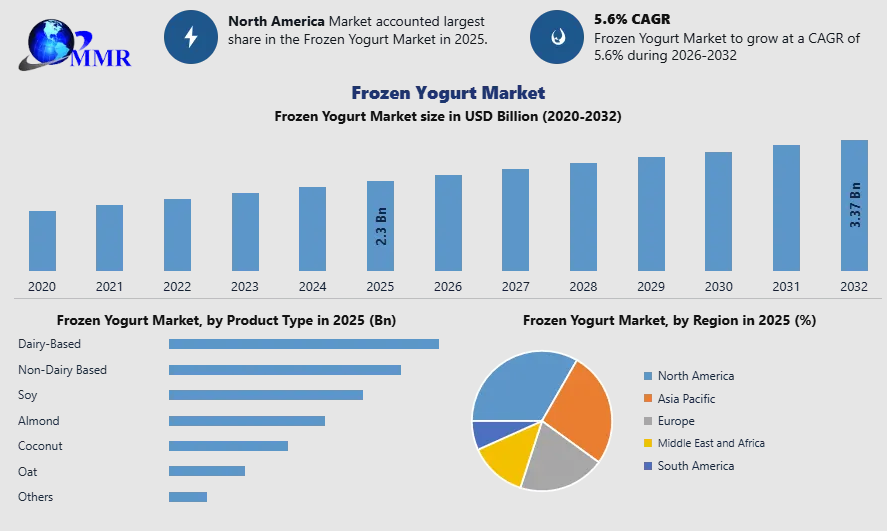
  • The global Frozen Yogurt Market is witnessing steady and sustainable growth as consumer preferences shift toward healthier indulgences and functional desserts. According to the latest industry analysis, the Frozen Yogurt Market was valued at USD 2.3 Billion in 2025 and is projected to grow at a CAGR of 5.6% from 2026 to 2032, reaching nearly USD 3.37 Billion by 2032.

    Download Sample Pages of Research Overview: https://www.maximizemarketresearch.com/request-sample/122850/

    Market Overview
    Frozen yogurt has evolved from a niche dessert category into a mainstream global indulgence, combining taste, nutrition, and versatility. It appeals to a wide demographic by offering a balance between indulgence and health-conscious consumption. Unlike traditional ice cream, frozen yogurt is widely perceived as a healthier alternative due to its lower fat content, probiotic benefits, and availability in low-sugar or sugar-free variants.

    Download Sample Pages of Research Overview: https://www.maximizemarketresearch.com/request-sample/122850/

    Key Market Metrics
    Base Year: 2025
    Forecast Period: 2026–2032
    Market Size (2025): USD 2.3 Billion
    Market Size (2032): USD 3.37 Billion
    CAGR (2026–2032): 5.6%
    Historical Data: 2020–2025

    Major Market Drivers and Trends
    Shift Toward “Natural” and Health-Oriented Products
    One of the most significant drivers of the frozen yogurt market is the growing consumer inclination toward natural and healthier food options.

    Rising Demand for Convenience Foods
    Convenience remains a key factor shaping consumer behavior. Frozen yogurt products are widely available in ready-to-eat formats such as cups, tubs, cones, and pouches, making them ideal for on-the-go consumption.

    Premiumization and Customization Trends
    Premiumization is reshaping the frozen yogurt industry, with consumers willing to pay higher prices for superior quality, unique flavors, and customized experiences. Brands are introducing gourmet flavors such as matcha, salted caramel, exotic fruits, and fusion desserts to cater to evolving tastes.

    Key Segments Covered
    The Frozen Yogurt Market is segmented based on multiple parameters to provide a comprehensive understanding of its structure:

    By Product Type
    Dairy-Based Frozen Yogurt
    Non-Dairy Frozen Yogurt (Soy, Almond, Coconut, Oat, Others)
    Dairy-based frozen yogurt continues to dominate due to its creamy texture and high protein content. However, non-dairy alternatives are rapidly gaining market share, driven by plant-based trends.

    By Nature
    Organic
    Non-Organic
    By Fat Content
    Full Fat
    Low Fat (0.5%–2%)
    No Fat (<0.5%)
    By Variant
    Flavored (Mango, Strawberry, Chocolate, Banana, Pineapple, Others)
    Non-Flavored
    By Price Range
    Economy/Budget
    Mid-Range
    Premium
    By Packaging Type
    Cups and Tubs
    Cones and Sticks
    Glass Jars
    Flexible Pouches
    By Distribution Channel
    Offline (Supermarkets, Convenience Stores, Departmental Stores)
    Online (Company Websites, E-commerce Platforms)
    Download Sample Pages of Research Overview: https://www.maximizemarketresearch.com/request-sample/122850/

    Regional Breakdown
    North America
    North America dominates the global frozen yogurt market, accounting for approximately 42% of total market share. The United States leads the region, driven by strong consumer awareness, extensive franchise networks, and continuous product innovation.

    Asia-Pacific
    The Asia-Pacific region is emerging as a high-growth market, with countries like China, India, and Japan offering significant opportunities. Rising urbanization, increasing disposable income, and growing health awareness are key drivers.

    Middle East & Africa and South America
    These regions are gradually gaining traction due to expanding retail networks and growing consumer exposure to global food trends. Franchise-based expansion strategies are playing a crucial role in market penetration.

    Leading Industry Players
    The Frozen Yogurt Market is highly competitive, with a mix of global giants and regional players focusing on innovation, expansion, and strategic partnerships. Key players include:

    Yogurtland
    The Hain Celestial Group
    Groupe Lactalis
    Mixmi
    Nancy's Yogurt
    Honey Hill Farms
    These companies are investing heavily in product innovation, expanding their distribution networks, and adopting sustainable practices to strengthen their market position.

    Connect With Us:

    MAXIMIZE MARKET RESEARCH PVT. LTD.
    2nd Floor, Navale IT park Phase 3,
    Pune Banglore Highway, Narhe
    Pune, Maharashtra 411041, India.
    +91 9607365656
    sales@maximizemarketresearch.com

    About Maximize Market Research:

    Maximize Market Research is one of the fastest-growing market research and business consulting firms serving clients globally. Our revenue impact and focused growth-driven research initiatives make us a proud partner of majority of the Fortune 500 companies. We have a diversified portfolio and serve a variety of industries such as IT & telecom, chemical, food & beverage, aerospace & defense, healthcare and others.
    The global Frozen Yogurt Market is witnessing steady and sustainable growth as consumer preferences shift toward healthier indulgences and functional desserts. According to the latest industry analysis, the Frozen Yogurt Market was valued at USD 2.3 Billion in 2025 and is projected to grow at a CAGR of 5.6% from 2026 to 2032, reaching nearly USD 3.37 Billion by 2032. Download Sample Pages of Research Overview: https://www.maximizemarketresearch.com/request-sample/122850/ Market Overview Frozen yogurt has evolved from a niche dessert category into a mainstream global indulgence, combining taste, nutrition, and versatility. It appeals to a wide demographic by offering a balance between indulgence and health-conscious consumption. Unlike traditional ice cream, frozen yogurt is widely perceived as a healthier alternative due to its lower fat content, probiotic benefits, and availability in low-sugar or sugar-free variants. Download Sample Pages of Research Overview: https://www.maximizemarketresearch.com/request-sample/122850/ Key Market Metrics Base Year: 2025 Forecast Period: 2026–2032 Market Size (2025): USD 2.3 Billion Market Size (2032): USD 3.37 Billion CAGR (2026–2032): 5.6% Historical Data: 2020–2025 Major Market Drivers and Trends Shift Toward “Natural” and Health-Oriented Products One of the most significant drivers of the frozen yogurt market is the growing consumer inclination toward natural and healthier food options. Rising Demand for Convenience Foods Convenience remains a key factor shaping consumer behavior. Frozen yogurt products are widely available in ready-to-eat formats such as cups, tubs, cones, and pouches, making them ideal for on-the-go consumption. Premiumization and Customization Trends Premiumization is reshaping the frozen yogurt industry, with consumers willing to pay higher prices for superior quality, unique flavors, and customized experiences. Brands are introducing gourmet flavors such as matcha, salted caramel, exotic fruits, and fusion desserts to cater to evolving tastes. Key Segments Covered The Frozen Yogurt Market is segmented based on multiple parameters to provide a comprehensive understanding of its structure: By Product Type Dairy-Based Frozen Yogurt Non-Dairy Frozen Yogurt (Soy, Almond, Coconut, Oat, Others) Dairy-based frozen yogurt continues to dominate due to its creamy texture and high protein content. However, non-dairy alternatives are rapidly gaining market share, driven by plant-based trends. By Nature Organic Non-Organic By Fat Content Full Fat Low Fat (0.5%–2%) No Fat (<0.5%) By Variant Flavored (Mango, Strawberry, Chocolate, Banana, Pineapple, Others) Non-Flavored By Price Range Economy/Budget Mid-Range Premium By Packaging Type Cups and Tubs Cones and Sticks Glass Jars Flexible Pouches By Distribution Channel Offline (Supermarkets, Convenience Stores, Departmental Stores) Online (Company Websites, E-commerce Platforms) Download Sample Pages of Research Overview: https://www.maximizemarketresearch.com/request-sample/122850/ Regional Breakdown North America North America dominates the global frozen yogurt market, accounting for approximately 42% of total market share. The United States leads the region, driven by strong consumer awareness, extensive franchise networks, and continuous product innovation. Asia-Pacific The Asia-Pacific region is emerging as a high-growth market, with countries like China, India, and Japan offering significant opportunities. Rising urbanization, increasing disposable income, and growing health awareness are key drivers. Middle East & Africa and South America These regions are gradually gaining traction due to expanding retail networks and growing consumer exposure to global food trends. Franchise-based expansion strategies are playing a crucial role in market penetration. Leading Industry Players The Frozen Yogurt Market is highly competitive, with a mix of global giants and regional players focusing on innovation, expansion, and strategic partnerships. Key players include: Yogurtland The Hain Celestial Group Groupe Lactalis Mixmi Nancy's Yogurt Honey Hill Farms These companies are investing heavily in product innovation, expanding their distribution networks, and adopting sustainable practices to strengthen their market position. Connect With Us: MAXIMIZE MARKET RESEARCH PVT. LTD. 2nd Floor, Navale IT park Phase 3, Pune Banglore Highway, Narhe Pune, Maharashtra 411041, India. +91 9607365656 sales@maximizemarketresearch.com About Maximize Market Research: Maximize Market Research is one of the fastest-growing market research and business consulting firms serving clients globally. Our revenue impact and focused growth-driven research initiatives make us a proud partner of majority of the Fortune 500 companies. We have a diversified portfolio and serve a variety of industries such as IT & telecom, chemical, food & beverage, aerospace & defense, healthcare and others.
    0 Yorumlar 0 hisse senetleri 1818 Views
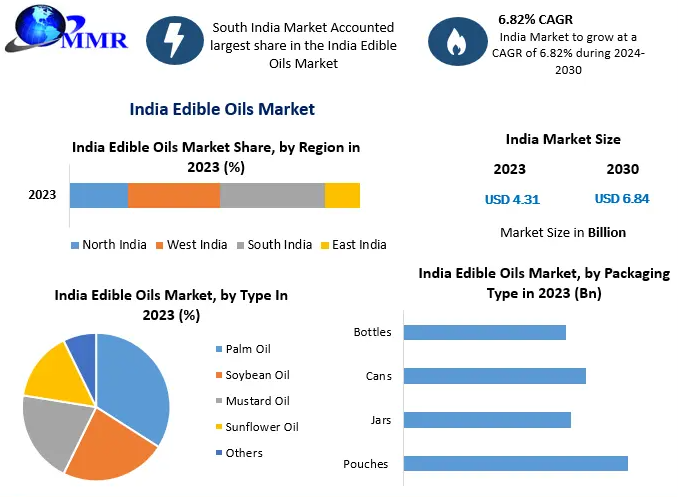
  • The India Edible Oils Market continues to demonstrate robust expansion, supported by evolving dietary habits, rising population, and increasing awareness of health and nutrition. According to recent industry analysis, the market was valued at US$ 4.31 billion in 2023 and is projected to grow at a compound annual growth rate (CAGR) of 6.82% from 2024 to 2030, reaching nearly US$ 6.84 billion by 2030. This growth trajectory reflects both structural demand fundamentals and ongoing transformation across production, processing, and consumption patterns in the country.

    Download Sample Pages of Research Overview: https://www.maximizemarketresearch.com/request-sample/125654/

    Market Overview
    Edible oils form a critical component of India’s agricultural and food processing ecosystem. The country is among the leading producers of oilseeds globally, cultivating a diverse range of crops such as groundnut, soybean, rapeseed, sunflower, sesame, and castor across its varied agro-climatic zones. Coconut and oil palm cultivation also contribute significantly, particularly in southern and coastal regions.

    Market Size and Growth Dynamics
    India’s edible oils market has witnessed consistent expansion over the past decade, driven by population growth, urbanization, and rising disposable incomes. Per capita consumption has increased significantly—from approximately 15 kg per year in 2012–13 to around 19 kg per year in 2015–16—indicating a steady rise in household usage.

    Download Sample Pages of Research Overview: https://www.maximizemarketresearch.com/request-sample/125654/

    Consumer Trends and Segment Share
    Consumer preferences in the edible oils market are evolving rapidly, influenced by health awareness, lifestyle changes, and product innovation. There is a noticeable shift toward oils perceived as healthier, such as soybean, sunflower, and rice bran oil. Rice bran oil, in particular, is gaining traction among urban consumers due to its potential health benefits, including cholesterol management and reduced risk of cardiovascular diseases.

    The market is broadly segmented into refined oils, raw oils, and vanaspati. Refined oils dominate the market with an estimated 60% share, followed by raw oils at 35%, and vanaspati at around 5%. The dominance of refined oils is attributed to their longer shelf life, improved quality, and growing consumer preference for convenience and safety.

    Urbanization and the expansion of organized retail have also played a crucial role in shaping consumption patterns. Supermarkets and hypermarkets, along with e-commerce platforms, are becoming increasingly important distribution channels, offering a wide variety of branded and value-added products.

    Government Initiatives and Import Dependence
    India’s edible oils sector is heavily reliant on imports, with approximately 56% of domestic demand met through imports. In 2019 alone, the country imported around 15 million tonnes of edible oils, accounting for a significant portion of the agricultural import bill. Palm oil constitutes the largest share of imports at about 62%, followed by soybean oil (21%) and sunflower oil (16%).

    To reduce import dependence and enhance self-sufficiency, the government has introduced several initiatives aimed at boosting domestic production. These include promoting oilseed cultivation, encouraging the adoption of high-yielding seed varieties, and expanding oil palm plantations, particularly in states such as Andhra Pradesh, Karnataka, Tamil Nadu, and the northeastern region.

    Download Sample Pages of Research Overview: https://www.maximizemarketresearch.com/request-sample/125654/

    Key Market Players and Competitive Landscape

    Prominent players in the market include Ruchi Soya Industries Ltd, Gokul Agro Resources Ltd., Gujarat Ambuja Exports Ltd., BCL Industries Ltd., Agro Tech Foods Ltd., and Anik Industries Ltd. These companies are actively engaged in refining, processing, and marketing a wide range of edible oil products.

    In addition to these, well-known consumer brands such as Fortune (Adani Group), Sundrop (Agro Tech Foods), Dhara (Mother Dairy), and Dalda (Bunge Limited) have a strong presence in the retail segment. Global players like Cargill also play a significant role, offering multiple brands including Gemini, Nature Fresh, and Sweekar.

    Connect With Us:

    MAXIMIZE MARKET RESEARCH PVT. LTD.
    2nd Floor, Navale IT park Phase 3,
    Pune Banglore Highway, Narhe
    Pune, Maharashtra 411041, India.
    +91 9607365656
    sales@maximizemarketresearch.com

    About Maximize Market Research:

    Maximize Market Research is one of the fastest-growing market research and business consulting firms serving clients globally. Our revenue impact and focused growth-driven research initiatives make us a proud partner of majority of the Fortune 500 companies. We have a diversified portfolio and serve a variety of industries such as IT & telecom, chemical, food & beverage, aerospace & defense, healthcare and others.
    The India Edible Oils Market continues to demonstrate robust expansion, supported by evolving dietary habits, rising population, and increasing awareness of health and nutrition. According to recent industry analysis, the market was valued at US$ 4.31 billion in 2023 and is projected to grow at a compound annual growth rate (CAGR) of 6.82% from 2024 to 2030, reaching nearly US$ 6.84 billion by 2030. This growth trajectory reflects both structural demand fundamentals and ongoing transformation across production, processing, and consumption patterns in the country. Download Sample Pages of Research Overview: https://www.maximizemarketresearch.com/request-sample/125654/ Market Overview Edible oils form a critical component of India’s agricultural and food processing ecosystem. The country is among the leading producers of oilseeds globally, cultivating a diverse range of crops such as groundnut, soybean, rapeseed, sunflower, sesame, and castor across its varied agro-climatic zones. Coconut and oil palm cultivation also contribute significantly, particularly in southern and coastal regions. Market Size and Growth Dynamics India’s edible oils market has witnessed consistent expansion over the past decade, driven by population growth, urbanization, and rising disposable incomes. Per capita consumption has increased significantly—from approximately 15 kg per year in 2012–13 to around 19 kg per year in 2015–16—indicating a steady rise in household usage. Download Sample Pages of Research Overview: https://www.maximizemarketresearch.com/request-sample/125654/ Consumer Trends and Segment Share Consumer preferences in the edible oils market are evolving rapidly, influenced by health awareness, lifestyle changes, and product innovation. There is a noticeable shift toward oils perceived as healthier, such as soybean, sunflower, and rice bran oil. Rice bran oil, in particular, is gaining traction among urban consumers due to its potential health benefits, including cholesterol management and reduced risk of cardiovascular diseases. The market is broadly segmented into refined oils, raw oils, and vanaspati. Refined oils dominate the market with an estimated 60% share, followed by raw oils at 35%, and vanaspati at around 5%. The dominance of refined oils is attributed to their longer shelf life, improved quality, and growing consumer preference for convenience and safety. Urbanization and the expansion of organized retail have also played a crucial role in shaping consumption patterns. Supermarkets and hypermarkets, along with e-commerce platforms, are becoming increasingly important distribution channels, offering a wide variety of branded and value-added products. Government Initiatives and Import Dependence India’s edible oils sector is heavily reliant on imports, with approximately 56% of domestic demand met through imports. In 2019 alone, the country imported around 15 million tonnes of edible oils, accounting for a significant portion of the agricultural import bill. Palm oil constitutes the largest share of imports at about 62%, followed by soybean oil (21%) and sunflower oil (16%). To reduce import dependence and enhance self-sufficiency, the government has introduced several initiatives aimed at boosting domestic production. These include promoting oilseed cultivation, encouraging the adoption of high-yielding seed varieties, and expanding oil palm plantations, particularly in states such as Andhra Pradesh, Karnataka, Tamil Nadu, and the northeastern region. Download Sample Pages of Research Overview: https://www.maximizemarketresearch.com/request-sample/125654/ Key Market Players and Competitive Landscape Prominent players in the market include Ruchi Soya Industries Ltd, Gokul Agro Resources Ltd., Gujarat Ambuja Exports Ltd., BCL Industries Ltd., Agro Tech Foods Ltd., and Anik Industries Ltd. These companies are actively engaged in refining, processing, and marketing a wide range of edible oil products. In addition to these, well-known consumer brands such as Fortune (Adani Group), Sundrop (Agro Tech Foods), Dhara (Mother Dairy), and Dalda (Bunge Limited) have a strong presence in the retail segment. Global players like Cargill also play a significant role, offering multiple brands including Gemini, Nature Fresh, and Sweekar. Connect With Us: MAXIMIZE MARKET RESEARCH PVT. LTD. 2nd Floor, Navale IT park Phase 3, Pune Banglore Highway, Narhe Pune, Maharashtra 411041, India. +91 9607365656 sales@maximizemarketresearch.com About Maximize Market Research: Maximize Market Research is one of the fastest-growing market research and business consulting firms serving clients globally. Our revenue impact and focused growth-driven research initiatives make us a proud partner of majority of the Fortune 500 companies. We have a diversified portfolio and serve a variety of industries such as IT & telecom, chemical, food & beverage, aerospace & defense, healthcare and others.
    0 Yorumlar 0 hisse senetleri 2990 Views
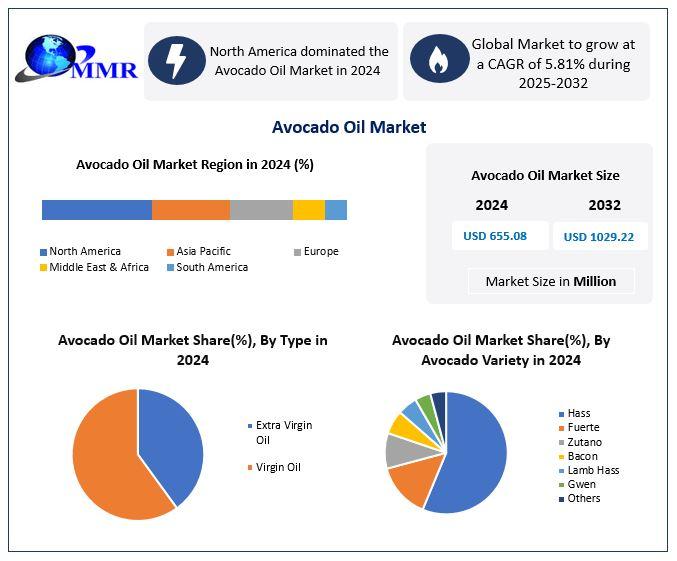
  • The global Avocado Oil Market is witnessing consistent expansion, projected to grow from USD 655.08 million in 2024 to USD 1029.22 million by 2032, registering a CAGR of 5.81% during the forecast period. This growth is primarily fueled by rising consumer awareness regarding health and wellness, increasing demand for clean-label products, and the expanding use of avocado oil across culinary, cosmetic, and pharmaceutical industries.

    Download Sample Pages of Research Overview: https://www.maximizemarketresearch.com/request-sample/148128/

    Market Overview
    Avocado oil, extracted from the pulp of avocados, is widely recognized for its high content of monounsaturated fats, vitamins (especially Vitamin E), and antioxidants. Its versatility allows it to be used in cooking, skincare, haircare, and medicinal formulations. The oil’s high smoke point, mild flavor, and nutritional profile make it a preferred alternative to traditional cooking oils such as sunflower, soybean, and palm oil.

    Key performance highlights include:

    Strong demand from North America due to high consumer awareness and health-conscious lifestyles
    Increasing penetration in Europe driven by clean-label and organic food trends
    Rapid growth potential in Asia-Pacific markets such as India and China due to rising disposable incomes and changing consumption habits

    Download Sample Pages of Research Overview: https://www.maximizemarketresearch.com/request-sample/148128/

    Market Drivers & Trends

    1. Health and Wellness Movement

    2. Culinary Versatility

    3. Expansion into Cosmetics and Personal Care

    4. Clean Label Preference

    Market Segmentation and Usage

    by Price
    Premium
    Standard

    by Type
    Treated
    Natural
    Dehydrated
    Darkened by Oxidation
    Specialties
    Others

    by Distribution
    Supermarkets and Hypermarkets
    Convenience Stores
    E-commerce
    Specialty Stores
    Others

    Download Sample Pages of Research Overview: https://www.maximizemarketresearch.com/request-sample/148128/

    Available Products (Example Pricing)
    Avocado oil products vary widely based on quality, processing method, and certification:

    Extra Virgin Cold-Pressed Avocado Oil (250 ml): USD 8 – USD 15
    Organic Certified Avocado Oil (500 ml): USD 12 – USD 20
    Refined Avocado Oil (1 liter): USD 10 – USD 18
    Infused/Flavored Oils: USD 15 – USD 25 depending on ingredients
    Premium pricing is typically associated with organic certification, cold-press extraction, and sustainable sourcing.

    Leading Regions
    North America
    Dominates the market due to high consumption levels, strong retail presence, and growing health awareness. The United States is a key contributor.

    Asia-Pacific
    An emerging market with significant growth potential due to rising health awareness and expanding middle-class population in countries like India and China.

    Major Global Players
    The competitive landscape is characterized by innovation, sustainability initiatives, and geographic expansion. Key players include:

    Spectrum Organics Products, LLC
    Chosen Foods LLC
    Olivado Ltd.
    Westfalia Fruit
    La Tourangelle, Inc.
    CalPure Foods Inc.
    Grupo Paltasur SpA
    Delizio Avocado Oils
    Clearspring Ltd.
    Nature Mills Pvt Ltd.

    Connect With Us:

    MAXIMIZE MARKET RESEARCH PVT. LTD.
    2nd Floor, Navale IT park Phase 3,
    Pune Banglore Highway, Narhe
    Pune, Maharashtra 411041, India.
    +91 9607365656
    sales@maximizemarketresearch.com

    About Maximize Market Research:

    Maximize Market Research is one of the fastest-growing market research and business consulting firms serving clients globally. Our revenue impact and focused growth-driven research initiatives make us a proud partner of majority of the Fortune 500 companies. We have a diversified portfolio and serve a variety of industries such as IT & telecom, chemical, food & beverage, aerospace & defense, healthcare and others.
    The global Avocado Oil Market is witnessing consistent expansion, projected to grow from USD 655.08 million in 2024 to USD 1029.22 million by 2032, registering a CAGR of 5.81% during the forecast period. This growth is primarily fueled by rising consumer awareness regarding health and wellness, increasing demand for clean-label products, and the expanding use of avocado oil across culinary, cosmetic, and pharmaceutical industries. Download Sample Pages of Research Overview: https://www.maximizemarketresearch.com/request-sample/148128/ Market Overview Avocado oil, extracted from the pulp of avocados, is widely recognized for its high content of monounsaturated fats, vitamins (especially Vitamin E), and antioxidants. Its versatility allows it to be used in cooking, skincare, haircare, and medicinal formulations. The oil’s high smoke point, mild flavor, and nutritional profile make it a preferred alternative to traditional cooking oils such as sunflower, soybean, and palm oil. Key performance highlights include: Strong demand from North America due to high consumer awareness and health-conscious lifestyles Increasing penetration in Europe driven by clean-label and organic food trends Rapid growth potential in Asia-Pacific markets such as India and China due to rising disposable incomes and changing consumption habits Download Sample Pages of Research Overview: https://www.maximizemarketresearch.com/request-sample/148128/ Market Drivers & Trends 1. Health and Wellness Movement 2. Culinary Versatility 3. Expansion into Cosmetics and Personal Care 4. Clean Label Preference Market Segmentation and Usage by Price Premium Standard by Type Treated Natural Dehydrated Darkened by Oxidation Specialties Others by Distribution Supermarkets and Hypermarkets Convenience Stores E-commerce Specialty Stores Others Download Sample Pages of Research Overview: https://www.maximizemarketresearch.com/request-sample/148128/ Available Products (Example Pricing) Avocado oil products vary widely based on quality, processing method, and certification: Extra Virgin Cold-Pressed Avocado Oil (250 ml): USD 8 – USD 15 Organic Certified Avocado Oil (500 ml): USD 12 – USD 20 Refined Avocado Oil (1 liter): USD 10 – USD 18 Infused/Flavored Oils: USD 15 – USD 25 depending on ingredients Premium pricing is typically associated with organic certification, cold-press extraction, and sustainable sourcing. Leading Regions North America Dominates the market due to high consumption levels, strong retail presence, and growing health awareness. The United States is a key contributor. Asia-Pacific An emerging market with significant growth potential due to rising health awareness and expanding middle-class population in countries like India and China. Major Global Players The competitive landscape is characterized by innovation, sustainability initiatives, and geographic expansion. Key players include: Spectrum Organics Products, LLC Chosen Foods LLC Olivado Ltd. Westfalia Fruit La Tourangelle, Inc. CalPure Foods Inc. Grupo Paltasur SpA Delizio Avocado Oils Clearspring Ltd. Nature Mills Pvt Ltd. Connect With Us: MAXIMIZE MARKET RESEARCH PVT. LTD. 2nd Floor, Navale IT park Phase 3, Pune Banglore Highway, Narhe Pune, Maharashtra 411041, India. +91 9607365656 sales@maximizemarketresearch.com About Maximize Market Research: Maximize Market Research is one of the fastest-growing market research and business consulting firms serving clients globally. Our revenue impact and focused growth-driven research initiatives make us a proud partner of majority of the Fortune 500 companies. We have a diversified portfolio and serve a variety of industries such as IT & telecom, chemical, food & beverage, aerospace & defense, healthcare and others.
    0 Yorumlar 0 hisse senetleri 2379 Views
  • #rsisb
    roll no 163
    song no 2

    The relationship of molecules is one of the most fascinating concepts in the field of Chemistry, as it explains how the smallest units of matter come together to form everything we see and experience in our daily lives. From the air we breathe to the food we eat and even the cells in our bodies, molecules play a vital role in shaping the structure and function of all matter.

    A molecule is formed when two or more atoms bond together through a process known as Chemical Bonding. These bonds can be strong or weak, depending on how atoms share or transfer electrons. The most common types include covalent bonds (where electrons are shared) and ionic bonds (where electrons are transferred). This bonding creates stable structures that give substances their unique properties, such as color, texture, and state (solid, liquid, or gas).

    The relationship between molecules goes beyond just bonding—it also includes how molecules interact with each other. Forces like intermolecular attractions determine how substances behave under different conditions. For example, the reason water sticks together and forms droplets is due to these molecular interactions. These relationships are essential in understanding natural phenomena such as evaporation, condensation, and even weather patterns.

    In the human body, molecular relationships are even more complex and important. The process of Photosynthesis in plants and cellular respiration in humans both rely on precise molecular interactions to produce energy. Without these processes, life as we know it would not exist. Molecules like proteins, DNA, and enzymes work together in highly organized ways to support growth, repair, and survival.

    Molecular relationships also drive innovation in science and technology. By understanding how molecules behave, scientists can create new medicines, develop advanced materials, and solve environmental challenges. For example, designing drugs that target specific molecules in the body helps treat diseases more effectively.

    In simple terms, the relationship of molecules is the foundation of everything in the universe. When atoms connect, they form molecules—and when molecules interact, they create systems that support life and the world around us. Understanding these relationships not only helps us learn science but also opens the door to discovering new possibilities for the future.


    #Chemistry #Molecules #Science #ChemicalBonding #Atoms #STEM #Education #Biology #ExploreScience #Knowledge

    https://youtu.be/3PcRtIb7Xfw?si=x5JY_AJBzwfUIiwp
    #rsisb roll no 163 song no 2 The relationship of molecules is one of the most fascinating concepts in the field of Chemistry, as it explains how the smallest units of matter come together to form everything we see and experience in our daily lives. 🌍 From the air we breathe to the food we eat and even the cells in our bodies, molecules play a vital role in shaping the structure and function of all matter. A molecule is formed when two or more atoms bond together through a process known as Chemical Bonding. These bonds can be strong or weak, depending on how atoms share or transfer electrons. The most common types include covalent bonds (where electrons are shared) and ionic bonds (where electrons are transferred). ⚛️✨ This bonding creates stable structures that give substances their unique properties, such as color, texture, and state (solid, liquid, or gas). The relationship between molecules goes beyond just bonding—it also includes how molecules interact with each other. Forces like intermolecular attractions determine how substances behave under different conditions. For example, the reason water sticks together and forms droplets is due to these molecular interactions. 💧 These relationships are essential in understanding natural phenomena such as evaporation, condensation, and even weather patterns. 🌦️ In the human body, molecular relationships are even more complex and important. The process of Photosynthesis in plants and cellular respiration in humans both rely on precise molecular interactions to produce energy. 🧬 Without these processes, life as we know it would not exist. Molecules like proteins, DNA, and enzymes work together in highly organized ways to support growth, repair, and survival. Molecular relationships also drive innovation in science and technology. By understanding how molecules behave, scientists can create new medicines, develop advanced materials, and solve environmental challenges. 🌱 For example, designing drugs that target specific molecules in the body helps treat diseases more effectively. In simple terms, the relationship of molecules is the foundation of everything in the universe. When atoms connect, they form molecules—and when molecules interact, they create systems that support life and the world around us. 💡 Understanding these relationships not only helps us learn science but also opens the door to discovering new possibilities for the future. 🚀 #Chemistry 🧪 #Molecules ⚛️ #Science 🌍 #ChemicalBonding 💫 #Atoms 🔬 #STEM 🚀 #Education 📚 #Biology 🧬 #ExploreScience 🌟 #Knowledge 💡 https://youtu.be/3PcRtIb7Xfw?si=x5JY_AJBzwfUIiwp
    0 Yorumlar 0 hisse senetleri 3861 Views
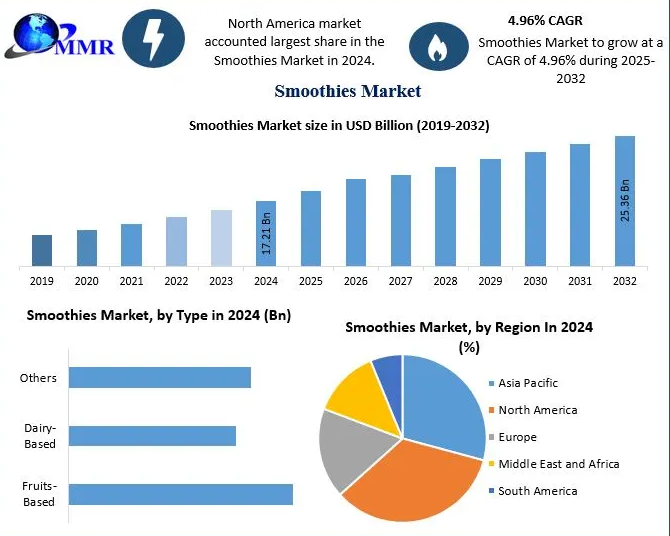
  • The global Smoothies Market continues to experience steady growth as consumers worldwide increasingly adopt healthier dietary habits and convenient nutrition options. According to the latest industry analysis, the Smoothies Market size was valued at USD 17.21 Billion in 2024 and is projected to reach nearly USD 25.36 Billion by 2032, expanding at a compound annual growth rate (CAGR) of 4.96% from 2025 to 2032. The rising popularity of nutrient-rich beverages, combined with increasing awareness of balanced diets, is expected to significantly influence market growth over the forecast period.

    Get a Free Sample PDF Of This Report (Get Higher Priority for Corporate Email ID):- https://www.maximizemarketresearch.com/request-sample/121502/

    Smoothies Market Overview
    Smoothies have emerged as one of the most popular functional beverages in both developed and developing economies. Made from a combination of fruits, vegetables, dairy products, and other functional ingredients, smoothies are widely recognized for their nutritional benefits, including high levels of dietary fiber, vitamins, antioxidants, and minerals. Unlike traditional fruit juices, smoothies retain the fiber content of fruits and vegetables, making them a healthier alternative for consumers seeking balanced nutrition.

    Get a Free Sample PDF Of This Report (Get Higher Priority for Corporate Email ID):- https://www.maximizemarketresearch.com/request-sample/121502/

    Key Market Drivers

    Rising Aging Population
    Increasing Health Awareness and Fitness Trends
    Growing Demand for Personalized Nutrition

    Smoothies Market Segmentation and Usage
    The global smoothies market is segmented based on type, distribution channel, and packaging material, reflecting diverse consumer preferences and purchasing patterns.

    By Type
    Based on product type, the market is divided into fruit-based smoothies, dairy-based smoothies, and others. Among these, fruit-based smoothies dominated the market in 2024 with approximately 79% share. The popularity of fruit smoothies is largely attributed to their refreshing taste, natural sweetness, and high nutritional value.

    By Distribution Channel
    The smoothies market is also segmented by distribution channels, including restaurants, supermarkets, convenience stores, smoothie bars, and others.

    By Packaging Material
    Based on packaging material, the market includes plastic, paper, glass, and other packaging types. Plastic packaging remains widely used due to its lightweight nature and convenience. However, growing environmental concerns are encouraging manufacturers to explore sustainable packaging alternatives such as recyclable paper containers and reusable glass bottles.

    Get a Free Sample PDF Of This Report (Get Higher Priority for Corporate Email ID):- https://www.maximizemarketresearch.com/request-sample/121502/

    Regional Outlook

    The Asia-Pacific region is expected to witness the fastest growth during the forecast period, fueled by increasing urbanization, rising disposable incomes, and growing adoption of healthy beverage choices. Countries such as China and India are experiencing a surge in demand for convenient and nutritious drinks, particularly among young professionals and fitness enthusiasts.

    Leading Market Players
    The global smoothies market features a mix of established beverage companies and emerging brands focused on innovative health-focused products. Key companies are investing heavily in product development, flavor innovation, and sustainable packaging to strengthen their market position.

    Some of the prominent players in the global smoothies market include:

    Barfresh Food Group, Inc.

    Bolthouse Farms, Inc.

    Connect With Us:

    MAXIMIZE MARKET RESEARCH PVT. LTD.
    2nd Floor, Navale IT park Phase 3,
    Pune Banglore Highway, Narhe
    Pune, Maharashtra 411041, India.
    +91 9607365656
    sales@maximizemarketresearch.com

    About Maximize Market Research:

    Maximize Market Research is one of the fastest-growing market research and business consulting firms serving clients globally. Our revenue impact and focused growth-driven research initiatives make us a proud partner of majority of the Fortune 500 companies. We have a diversified portfolio and serve a variety of industries such as IT & telecom, chemical, food & beverage, aerospace & defense, healthcare and others.
    The global Smoothies Market continues to experience steady growth as consumers worldwide increasingly adopt healthier dietary habits and convenient nutrition options. According to the latest industry analysis, the Smoothies Market size was valued at USD 17.21 Billion in 2024 and is projected to reach nearly USD 25.36 Billion by 2032, expanding at a compound annual growth rate (CAGR) of 4.96% from 2025 to 2032. The rising popularity of nutrient-rich beverages, combined with increasing awareness of balanced diets, is expected to significantly influence market growth over the forecast period. Get a Free Sample PDF Of This Report (Get Higher Priority for Corporate Email ID):- https://www.maximizemarketresearch.com/request-sample/121502/ Smoothies Market Overview Smoothies have emerged as one of the most popular functional beverages in both developed and developing economies. Made from a combination of fruits, vegetables, dairy products, and other functional ingredients, smoothies are widely recognized for their nutritional benefits, including high levels of dietary fiber, vitamins, antioxidants, and minerals. Unlike traditional fruit juices, smoothies retain the fiber content of fruits and vegetables, making them a healthier alternative for consumers seeking balanced nutrition. Get a Free Sample PDF Of This Report (Get Higher Priority for Corporate Email ID):- https://www.maximizemarketresearch.com/request-sample/121502/ Key Market Drivers Rising Aging Population Increasing Health Awareness and Fitness Trends Growing Demand for Personalized Nutrition Smoothies Market Segmentation and Usage The global smoothies market is segmented based on type, distribution channel, and packaging material, reflecting diverse consumer preferences and purchasing patterns. By Type Based on product type, the market is divided into fruit-based smoothies, dairy-based smoothies, and others. Among these, fruit-based smoothies dominated the market in 2024 with approximately 79% share. The popularity of fruit smoothies is largely attributed to their refreshing taste, natural sweetness, and high nutritional value. By Distribution Channel The smoothies market is also segmented by distribution channels, including restaurants, supermarkets, convenience stores, smoothie bars, and others. By Packaging Material Based on packaging material, the market includes plastic, paper, glass, and other packaging types. Plastic packaging remains widely used due to its lightweight nature and convenience. However, growing environmental concerns are encouraging manufacturers to explore sustainable packaging alternatives such as recyclable paper containers and reusable glass bottles. Get a Free Sample PDF Of This Report (Get Higher Priority for Corporate Email ID):- https://www.maximizemarketresearch.com/request-sample/121502/ Regional Outlook The Asia-Pacific region is expected to witness the fastest growth during the forecast period, fueled by increasing urbanization, rising disposable incomes, and growing adoption of healthy beverage choices. Countries such as China and India are experiencing a surge in demand for convenient and nutritious drinks, particularly among young professionals and fitness enthusiasts. Leading Market Players The global smoothies market features a mix of established beverage companies and emerging brands focused on innovative health-focused products. Key companies are investing heavily in product development, flavor innovation, and sustainable packaging to strengthen their market position. Some of the prominent players in the global smoothies market include: Barfresh Food Group, Inc. Bolthouse Farms, Inc. Connect With Us: MAXIMIZE MARKET RESEARCH PVT. LTD. 2nd Floor, Navale IT park Phase 3, Pune Banglore Highway, Narhe Pune, Maharashtra 411041, India. +91 9607365656 sales@maximizemarketresearch.com About Maximize Market Research: Maximize Market Research is one of the fastest-growing market research and business consulting firms serving clients globally. Our revenue impact and focused growth-driven research initiatives make us a proud partner of majority of the Fortune 500 companies. We have a diversified portfolio and serve a variety of industries such as IT & telecom, chemical, food & beverage, aerospace & defense, healthcare and others.
    0 Yorumlar 0 hisse senetleri 4742 Views
  • Mobile Money Market Size, Share, and Emerging Trends 2024-2030


    Anticipated Growth in Revenue: The Mobile Money Market Size was valued at US$ 7.78 Bn. in 2023 and the total revenue is expected to grow at 26 % through 2024 to 2030, reaching nearly US$ 39.26 Bn.

    Mobile Money Market Overviews

    Maximize Market Research study in comprehensive market analysis, providing insights into the current status, historical evolution, and CAGR of the Mobile Money market. The key factors for market size estimations are trend analysis, revenue forecasts, and market dynamics, this study equips clients with invaluable data to strategize market entry approaches and enables investors to grasp the prevailing landscape within the Mobile Money industry.

    Mobile Money Market Scope and Methodology:

    The Mobile Money Market report presents an in-depth examination of segments and sub-segments across local, global, and regional markets. The report scrutinizes how drivers, restraints, and macro variables impact Systems of Mobile Money markets at the local, global, and regional levels. It encompasses a comprehensive evaluation of trends, forecasts, and monetary valuations within the global Mobile Money System market. Employing both primary and secondary data collection techniques, the report employs qualitative and quantitative approaches for Mobile Money market analysis. The report adopts a bottom-up approach for Mobile Money market estimation. Market segmentation is undertaken to analyze different facets of the industry, categorized and segments. The report profiles key industry players, including market leaders, followers, and newcomers.

    A comprehensive analysis of demand projections, market trends, and micro and macro factors is provided for the Mobile Money market. The report encompasses factors driving and constraining market growth. Analytical methodologies like Porter's five forces analysis and PESTLE analysis are employed to offer market insights. Current market trends and forecasts for the upcoming years are also part of the report's content.

    Request a Sample of the Full Market Report:https://www.maximizemarketresearch.com/request-sample/7166/

    Mobile Money Market Regional Insights

    The Mobile Money Market is divided into North America, South America, Europe, the Middle East and Africa, and Asia Pacific, according to regional analysis. Several areas are home to nations such as the United States, Canada, Mexico, United Kingdom, Germany, France, Spain, Italy, Rest of Europe, China, India, Japan, Australia, and South Korea.

    Mobile Money Market Segmentation

    by Payment Type

    Remote Payments
    Proximity Payments

    by Industry

    BFSI
    Telecom and IT
    Media and entertainment
    Healthcare
    Travel and hospitality
    Transportation
    Others

    by Transaction Mode

    Point of Sale (PoS)
    Mobile Apps
    QR codes

    by Nature of Payment

    Person to Person (P2P)
    Person to Business (P2B)
    Business to Person (B2P)
    Business to Business (B2B)

    by Application

    Money transfers
    Bill Payments
    Airtime Transfer and Top-Ups
    Travel and Ticketing
    Merchandise and Coupons

    Get Your Complimentary Sample Report Today :https://www.maximizemarketresearch.com/request-sample/7166/

    Mobile Money Market Key Players

    1. Vodafone
    2. Google
    3. Orange
    4. FIS
    5. PayPal
    6. MasterCard
    7. Fiserve
    8. Airtel
    9. Gemalto
    10. Alipay
    11. MTN
    12. PAYTM
    13. Samsung
    14. VISA
    15. Tencent
    16. Global Payments
    17. Square
    18. Amazon
    19. Apple
    20. Western Union Holdings
    21. Comviva
    22. T- Mobile

    Key questions answered in the Mobile Money Market are:

    What is Mobile Money?

    What is the growth rate of the Mobile Money Market?

    Which are the factors expected to drive the Mobile Money market growth?

    What are the different segments of the Mobile Money Market?

    What growth strategies are the players considering to increase their presence in Mobile Money?

    What are the upcoming industry applications and trends for the Mobile Money Market?

    What are the recent industry trends that can be implemented to generate additional revenue streams for the Mobile Money Market?

    Who are the leading companies and what are their portfolios in Mobile Money Market?

    What segments are covered in the Mobile Money Market?

    Who are the key players in the Mobile Money market?

    Key Offerings:

    Past Market Size and Competitive Landscape

    Past Pricing and price curve by region

    Market Size, Share, Size & Forecast by Different Segment

    Market Dynamics – Growth Drivers, Restraints, Opportunities, and Key Trends by Region

    Market Segmentation – A detailed analysis by segment with their sub-segments and Region

    Competitive Landscape – Profiles of selected key players by region from a strategic perspective

    Competitive landscape – Market Leaders, Market Followers, Regional player
    Mobile Money Market Size, Share, and Emerging Trends 2024-2030 Anticipated Growth in Revenue: The Mobile Money Market Size was valued at US$ 7.78 Bn. in 2023 and the total revenue is expected to grow at 26 % through 2024 to 2030, reaching nearly US$ 39.26 Bn. Mobile Money Market Overviews Maximize Market Research study in comprehensive market analysis, providing insights into the current status, historical evolution, and CAGR of the Mobile Money market. The key factors for market size estimations are trend analysis, revenue forecasts, and market dynamics, this study equips clients with invaluable data to strategize market entry approaches and enables investors to grasp the prevailing landscape within the Mobile Money industry. Mobile Money Market Scope and Methodology: The Mobile Money Market report presents an in-depth examination of segments and sub-segments across local, global, and regional markets. The report scrutinizes how drivers, restraints, and macro variables impact Systems of Mobile Money markets at the local, global, and regional levels. It encompasses a comprehensive evaluation of trends, forecasts, and monetary valuations within the global Mobile Money System market. Employing both primary and secondary data collection techniques, the report employs qualitative and quantitative approaches for Mobile Money market analysis. The report adopts a bottom-up approach for Mobile Money market estimation. Market segmentation is undertaken to analyze different facets of the industry, categorized and segments. The report profiles key industry players, including market leaders, followers, and newcomers. A comprehensive analysis of demand projections, market trends, and micro and macro factors is provided for the Mobile Money market. The report encompasses factors driving and constraining market growth. Analytical methodologies like Porter's five forces analysis and PESTLE analysis are employed to offer market insights. Current market trends and forecasts for the upcoming years are also part of the report's content. Request a Sample of the Full Market Report:https://www.maximizemarketresearch.com/request-sample/7166/ Mobile Money Market Regional Insights The Mobile Money Market is divided into North America, South America, Europe, the Middle East and Africa, and Asia Pacific, according to regional analysis. Several areas are home to nations such as the United States, Canada, Mexico, United Kingdom, Germany, France, Spain, Italy, Rest of Europe, China, India, Japan, Australia, and South Korea. Mobile Money Market Segmentation by Payment Type Remote Payments Proximity Payments by Industry BFSI Telecom and IT Media and entertainment Healthcare Travel and hospitality Transportation Others by Transaction Mode Point of Sale (PoS) Mobile Apps QR codes by Nature of Payment Person to Person (P2P) Person to Business (P2B) Business to Person (B2P) Business to Business (B2B) by Application Money transfers Bill Payments Airtime Transfer and Top-Ups Travel and Ticketing Merchandise and Coupons Get Your Complimentary Sample Report Today :https://www.maximizemarketresearch.com/request-sample/7166/ Mobile Money Market Key Players 1. Vodafone 2. Google 3. Orange 4. FIS 5. PayPal 6. MasterCard 7. Fiserve 8. Airtel 9. Gemalto 10. Alipay 11. MTN 12. PAYTM 13. Samsung 14. VISA 15. Tencent 16. Global Payments 17. Square 18. Amazon 19. Apple 20. Western Union Holdings 21. Comviva 22. T- Mobile Key questions answered in the Mobile Money Market are: What is Mobile Money? What is the growth rate of the Mobile Money Market? Which are the factors expected to drive the Mobile Money market growth? What are the different segments of the Mobile Money Market? What growth strategies are the players considering to increase their presence in Mobile Money? What are the upcoming industry applications and trends for the Mobile Money Market? What are the recent industry trends that can be implemented to generate additional revenue streams for the Mobile Money Market? Who are the leading companies and what are their portfolios in Mobile Money Market? What segments are covered in the Mobile Money Market? Who are the key players in the Mobile Money market? Key Offerings: Past Market Size and Competitive Landscape Past Pricing and price curve by region Market Size, Share, Size & Forecast by Different Segment Market Dynamics – Growth Drivers, Restraints, Opportunities, and Key Trends by Region Market Segmentation – A detailed analysis by segment with their sub-segments and Region Competitive Landscape – Profiles of selected key players by region from a strategic perspective Competitive landscape – Market Leaders, Market Followers, Regional player
    0 Yorumlar 0 hisse senetleri 4008 Views
Arama Sonuçları